Bunnings Business Practises Under The Microscope, Some Claim They Are A Monopoly Without ACCC Supervision
 David Richards
14 May 2025
David Richards
14 May 2025

Bunnings whose parent Company also owns Officeworks, is under investigation on multiple fronts, with the big hardware Company who spend millions on advertising appearing to be pulling in favours from their media partners after the ABC which is advertising free started to highlight the questionable modus operandi of Bunnings management.
Bunnings managing director Michael Schneider says the retailer holds a unique place with shoppers, the ABC call their hardware operation a monopoly whose management move to put competitors out of business with sheer scale.
They have also raised questions about Bunnings claims that they will not be beaten on price.
And it’s not just the ABC that is putting Bunnings management and their parent Company Wesfarmers under the microscope Bunnings is also the subject of a Federal Government “Big Box” senate inquiry that is examining their price-setting practices and market power.
Recently the Company moved into selling solar after moving to strip appliance share from value retailers with the Company that deals extensively with Chinese suppliers and distributors of Chinese made products accused of using uses its market power to squeeze suppliers and is disingenuous about its pricing while raking in excessive profits.
Bunnings management are also moving to expand beyond hardware into categories such as automotive a move that takes them into a head on fight with Super Cheap Auto, they are also moving into pet care and cleaning products.
The ABC claims that emails seen by the Four Corners reveals that Bunnings has repeatedly used its size and market power to block competitors from setting up in retail precincts where it already has a store.
Such restrictive lease agreements are prohibited in the supermarket sector.
But that does not apply to Bunning with competitors claiming it should.
Investigations reveal that Bunnings is not subject to the same competition rules as Coles and Woolworths, despite rivals believing it has more market power than the pair combined.
Documents in the possession of the ABC reveal a specialty tools retailer was looking to open a store in a homemaker centre on the NSW Central Coast last year, only to be told by the leasing agent: “Bunnings have exclusivity in the centre for tools.”
It was the same story in 2021 on the Gold Coast and again in Melbourne.
The big question is why Bunnings and Wesfarmers has been able to get away with this sort of retail behaviour and why has the Australian Competition & Consumer Commission did not pull them up in the past.
Bunnings, has 310 warehouses in Australia and are spending millions building out new ones in places such as Frenches Forest in Sydney
The massive Bunnings store with five different levels is expected to be completed this year at a cost of $48M.
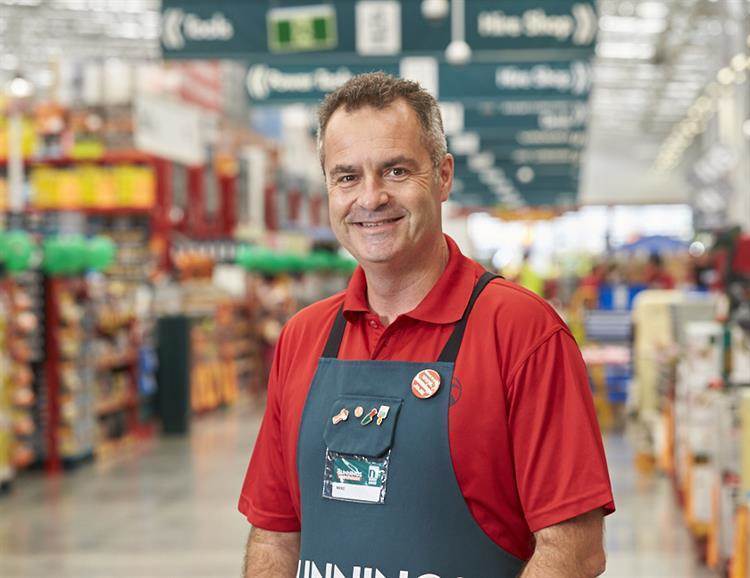
Michael Schneider
Three separate levels of the high-rise Bunnings will contain different retail opportunities with Bunnings set to trial what appears to be a store within a store layout with automotive, tools, appliances all getting their own custom location.
As soon as the ABC 4 Corners investigation of the retail chain broke their spin doctors went into action with the Nine Media Group who rake in millions from Bunnings along with the Nine Entertainment network moving to make out that Bunnings was a pretty good retailer.

Citing J.P. Morgan analyst Bryan Raymond who claimed that when price inflation was rising supermarkets used that as an opportunity to drive their margins up, while Bunnings’ owner Wesfarmers was criticised for keeping prices low at Bunnings and Kmart.
Bunnings estimates it has about 17% of the hardware market worth around $110 billion, competitors claim that Bunnings share is considerably bigger and the ACCC needs to “investigate the monopoly”.
According to the AFR the ACCC declined to comment on whether it has any pending investigations on Bunnings’ pricing.
Bunning CEO Mike Schneider says it is unfounded and there are plenty of big brands that it does not sell due to their tie-ups with other retailers.
Many of these brands have refused to do business with Bunnings because they don’t want their brands sold in a warehouse mass sale environment ChannelNews has been told.
Schneider said, “We can’t sell appliances because these other powerful businesses choose to manage their business through different channels,” he said.
Professor Clinton Free from Sydney University Business School says Bunnings is not subject to the same scrutiny as Coles or Woolworths.
“There’s a number of interesting angles to the Bunnings story. It’s an enormous success financially, but it also starts to raise big questions about market power,” he says.
This general lack of scrutiny, despite its dominant market position, has allowed Bunnings to continue expanding with little pushback from the ACCC.
See the 4 Corners Story on Bunnings here.