BenQ Back On The Brink: Worst Parent Profit In 12 Years Raises Questions Over Consumer Future
 David Richards
30 Jul 2026
David Richards
30 Jul 2026
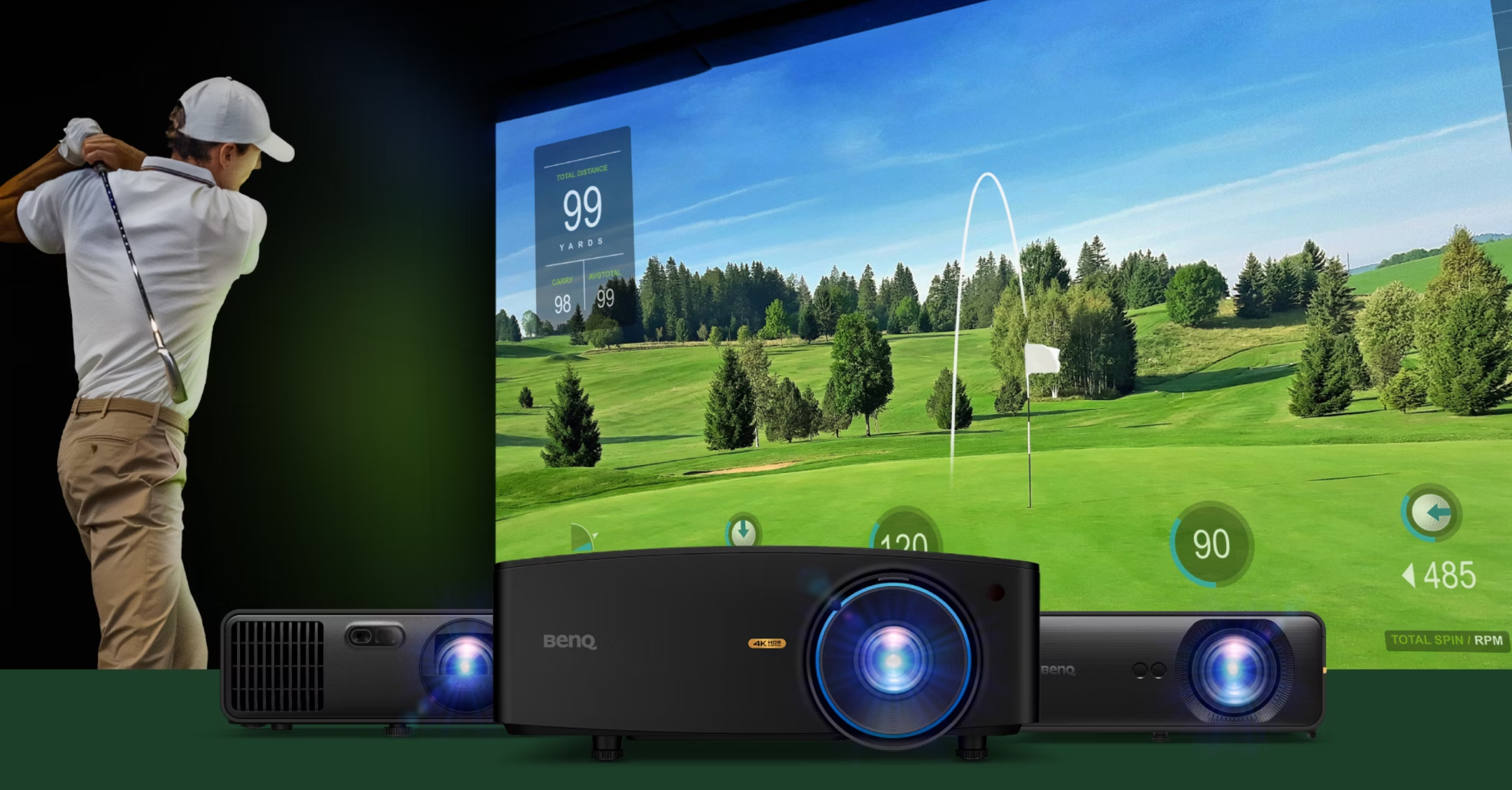
Serious questions are being asked as to whether Taiwanese brand BenQ has a future in the consumer market after parent company Qisda Group posted its worst profit in 12 years, with management openly admitting that the group’s future now lies in AI infrastructure, networking, healthcare and enterprise systems, not consumer displays where margins are thin.
For a brand that was once tipped to take on Nokia HTC and Sony, and which nearly destroyed itself trying, the latest numbers have an ominous ring of history repeating.
Qisda Chairman Peter Chen opened the group’s recent Q4 earnings call recently with an apology for profit sitting at a near 12-year low. Management flagged a trough in operating income and a three-part fix: returning loss-making subsidiaries to profit, expanding profitable units such as BenQ Medical, and driving growth in AI-related lines including servers, cooling systems and 1.6Tb switches. A new president, Cally Ko, has been hired specifically to drive the AI transformation.
Nowhere in that plan is the consumer display brand that made BenQ a household name.
Australia: A $700K Profit On $21.9M Revenue
Locally the picture is no better.
In 2025 BenQ Australia managed a profit of just $700,847 on revenues of $21.9M, thin returns in a market where the brand’s traditional strongholds of projection and interactive whiteboards are under direct assault.
Several Chinese and Japanese brands including Hisense are squeezing BenQ in projection, alongside Japanese giant Epson, while in monitors the company is caught in a pincer: intense pricing from Dell, HP, Lenovo, Acer, AOC and aggressive Chinese entrants at the bottom of the market, and superior premium offerings from Samsung and LG at the top. The Company also manufactures and sells desk lamps in Australia which are sold at Big W and Woolworths. 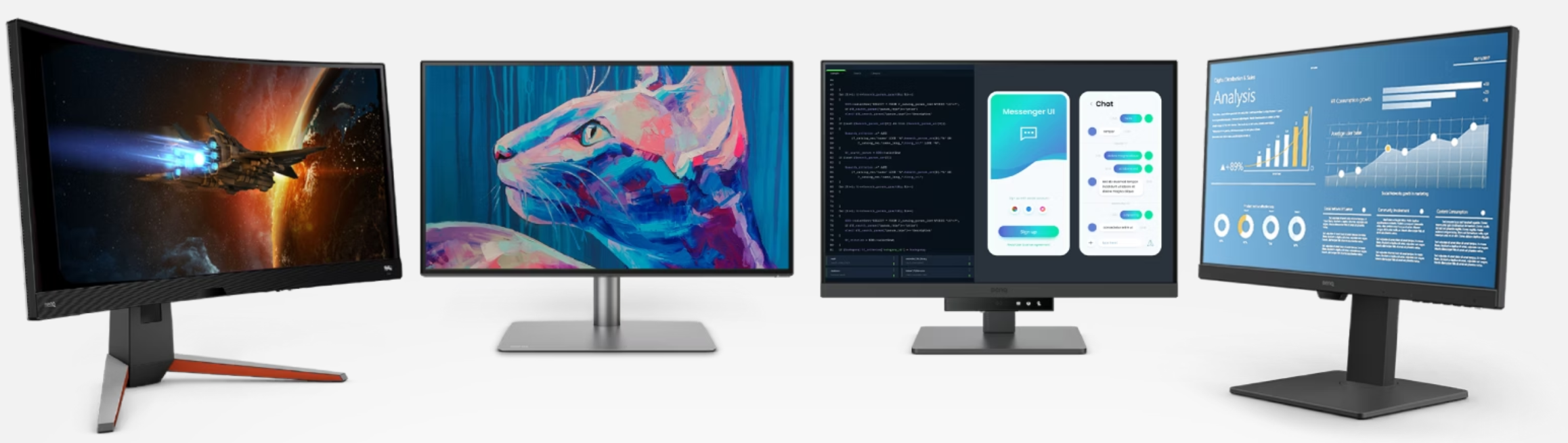
Qisda itself expects the total display market to be flat or slightly lower in 2026, with several brands actively looking to strip share from BenQ. The core problem, analysts say, is that monitors and projectors are mature, highly competitive and increasingly low margin, exactly the sort of business the parent group is pivoting capital and attention away from.
A Dark Past: The Siemens Deal That Almost Killed The Company
BenQ has been here before, and last time it nearly proved fatal.
Back in June 2005, BenQ agreed to take over Siemens’ loss-making mobile phone division, completing the deal on 1 October 2005. Siemens paid BenQ at least €250 million to take the business off its hands, in return for a 2.5% stake in BenQ.
“That should have been the red flag,” one Taipei analyst noted at the time.
BenQ management, with no experience in a mobile market then dominated by Nokia and fellow Taiwanese company HTC, took on a business bleeding US$1.5 million a day. Locked into German labour contracts they could not unwind, BenQ racked up US$760M in losses from BenQ Mobile in under a year, against a total company capital worth of just US$793 million at the time.
In late September 2006, barely a year after the acquisition, BenQ cut off funding and pushed BenQ Mobile into insolvency in Germany, leaving 3,000 German jobs in doubt. Roughly two-thirds of those workers were laid off, sparking a bitter compensation dispute with both BenQ and Siemens and a full-blown political scandal in Germany. Siemens threatened legal action, putting the BenQ-Siemens co-brand in doubt.
To survive, BenQ went into fire-sale mode. The company lost US$600 million in the first nine months of 2006, announced the sale of non-core assets and set aside about US$360 million in one-off provisions. In 2007, after six straight quarterly losses, BenQ sold its Taoyuan facility to keyboard-maker affiliate Darfon to raise funds and “revitalise” its financial structure.
Then Came The Criminal Investigation
The saga then turned messy and criminal.
In 2007, Taoyuan prosecutors raided BenQ’s Taipei and Taoyuan offices, questioned seven executives and detained CFO Eric Yu on suspicion of insider trading. The allegation was that about 7 million shares were sold in early 2006, shortly before BenQ disclosed NT$9.06 billion in Q4 2005 losses. Chairman K.Y. Lee publicly denied any wrongdoing in an open letter.
The damage was done. BenQ’s share price fell 47% to NT$17.55, and the company posted a US$367 million third-quarter loss, its worst in five years.
The aftermath was the 2007 restructuring that split the group, with manufacturing spun off as Qisda and BenQ retained as the brand company focused on monitors and projectors. The wider organisation is today commonly called the BenQ Qisda Group.
The episode is still cited as the cautionary tale for Taiwanese OEMs chasing global brands via distressed Western acquisitions. TCL’s Alcatel misadventure and, arguably, the Foxconn-Sharp negotiations were always measured against the BenQ saga.
There is a local footnote to the 2007 era. Phil Newton, who was running the Australian subsidiary at the time, went on to become a key manager and Vice President at Samsung Australia, and was later offered the CEO role at the local Samsung subsidiary, an offer he refused.
What Happens Now
Analysts claim BenQ is unlikely to disappear, but it is equally unlikely to become a broad consumer electronics brand competing head-on with Samsung, LG, Sony or TCL, the sort of brand that is ranged in Australian retailers such as JB Hi-Fi one minute and dumped the next because of retailer margin pressure.
The probable future is a narrower, more specialist and more premium BenQ, built around high-end 4K monitors, niche projection and education displays.
The question is whether local management is capable of executing that pivot. The company is still struggling to come to grips with a new generation of the information market, with local management still expecting customers to click banner ads while failing to invest in building the brand.
For a company that has already survived one near-death experience, the warning signs are flashing again. This time, the parent company has made it clear where its money is going, and it is not consumer displays.