Australia Is Less Safe Because Of Poor Technology Funding, And the Albanese Government Owns It
 David Richards
17 Dec 2025
David Richards
17 Dec 2025

COMMENT: If Australia is to become a safer country, Prime Minister Anthony Albanese must immediately stop posturing and start governing. Instead of pouring political capital into under-16 social media bans and foreign policy virtue signalling, the Albanese Government must urgently fund modern intelligence systems — advanced analytics, AI-driven threat detection, and real-time information sharing — so ASIO, the AFP and state police forces can actually communicate and act before the next terrorist attack occurs.
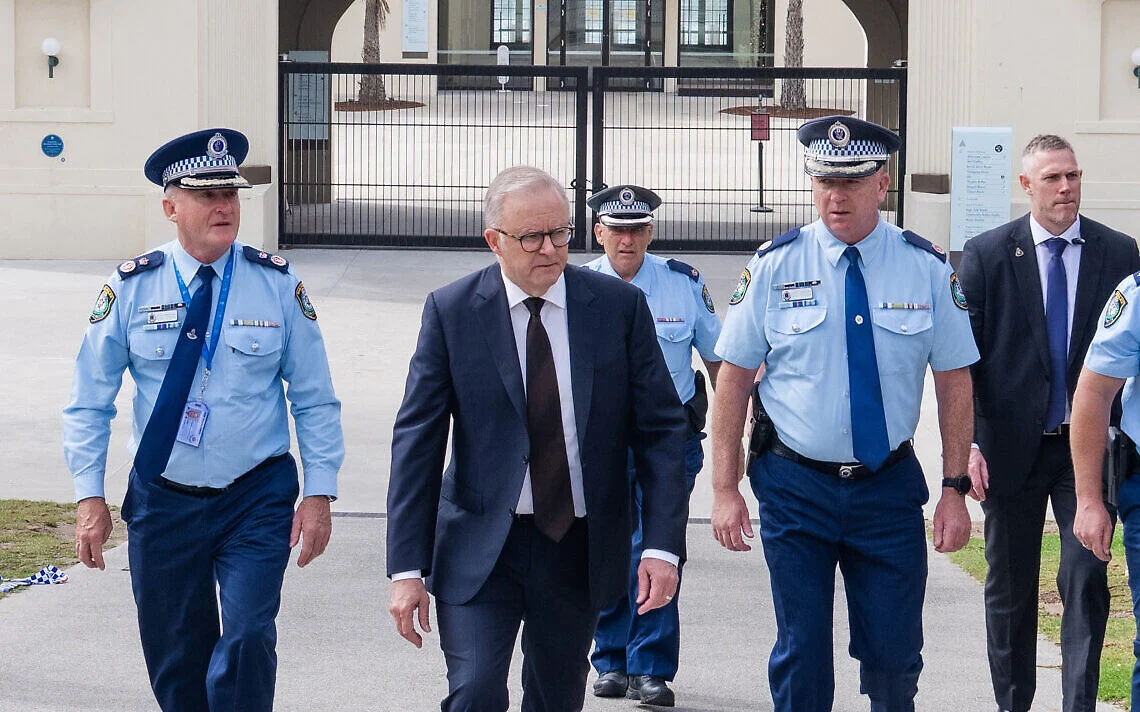
Australian Anthony Albanese On Another on of his publicity stunts following Bondi shooting.
The failure to invest in modern intelligence, relationship-mapping and threat-analysis software sits at the centre of the Federal Labor Government’s security collapse. While ministers chase ideological wins and immigrant vote blocs, Australia’s law-enforcement agencies are left operating on outdated, fragmented systems that fail to identify known threats hiding in plain sight.
This is a government that has shown more urgency in repatriating ISIS brides — the wives of Australian-based ISIS fighters who travelled to Syria to support terrorist organisations — than in equipping its own security agencies with the tools required to keep Australians safe. These women were married to men explicitly designated as threats by Australian intelligence, yet were quietly returned with assurances that defy common sense and public trust.
When the Bondi terror attack exposed catastrophic intelligence failures, Labor’s response was pure spin. Gun-licence debates were cynically weaponised to divert attention from the real issue: systemic intelligence breakdowns. Despite claims that the government is “up for whatever’s necessary” to combat antisemitism, Jewish leaders and security experts have made it clear that gun reforms are a distraction — not a solution.

Israeli Prime Minister Benjamin Netanyahu has accused Australia’s Federal Lbor government of fuelling antisemitism in the lead-up to Sunday’s shooting in Sydney.
Anthony Albanese speaks loudly about fighting antisemitism but refuses to explain why ASIO, the AFP and state police still lack integrated systems capable of linking known extremists, travel movements, firearms ownership and family relationships. Words without capability are meaningless.
We now know NSW Government agencies are still relying on legacy systems so outdated they can’t even maintain correct addresses — despite repeated corrections. This is not merely embarrassing; it is dangerous.
It also raises serious questions about how security agencies failed to detect the threat posed by Sajid Akram and his son Naveed Akram, who targeted the Jewish community during Hanukkah celebrations at Bondi Beach. Naveed Akram was already known to ASIO, yet authorities failed to connect his movements, overseas travel to the Philippines — a known ISIS training ground — and his relationship with a father who legally owned six firearms while sharing the same residence.
This is precisely the kind of failure that modern intelligence software is designed to prevent.
International partners such as the FBI, MI5, Scotland Yard and Interpol have long relied on advanced relationship-mapping and cross-agency intelligence platforms. In Australia, according to security sources, only limited and outdated versions of these tools exist.
This is not about creating a single “super-database.” The UK model proves otherwise. MI5, MI6 and the Metropolitan Police all operate separate systems, linked through tightly controlled data-sharing gateways, joint counter-terrorism taskforces and legally governed intelligence alerts. If the father of a known extremist applies for multiple gun licences, alarms are triggered. If a known sympathiser travels to a terrorist training hub, alerts are raised. Action follows.
Australia has none of this at scale.
Instead, governments are funding inquiries into retail surveillance cameras while prioritising the “rights” of shoplifters over the safety of law-abiding citizens. The idea that security threats will be stopped by monitoring Bunnings receipts rather than mapping extremist networks is absurd.
Australia faces a growing risk of domestic radicalisation — not just from Islamist extremism, but from potential retaliatory violence. History is instructive. The UK endured attacks from the IRA, PLO, ISIS, Hamas-linked groups and domestic extremists such as the Angry Brigade. That group carried out more than 25 bombings in just one year, including assassination attempts against senior government ministers.

Bob Carr’s X account featuring Ayatollah Khamenei in the background as Labor party members rolled up in force to support anti semectic marches and openly supported Palestinian led protest groups for a Country influenced by Hamas a terrorist group.
Australia is not immune to the emergence of similar domestic terror networks — particularly when immigration policy failures, antisemitism, and rising violent crime are left unaddressed.
What Australia urgently needs is what the UK and US already have:
• National intelligence platforms that allow cross-agency data linking
• Entity and relationship analysis across people, vehicles, phones and locations
• Real-time travel and firearms alerts
• Strong oversight to ensure lawful use
• Role-based, case-specific access to intelligence
Instead, ministers such as Tony Burke appear content spending political capital repatriating ISIS affiliates while security chiefs warn of “serious software failures” across Australia’s intelligence landscape.
Former intelligence and defence leaders Nick Warner, Duncan Lewis and Dennis Richardson have described Australia as being at a “turning point.” Their criticism of the Albanese Government is not political — it is professional, informed, and damning.
Australia does not need more press conferences.
It does not need more virtue signalling.
It needs modern intelligence systems, funded now.