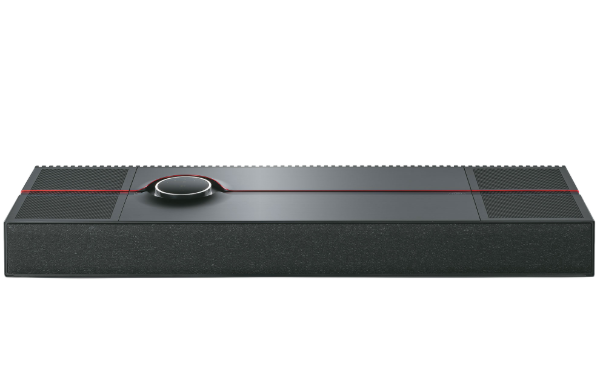
Audiodome Offers Insights Into Human Processing Of 3D Sound
 Chris Griffith
25 Jun 2025
Chris Griffith
25 Jun 2025

Researchers in Canada have tested a new loud speaker array called the AudioDome to better understand how the human brain would best process three-dimensional sound.
The research, conducted by scientists at Western University in Ontario, looks at the sound reproduction from the brain’s point of view with the listener in the middle of a loudspeaker array.
The AudioDome uses a special audio technology called ambionics that can play sounds around a listener in a way that feels lifelike, as if they were in the environment where the sounds were recorded.
The research, published in The Journal of the Acoustical Society of America, found that the loudspeaker array could reproduce sound at a spatial scale beyond the limits of human perception, hiddenwires.co.uk reports.
It allows developers to test the likely output of sound profiles when processed by the human brain.
The system doesn’t play sounds left and right like normal speakers. It can place sounds anywhere: above, behind, far away, or really close.
Researchers say it can fool a listener’s brain into thinking the sound is coming from a specific spot, even if there is no speaker there.
Its goal is to better understand how humans receive three-dimensional sound and process where sounds are coming from. The set-up is claimed to be accurate enough to simulate real-life situations accurately.
Image: The AudioDome. Credit: sonible GmbH, Graz, Austria