Apple Ratings Crash to Five-Year Low
 Joe Gallop
12 Sep 2025
Joe Gallop
12 Sep 2025

Apple has seen its analyst sentiment hit a five-year low following two downgrades, highlighting growing caution around the iPhone maker as it rolls out its latest products.
According to Bloomberg data, Apple’s consensus recommendation score (a measure of buy, hold and sell ratings) fell to 3.9 out of 5, the weakest since early 2020.
Only 55% of analysts tracked by Bloomberg now recommend buying the stock, far below the likes of Nvidia, Microsoft and Amazon, which all maintain buy ratings above 90%.
D.A. Davidson downgraded Apple from buy to neutral after new product announcements failed to ease concerns over the company’s AI strategy.
Analyst Gil Luria described the new lineup, including the ultra-thin iPhone 17 Air, as “uninspiring,” adding that Apple would need to redefine its core products or develop new innovations to sustain growth.
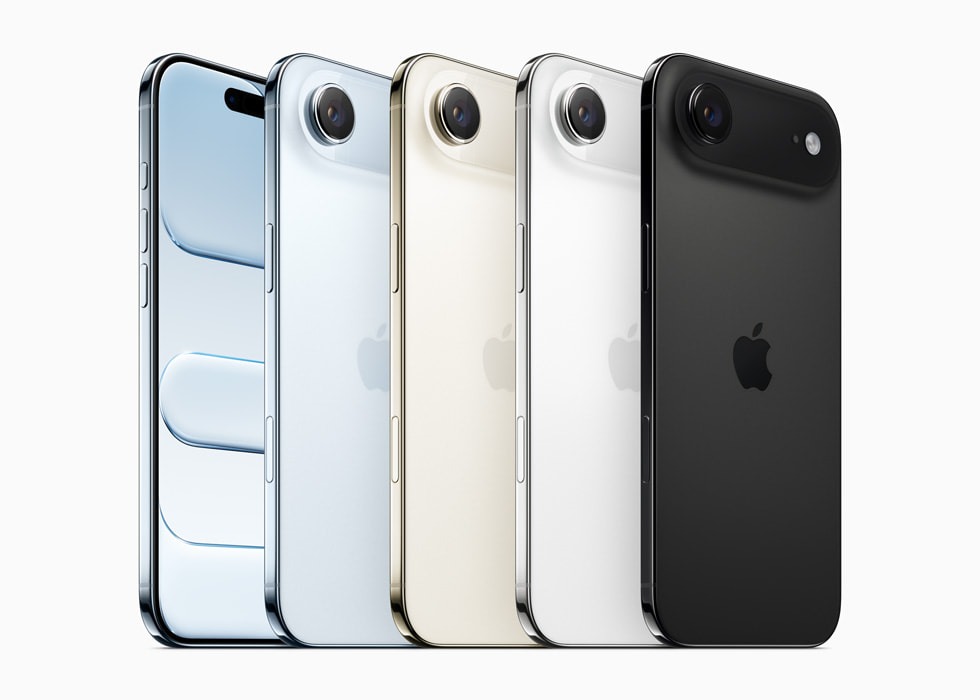
Analysts are unimpressed by the new ultra-thin iPhone 17 Air
Phillip Securities also reduced its rating, citing “no significant AI innovation” and persistent weaknesses in Apple’s product line and the Chinese market.
Despite these concerns, Apple shares rose 0.6% on Thursday, rebounding from a four-day drop of 5.4% and remaining down 9% for 2025 compared with a 14% gain in the Nasdaq 100 Index.
Locally, Apple’s high-handed retail approach continues to affect Australian stores.
As reported yesterday, retailers including JB Hi-Fi and Harvey Norman are grappling with razor-thin margins of just 4% on the new iPhone 17 series, compared with typical margins of around 40% for other brands.
The iPhone 17 Air, priced at A$1,799 in Australia, gives retailers just $71.96 in profit per device, underscoring the tension between Apple’s premium branding and its partners’ bottom line.
Analysts say Apple’s long-term stock performance now hinges on its ability to deliver compelling AI features, maintain its ecosystem, and navigate both global competition and local retail pressures.