Already In Strife, Now Facing New Problems As Chinese Workers Go Home
 David Richards
04 Jul 2025
David Richards
04 Jul 2025

Key Apple partner Foxconn Technology has asked hundreds of Chinese engineers and technicians to return home from its iPhone factories in India, the move comes as Apple struggles to prevent major prices for their products especially in the USA due to Trump tariffs.
The move comes only weeks after the Company was spruiking their India manufacturing capability.
What’s been revealed is that Chinese staff employed by Foxconn have been told to been told to fly back home with more than 300 Chinese workers having already quit the Foxconn plants where Apple iPhones are assembled.
Currently Apple stock is down 13.8% with Trump tariffs threatening margins and supply.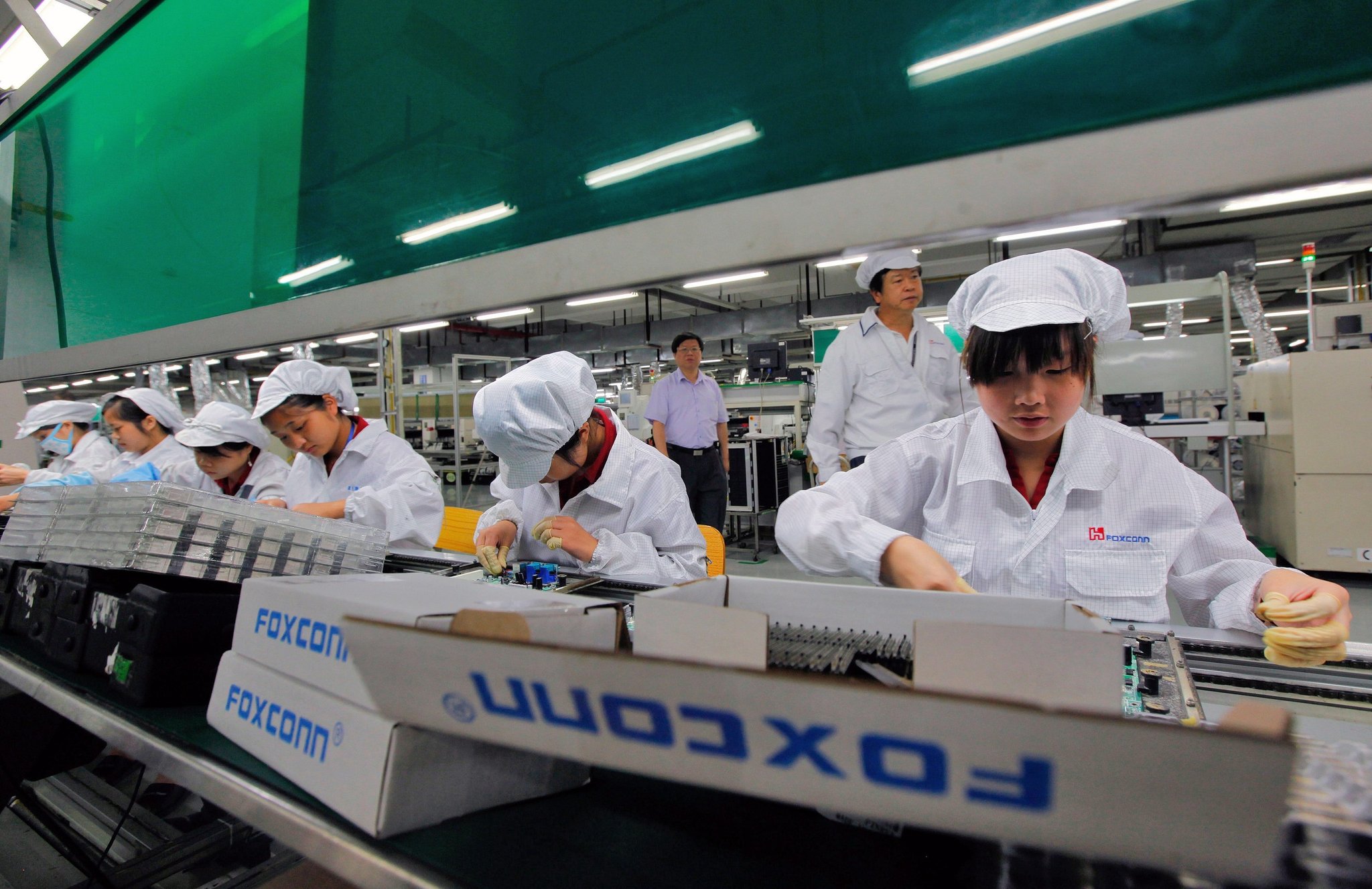
US President Donald Trump also is pressuring Apple to change its overseas production model with the bulk of Apple products manufactured in the future in the USA despite Apple adopting a supply chain strategy the company has used for two decades.
Apple who are seen as a monopolistic Company that dictates to partners such as retailers in Australia who sell their products as well as developers of software that runs on the Companies iOS software is now being probed by multiple Government.
Their services division, which delivers gross profit margins of 74%, is under legal scrutiny in several Countries including in the EU, UK, Australia, and the USA.
Questions surround both App Store fees and payments Apple gets from Google for being its default search engine.
“We caution that Apple has material risks to its revenue growth, margins and valuation multiple,” Needham analyst Laura Martin wrote in a report, downgrading the stock to “hold.”
The Company is also struggling to deliver an AI offering a major issue that could limit near-term upside as it tries to boost sales of core hardware, such as their iPhones, which have seen flat revenue for two years with brands including Samsung and Motorola now gaining share.
“We believe that, for this stock to work, it must have the catalyst of an iPhone replacement cycle, which we do not foresee in the next 12 months,” Martin added.
It’s not immediately clear why Apple’s biggest iPhone assembler sent the worker’s home.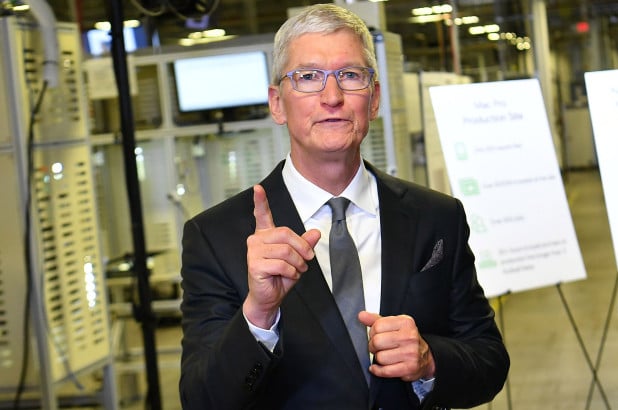
Earlier this year, officials in Beijing verbally encouraged regulatory agencies and local governments to curb technology transfers and equipment exports to India and Southeast Asia in what is a potential attempt to prevent companies from shifting manufacturing elsewhere, Bloomberg News recently reported.
Apple Chief Executive Officer Tim Cook who some claim should retire and hand over the reins to “someone new” has in the past praised the skill and expertise of Chinese assembly workers, highlighting it as the key reason — not just more favourable cost — for setting up the majority of Apple’s production in China.
finding the company’s all-important “next big thing” has proved elusive for Cook.
Apple under his management killed a much-anticipated car project last year, and its push into smart home technology is almost non-existent.
The company has also struggled to find commercial success with what it calls spatial computing.
Another sideline problem is that Sir Jony Ive, the hugely influential British designer responsible for the look of Apple’s most iconic and successful products, recently joined with OpenAI and is said to be developing a range of products to compete with Apple products.
Sam Altman head of OpenAI said he was “thrilled” to be partnering with the man he called the “greatest designer in the world”.
Sir Jony – who designed the iMac, iPod, iPhone, and iPad – will “assume deep design and creative responsibilities” across the company, the two firms said in their recent announcement.
Observers claim that the sudden exit of skilled Chinese Foxconn staff in India will slow down the training of local workforce as well as the transfer of manufacturing technology from China, likely raising production costs.
The change comes at a bad time for Apple, as it is preparing to ramp up production of the new iPhone 17 with its manufacturing partners in India.
Foxconn was in the process of building a new iPhone plant in southern India.
While Foxconn still makes most iPhones in China, it has gradually built large assembly operations in India in recent years with several products now sold in Australia manufactured in India.
India’s government was informed by Foxconn it was withdrawing its Chinese staff, but it wasn’t told the reasons for the move, according to a person familiar with the matter.
This is despite Apple trying to make a splash with its unveiling of Apple Intelligence last year, showing off something it described as “AI for the rest of us.”
The technology helps summarize text, create original images and promises to retrieve the most relevant data.
The hope was that Apple Intelligence would spur consumers to upgrade their devices, but the software so far has suffered a series of bugs and delays, and rivals such as Samsung have continued to race ahead of the big USA Company whose shares are on hold with many brokers.
Ironically, when I recently typed into Microsoft’s Copilot ‘How do I fix Apple’s problems’, it simply came up with a blank page.