AI Shopping Assistants Can’t Agree: ChatGPT and Google Clash on 62% of Product Recommendations
 Isabella Alexiou
02 Sep 2025
Isabella Alexiou
02 Sep 2025
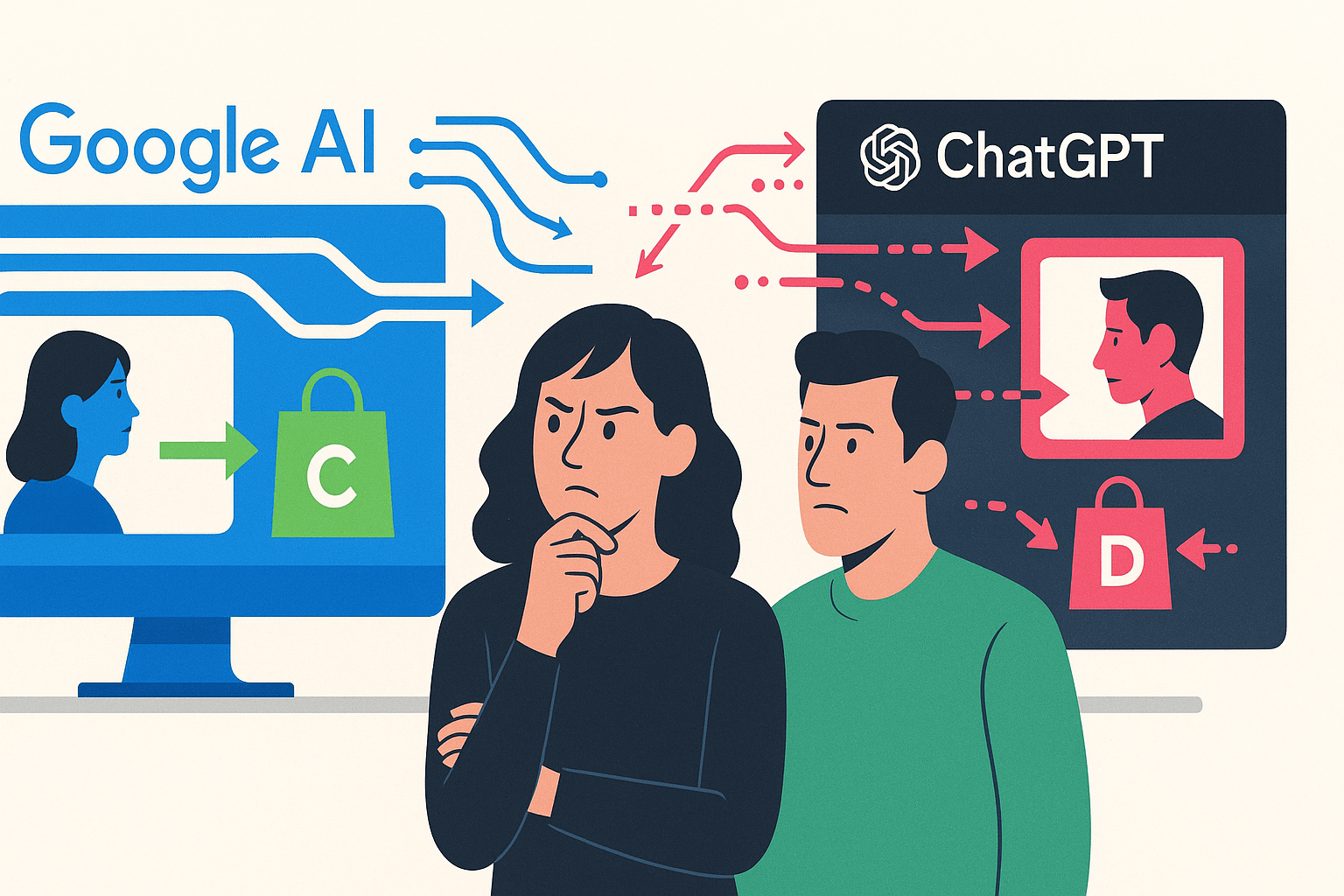
Australian shoppers relying on AI assistants for purchasing decisions may want to reconsider their approach, as new research shows significant inconsistencies between major AI platforms when it comes to brand recommendations.
A comprehensive analysis by BrightEdge, which examined tens of thousands of shopping-related queries across ChatGPT, Google’s AI Overviews, and Google’s AI Mode in Search, found that these platforms disagree on brand recommendations for nearly 62% of queries.
The research reveals a concerning lack of consensus among AI shopping assistants.
All three platforms agreed on the same brand recommendation in only 17% of cases, raising questions about the reliability of AI-powered shopping advice.
Key findings from the study include:
- 61.9% of queries returned conflicting brand recommendations depending on the platform
- Brands from all three platforms appeared in just 33.5% of queries
- In 4.6% of cases, none of the platforms recommended any brands at all
The disagreement is particularly pronounced in certain sectors.
Healthcare-related queries showed a 68.5% disagreement rate between platforms, followed by education at 62.1% and finance at 57.9%.
The research highlights distinct strategies employed by each AI platform.
ChatGPT tends to be more selective, recommending an average of 2.37 brands per query and providing no brand mentions in 43.4% of cases.

In contrast, Google AI Overview serves up 6.02 brands per query, more than twice ChatGPT’s offerings, while skipping brand mentions in only 9.1% of queries.
Google AI Mode takes the most conservative approach, suggesting just 1.59 brands per query.
For Australian consumers accustomed to comparing prices across retailers like JB Hi-Fi, Harvey Norman, or online marketplaces, this inconsistency means a single AI assistant may not provide a complete picture of available options.
While ChatGPT provides more focused recommendations, it offers limited transparency with only 0.73 citations per query on average.
Google’s AI tools take a different approach, with Google AI Mode providing approximately 14 citations for every six brand recommendations, offering significantly more transparency about the sources behind its suggestions.
The findings suggest that Australian consumers should approach AI shopping assistants with caution.
Rather than relying on a single platform, shoppers may need to cross-reference multiple AI tools to get a comprehensive view of their options, a time-consuming process that somewhat defeats the purpose of using AI for convenience.
As AI increasingly integrates into online shopping experiences, from adding items to Amazon carts to booking restaurant tables, these inconsistencies raise important questions about standardisation and reliability in AI-powered commerce.
Until a greater consensus emerges between platforms, the old-fashioned approach of conducting your own research may still be the most reliable option for making informed purchasing decisions.
For now, whether you’re shopping for electronics, comparing insurance policies, or researching healthcare products, treating AI recommendations as just one input among many, rather than definitive advice, appears to be the wisest approach.