Virgin Australia Rethinks Power Bank Policy After Mid-Air Fire
 Joe Gallop
23 Jul 2025
Joe Gallop
23 Jul 2025
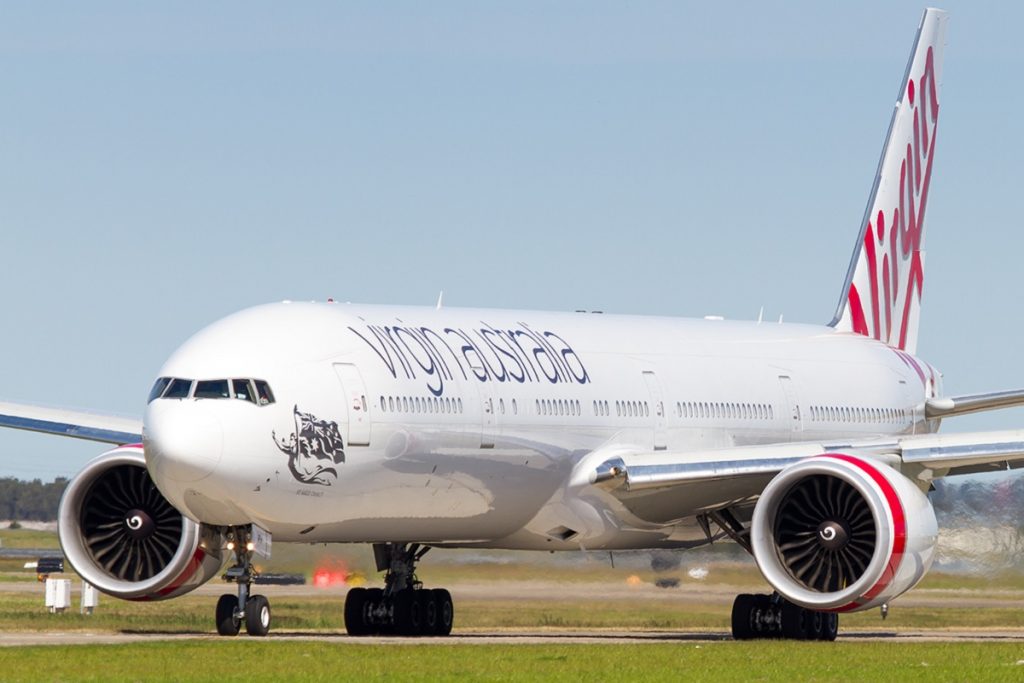
Virgin Australia says it’s reviewing its onboard battery policy following a fire on a flight from Sydney to Hobart, believed to have been sparked by a lithium-ion power bank stored in an overhead locker.
The incident occurred during the flight VA1528’s descent on Monday morning.
A “pan-pan” emergency call, used to indicate an urgent but not life-threatening situation, was issued by the pilot.
Cabin crew extinguished the fire before landing and the Boeing 737 touched down safely in Hobart.
Firefighters removed the affected bag upon arrival. Passengers described seeing smoke and a “small fireball” erupt from the locker.
Virgin currently allows lithium power packs as carry-on items but discourages in-flight use.
That policy is now under scrutiny, with the airline saying any updates will be guided by investigations from the Australian Transport Safety Bureau (ATSB) and Civil Aviation Safety Authority (CASA).

A Virgin Australia spokesperson said: “Safety is always our highest priority. We appreciate the swift and professional response of our flight and cabin crew, as well as the support of Airservices Australia firefighters.
“We have immediately initiated an investigation into the cause, which is ongoing in collaboration with the ATSB and the CASA.
“Any relevant findings from this investigation may inform permanent changes to our battery policy to ensure the safety of our guests and team members.”
The incident highlights growing concerns over lithium battery safety in air travel.
CASA recently reminded travellers to keep power banks in the cabin, not checked luggage, to allow crews to respond to any thermal events quickly.
Other airlines, including Singapore Airlines and South Korea’s Air Busan, have already banned the use of power banks in-flight or in overhead bins following similar fires.
The Virgin aircraft was assessed for damage and swapped out for a replacement, causing a five-hour delay. Normal operations at Hobart Airport were otherwise unaffected.
With modern travellers typically carrying multiple battery-powered devices, regulators and airlines are under increasing pressure to tighten safety rules.
Peter Carter, director of Carter Capner Law and one of Australia’s most experienced lawyers in the fields of aviation, said: “Perhaps the airlines need to ask more questions and do more when it comes to on board safety.
“Given this could have erupted into a dangerous blaze very quickly, aviation authorities should be putting this incident under the microscope.
“While this is a pretty rare circumstance I have no doubt ATSB and CASA will turn their attention to this incident and we should trust their assessment on what should happen going forward.”