Telstra Partners With SpaceX’s Starlink To Test Satellite-To-Mobile Technology
 Varun Godinho
10 Jan 2025
Varun Godinho
10 Jan 2025

Telstra has reached an agreement with SpaceX’s Starlink to test a Satellite-to-Mobile (direct-to-handset) text messaging capability for Australian conditions, ahead of a commercial launch.
The telco noted that its mobile network in the country covers 99.7% of the Australian population over an area of 3 million square kilometres, but the latest move will allow it to tap the country’s vast remote areas which are not covered by mobile
coverage, but instead can be reached by satellite technology.
While Telstra will initially look at starting with text message services using the satellite technology, it could eventually extend to voice and data access for phones being used in remote areas – as long as there is a clear line of sight to the sky and Starlink’s low earth orbiting satellite.
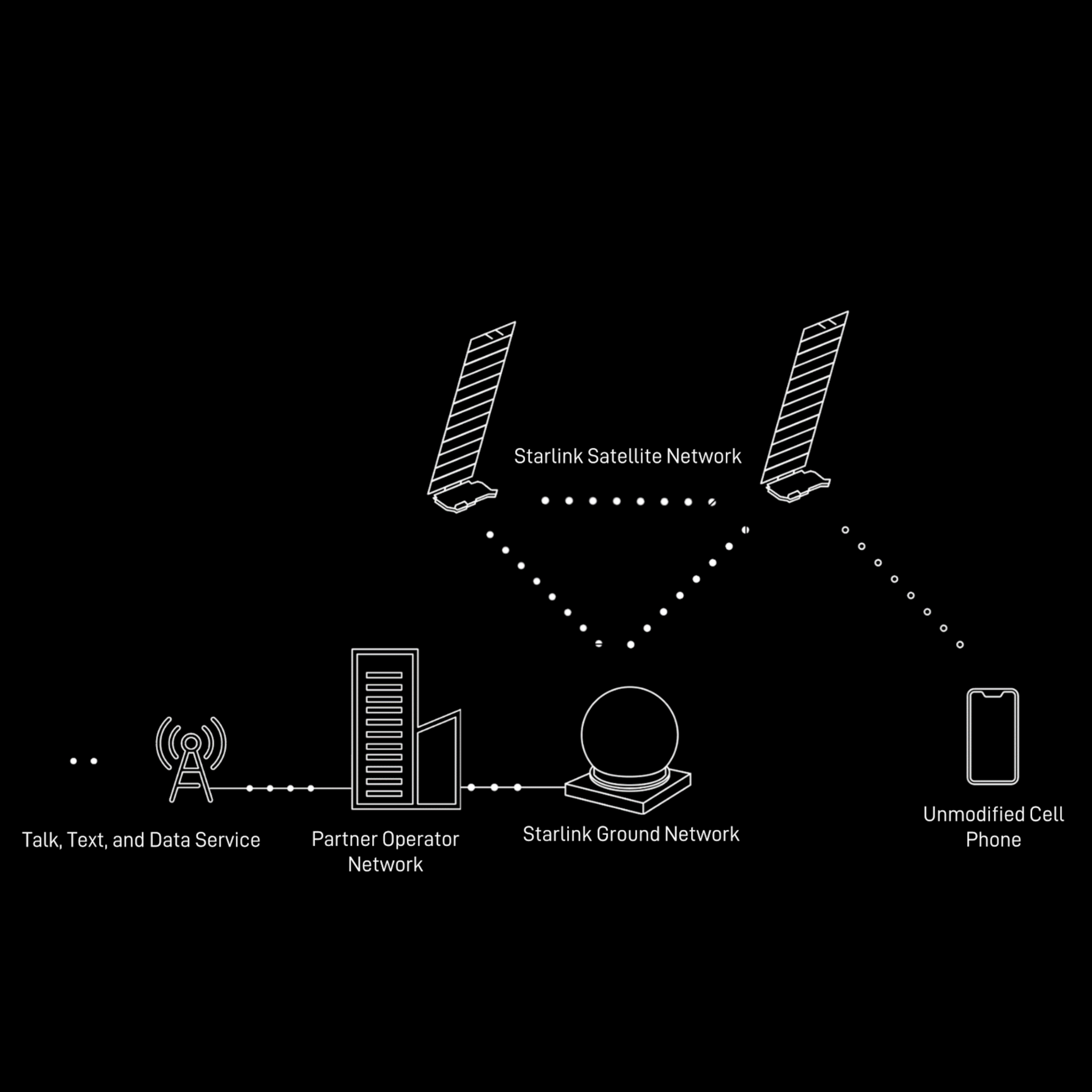
However, as Telstra emphasised, currently, satellite-to-mobile technology allows users to send a message only and the company stressed that this technology is a “’just-in-case’ connectivity layer that allows a person to make contact for help or let someone know they are ok when they are outside their own carrier’s mobile coverage footprint.”
Telstra’s agreement with Starlink comes several months after rival Optus announced its own direct-to-mobile deal with Starlink in 2023. Although Optus has initially claimed it would be starting with SMS in late 2024, with voice and data to follow in late 2025, it has so far missed the deadline to launch the satellite text-messaging service. “Optus is working with SpaceX to conduct local testing, and we’re re-evaluating our timelines to deliver this product with the best possible experience for customers,” said a spokesman for Optus, according to the Australian Financial Review.
Starlink reportedly launched its first set of satellites with direct-to-cell capabilities last year, and they are now regularly sending satellites equipped with modems. Its satellites generally operate at altitudes of 550km-1,200km above the earth.
“What makes this technology so interesting is that for many people, they won’t need to buy a specific compatible phone to send an SMS over Satellite-to-Mobile, as it will take advantage of technology already inside modern smartphones,” said Shalini Sehgal Telstra’s group executive of global networks and technology.

“Satellite-to-Mobile will complement our existing land-based mobile network offering basic connectivity where people have never had it before.” Telstra hasn’t yet offered firm dates as to when it will roll out its Satellite-to-Mobile text messaging service with Starlink.
Last year, Telstra also partnered with Lynk Global to test the use of its LEO satellites to offer direct-to-mobile services.
Telstra’s decision to now partner with Starlink would perhaps be bolstered by a recent report by the Australian Competition & Consumer Commission (ACCC) that examined satellite internet speeds in Australia and found Starlink vastly outperformed NBN Sky Muster in terms of delivering higher data transmission speeds and lower latency. The maximum speed for NBN Sky Muster was approximately 111 Mbps for downloads and 22 Mbps for uploads. In comparison, Starlink connections are capable of far higher speeds, with the report recording peak speeds of approximately 470 Mbps for downloads and 74 Mbps for uploads.
Apart from Telstra in Australia, Starlink has partnered with carriers such as One NZ in New Zealand, T-Mobile in the US, Kddi in Japan and Salt in Switzerland, among several other countries, to test similar mobile services.