EXCLUSIVE: Cash Strapped Seven Tipped To Be In Secret Move To Wind Back Crippling AFL Rights Bill
 David Richards
05 Aug 2026
David Richards
05 Aug 2026
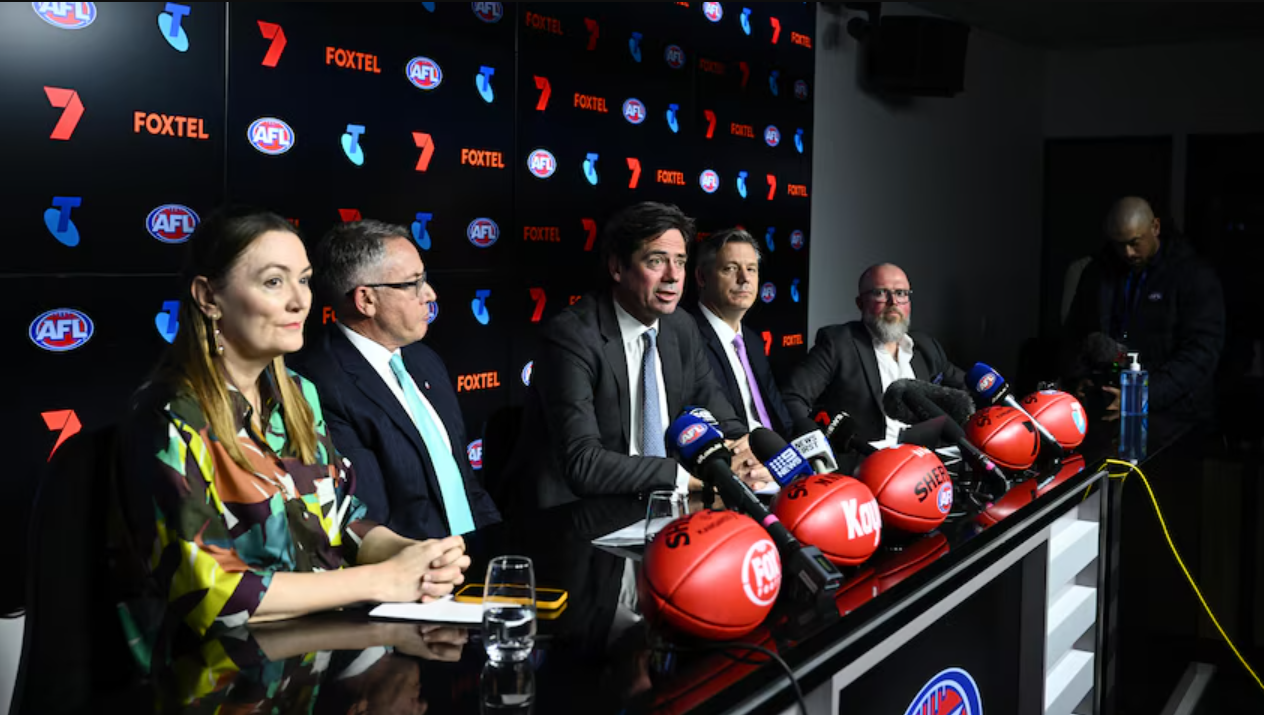
Seven West Media, now part of the Southern Cross Media Group following their recent merger, is quietly manoeuvring to renegotiate its multibillion dollar AFL broadcast deal, with insiders claiming the revenue strapped network has already held talks with consultants and the AFL about relief from rights fees it can no longer comfortably afford.
One senior executive, recently laid off in the Company’s brutal cost cutting drive, claims “Seven has already spoken to the AFL about their decline in revenues and the impact on their ability to pay fees to the AFL in 2027 to 2031”.
Another insider claims the network is “so cash strapped that management are looking for a release valve” from the high cost of airing AFL games on their free to air network.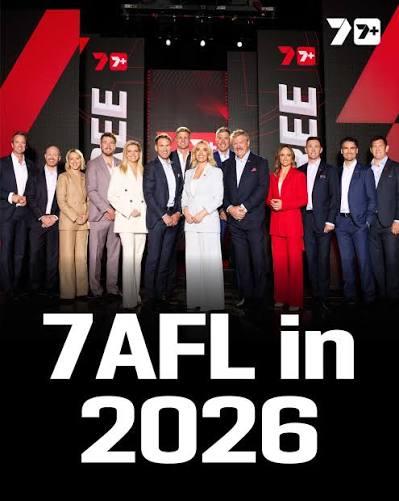
The Numbers Behind The Panic
The trigger is a set of accounts that make grim reading.
Seven has just posted its lowest first half EBITDA ever, $67m, down 27% ($25m) year on year, with revenue down 2.1% to $712m.
TV advertising revenue came in at $585m, a figure that now includes the acquired Southern Cross regional TV licences that made Seven the country’s biggest regional TV operator. Even with that added regional bulk, the trajectory is down.
Net profit after tax fell 42.3%, with EBITDA down 28.7% under the restated accounting methodology applied post takeover.
Since the merger completed in January 2026, between 250 and 300 roles have been slashed as part of a program targeting $145 million to $150 million in savings, after business units, particularly TV, where the AFL deal sits, deteriorated more than anticipated. The Company is even deploying in house developed AI tools to convert TV news content into web ready copy.
A Deal Struck In Better Times
The 2025 to 2031 AFL agreement is worth $4.5b over seven years to the AFL in cash and contra, with broadcast partners stumping up $643m a season, up from $473m a season under the prior arrangement. Analysts claim the cash component alone is worth over $4b.
The AFL refused to disclose the cash and contra split to ChannelNews when the deal was struck. Seven’s annual commitment is generally understood to be in the $210m to $230m range, though neither party has confirmed exact figures.
What is not in dispute is the escalation baked into the contract. Seven’s own numbers show a 14% step up on 2024 rights fees in 2025, with indexation delivering a 3.6% compound annual growth rate across the term, a structure insiders claim is now of huge concern to management as advertising revenue heads in the opposite direction.
On top of the rights cheque sits the cost of actually broadcasting the games, production, logistics and on air talent.

Locked Out Of The Growth Market
Seven’s deeper strategic problem is that it is committed to enormous fixed costs in a deal that hands the growth engine, streaming, to its rivals.
Under the carve up, Foxtel’s Kayo gets all nine matches per week of the home and away season live, 207 games a year, plus every final except the Grand Final, all pre season games and every AFLW game live. Foxtel also holds an exclusive “Super Saturday” in each of the first eight rounds in the Melbourne market.
Seven is committed to a minimum of 81 games per season, the same number as under the previous agreement, covering all Thursday and Friday night games in the first 15 rounds, marquee matches such as Anzac Day, plus finals, and it retains the Grand Final exclusively. What it does not have is AFL streaming rights, which sit with arch rival Kayo, while Nine Entertainment holds its own sports streaming play with Stan.
The Audience Has Moved, And Is Paying
The subscription market is where the money now is.
In Australia, sport and live event content accounted for up to one in three new streaming subscriptions in Q1 2026, with Kayo lifting its share of new subscribers to 10% on the back of the AFL and NRL season starts, Prime Video benefiting from T20 cricket and NBA coverage, and Netflix pulling audiences with live boxing, wrestling and concerts. Gen Z and Millennials accounted for more than half of these new subscriptions.
Australia now has 8.06 million streaming households, and satisfaction scores for sports platforms have jumped sharply, with Kayo’s NPS up 28 points year on year and Stan Sport up 21, showing genuine satisfaction, not mere tolerance, with paying for quality streamed sport such as Foxtel and Kayo’s 4K content.
Deloitte’s MECI 2025 report confirms paying is now the norm. 84% of Australians consider themselves sports fans, and 57% are willing to pay for sports content, up from 53% in 2024, at an average of $22 per month, up from $20.
The generational data is even starker. Gen Z households pay $101 monthly for subscriptions, the highest on record, with 98% holding at least one paid subscription versus 90% across all households, and willingness to pay for ad free content now sits at 42% of consumers.
More than 60% of Gen Z and millennials use CTV platforms to watch live sports, and Gen Z viewers subscribe to an average of three platforms versus two for the general population. US based CivicScience data shows Gen Z is by far the most likely generation to hold multiple streaming subscriptions specifically for sport, with 51% holding two or more, 10 points higher than the next group, and only 25% saying they are not interested in sports, the lowest of any adult generation.
The Squeeze
Put together, the numbers describe a company caught in a vice. An audience increasingly willing to pay for streamed sport it cannot monetise, rights costs on the balance sheet that escalate every year until 2031, and free to air advertising revenue in structural decline.
Something, insiders suggest, has to give.
The question now is whether the AFL, sitting on a record $4.5b deal, is prepared to give it.