TCL Takes Aim at Samsung and LG with Landmark Display Innovations as Australian Expansion Accelerates
 David Richards
07 May 2026
David Richards
07 May 2026
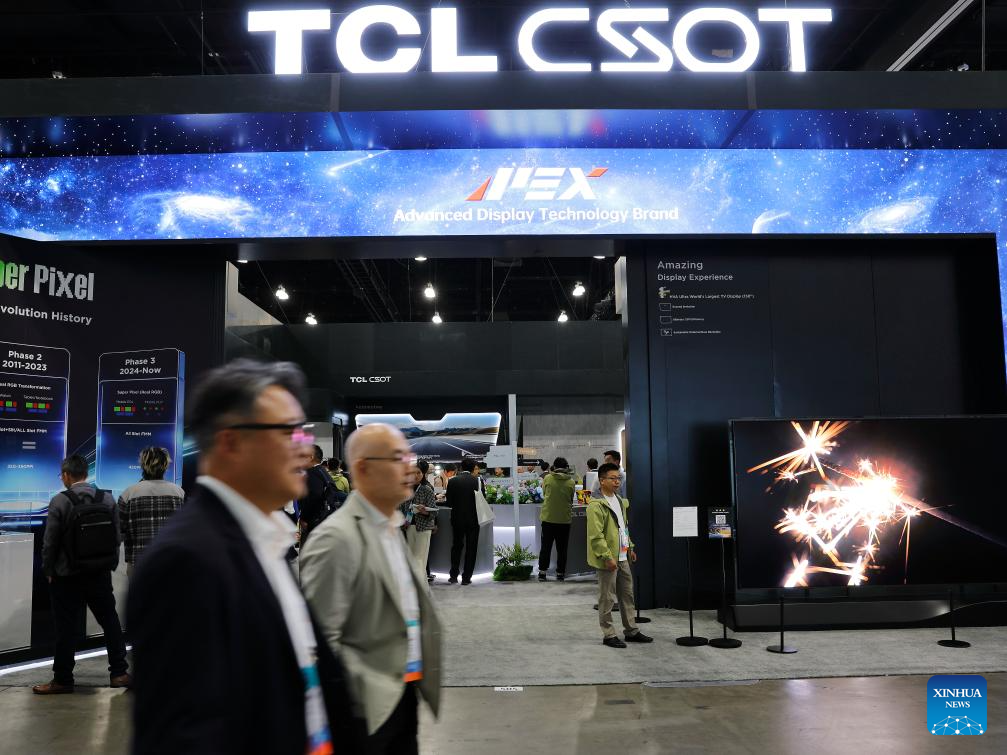
TCL CSOT is making its most ambitious push yet into the Australian market, expanding its management teams and product ranges as it sets its sights firmly on dethroning Samsung and the increasingly beleaguered LG Electronics in the local TV and appliance arena, in the display market alone TCL already holds a dominant global manufacturing position.
The Melbourne-based operation, which recently moved into new offices and has absorbed its Sydney-based mobile division, is backed by a parent company firing on all cylinders.
TCL Technology posted a staggering 188.8% surge in net profit in 2025, reaching US$643 million, driven by the robust expansion of its display business, with full-year operating revenue climbing 11.7% to US$26.19 billion.
That financial muscle is now being channelled into next-generation display technology that could reshape what Australian consumers expect from their screens. 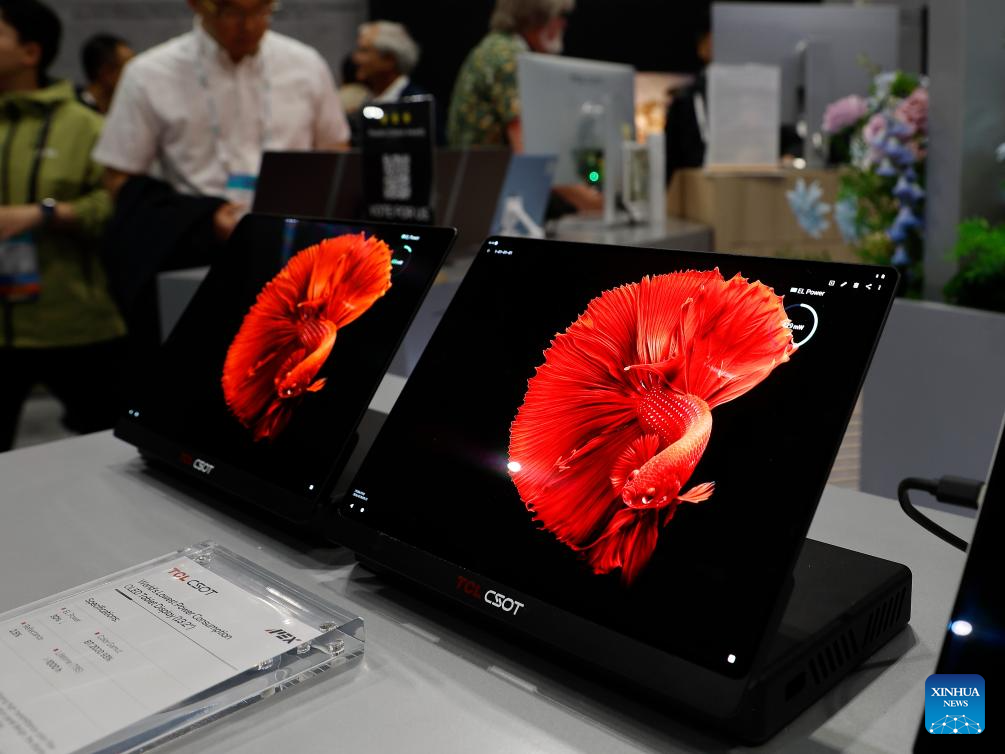
At SID Display Week 2026 in Los Angeles this week, TCL CSOT introduced its APEX Pixel framework, a unified path for pixel-level innovation spanning FMM OLED, Inkjet-printed OLED (IJP OLED), and LCD technologies, underscoring the company’s leadership in frontier display development.
Central to the announcement is Super Pixel technology, which redesigns pixel structure to deliver sharper imagery through an approximately 1.8% increase in sub-pixel density, reduces energy consumption by up to 25%, and supports refresh rates up to 40% higher than conventional displays.
“Pixel innovation is the cornerstone of display technology. APEX Pixel is driving coordinated breakthroughs across LCD, OLED, and beyond, infusing every pixel with comfort, eye health, sustainability, and a vision for the future,” said Xiaolin Yan, CTO of TCL Technology and TCL CSOT. “It also continues to push the boundaries of next-generation technologies such as Micro LED, while enabling extraordinary experiences for the AI era through XR displays.”
The Super Pixel architecture debuts across three cutting-edge 6.9-inch mobile displays. The world’s first Super Pixel High-Clarity Mobile Display delivers an ultra-high 2608×1200 resolution at 420PPI, with ultra-narrow bezels of just 0.5mm at the top and 0.8mm on the sides for a deeply immersive, edge-to-edge experience. A low-power companion model combines that same 420PPI density with an 8T LTPO architecture, cutting IC power consumption by 10% and SoC consumption by 25% compared to conventional solutions. A third display, aimed squarely at mobile gaming, achieves a 165Hz refresh rate with intelligent 60,165Hz adaptive switching via a 7T LTPS architecture.
For the living room, TCL CSOT showcased the world’s largest HVA Ultra TV display at 130 inches with an ultra-slim 29.8mm profile, alongside the world’s highest image quality WHVA Ultra LCD TV display at 85 inches, which employs a native RGBC four-colour pixel arrangement for more lifelike and natural colour reproduction.

The company also demonstrated the world’s first 28-inch foldable and portable IJP OLED monitor, a tri-fold design that expands from a compact 16-inch form into an ultra-wide display, with an unfolded thickness of just 4.48mm and a 1.8mm folding radius, incorporating a large waterdrop hinge and integrated rear stand.
Underpinning it all is a manufacturing breakthrough. TCL CSOT has broken ground on the world’s first 8.6-generation IJP OLED production line (t8) in Guangzhou, advancing the commercialisation of next-generation display technologies. The line reduces reliance on complex vacuum procedures, adapts to different panel sizes through scalable printhead configurations, and uses a Real Stripe RGB pixel arrangement for superior colour accuracy.
TCL’s manufacturing dominance has already reshaped the competitive landscape. The company completed the acquisition of LG Display’s Guangzhou LCD factory (t11), rapidly achieving mass production of monitor products, meaning LG-branded LCD TVs are now effectively manufactured by TCL. TCL CSOT also holds the number one global position in market share for panels 98 inches and above, sits second globally in overall TV panel shipments, and leads the world in gaming monitor panels.
For Australian shoppers, that technological leadership is already arriving at retail. The flagship X11L, TCL’s first SQD-Mini LED TV, is confirmed for the Australian market, with the QD Mini LED C8K range already available at major retailers including Harvey Norman and JB Hi-Fi. TCL engineers have also signalled that SQD-Mini LED technology will trickle down into the C8 and C7 ranges, meaning it won’t remain a flagship-only feature for long.
With a war chest bolstered by record profits, a growing local team, and display innovations that are arriving at stores now, TCL’s challenge to Samsung, and its quiet dismantling of LG’s manufacturing base, is no longer a threat on the horizon. It’s already well underway.