Marketplaces Surge As Brands Switch After Losing Out To Housebrands
 David Richards
11 Aug 2026
David Richards
11 Aug 2026

Australia’s online marketplace boom is reshaping the battle between retailers, distributors and major brands, as billions of dollars in sales shift towards platforms that give suppliers an alternative route to consumers after being dumped by retailers moving to housebrands.
Australians spent $82.6 billion online in 2025, up 14% year-on-year, according to Australia Post’s 2026 eCommerce Report, with spending through pure online marketplaces reaching $18.9 billion.
Online purchases now account for 24% of retail transactions, while marketplaces have emerged as the biggest category in Australian eCommerce.
The shift is creating a new challenge for traditional retailers pursuing private-label and house-brand strategies designed to reduce their reliance on established suppliers and improve margins.
Major brands that lose shelf space at retailers increasingly have another route to market: marketplaces.

That dynamic is potentially significant for Wesfarmers-owned Officeworks, which is accelerating its push into house brands and lower-cost products under chief executive John Gualtieri, the former Kmart and Target boss.
Officeworks is expanding its J.Burrows private-label range while Wesfarmers is also extending its Anko brand beyond Kmart and Target as part of a broader strategy to increase its ownership of the products sold through its retail businesses.
The strategy potentially puts established brands and distributors under pressure inside traditional retail stores, but the rapid growth of marketplaces means being removed from a retailer’s core range no longer necessarily means losing access to its customers.
Amazon, JB Hi-Fi, The Good Guys, Kogan and other marketplace operators are increasingly providing brands and distributors with alternative access to Australian shoppers.
It comes as the Australian marketplace sector consolidates following the demise of Catch and MyDeal, leaving a smaller number of increasingly powerful platforms competing for consumers and suppliers.
Amazon has emerged as the dominant force.
Amazon Australia reported revenue of $11.9 billion in its latest reported year, up almost 50% from $8 billion, although the figure includes businesses beyond direct retail sales.
Roy Morgan estimates Amazon generated $7.1 billion in Australian retail sales in 2025, up from $5.9 billion a year earlier. Amazon, Temu and Shein collectively generated close to $12 billion in Australian sales, according to the researcher, more than $2 billion higher than in 2024.
The change is also altering how products reach traditional retailers.
JB Hi-Fi Group launched marketplaces across JB Hi-Fi and The Good Guys as a curated “extended aisle”, allowing the businesses to offer products beyond those carried in their core ranges.
Chief executive Nick Wells has indicated the marketplace can also be used to test products that have not initially been accepted by the group’s buyers.
That creates a potentially significant new pathway for suppliers. Instead of convincing a retailer to commit shelf space and inventory to an unproven product, brands can establish demand through the marketplace before making a case for inclusion in the retailer’s core range.
JB Hi-Fi Group has identified expansion of its marketplace offering as part of its FY26 multichannel strategy.
Kogan provides another indication of how rapidly the economics of online retail are changing.
The online retailer reported gross sales of $875.6 million for the 10 months to April 2026, up 13.2%, while revenue increased 6%.
The widening gap partly reflects Kogan’s increasing marketplace mix. Unlike traditional retail sales, where the retailer records the full selling price as revenue, marketplace transactions generally generate commissions and fees for the platform.
Kogan Marketplace revenue increased 31.6% in the first half of FY26, while its platform-based businesses — including marketplaces, loyalty, advertising and verticals — now generate 65% of group gross profit.
The result demonstrates the attraction of marketplaces to retailers: they can dramatically expand their ranges without taking the same inventory risk associated with traditional wholesale buying.
For brands and distributors, however, the shift is more complicated.
Retailers including BIG W, Bunnings and Woolworths have incorporated third-party sellers into their digital businesses, blurring the distinction between a retailer’s own inventory and products sold by outside merchants.
Australia Post found 34% of Australians were unaware that some major retail websites operated as marketplaces.
That means a brand dropped from a retailer’s traditional range can potentially continue competing for the same customer online — either through another marketplace or, depending on the retailer, through third-party marketplace listings.
It also creates challenges around pricing, unauthorised sellers, warranty support and control of how brands are represented online.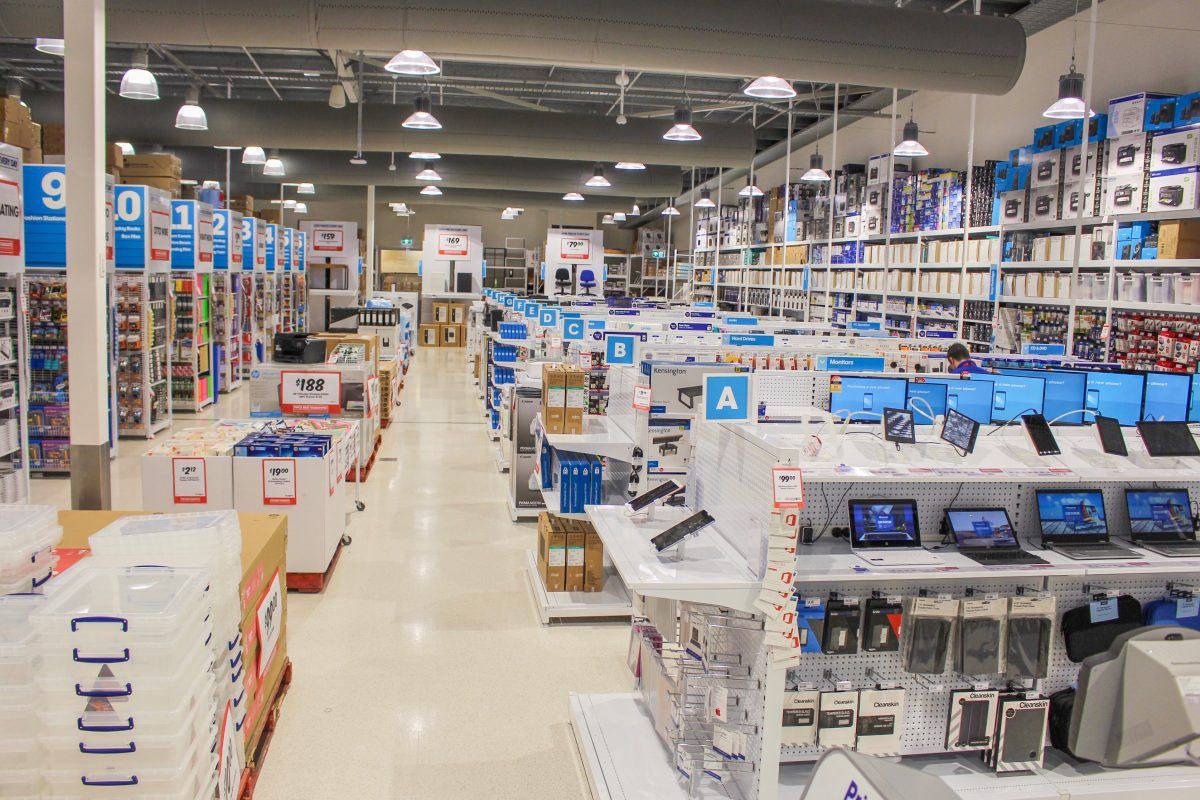
The arrival of Temu has intensified the pressure.
The Chinese-founded platform generated about $2.6 billion in Australian sales last financial year and has been used by 47% of Australians. It opened its platform to Australian sellers in March 2025, giving local suppliers and distributors access to another rapidly growing channel.
The marketplace model is consequently changing the economics across the supply chain.
Traditional retailers make money from the margin between wholesale and retail prices while carrying inventory risk. Marketplace operators can instead collect commissions, seller fees and increasingly valuable retail-media revenue without owning the products being sold.
For distributors, that threatens parts of the traditional model built around range curation, inventory, retailer relationships and trade terms.
For brands, it creates an incentive to pursue hybrid strategies combining conventional wholesale distribution, direct sales and third-party marketplaces.
There are limits to the shift.
Big-ticket appliances remain more resistant to marketplaces because delivery, installation, servicing and warranty requirements are substantially more complex than for smaller consumer-electronics products. Major retailers also commonly exclude marketplace sellers from price-match guarantees.
That helps explain why marketplace ranges in appliance retail remain weighted towards smaller appliances, accessories and products that can be shipped through conventional parcel networks.
But the broader direction of Australian retail is becoming difficult to ignore.
Retailers are simultaneously trying to increase private-label penetration while expanding marketplaces capable of carrying thousands of third-party brands.
That creates an unusual tension.
The house-brand strategy gives retailers greater control over product, pricing and margin. The marketplace strategy does almost the opposite, opening their digital shelves to outside suppliers in return for commissions and advertising revenue.
Officeworks is now testing how those competing forces play out.
Gualtieri was appointed to lead the business after previously running Kmart and Target, where Wesfarmers built one of Australia’s most extensive private-label retail models.
Officeworks is now undergoing its own strategic overhaul, including changes to its buying operation and a greater emphasis on owned brands.
The retailer is expanding J.Burrows across categories while Wesfarmers is also extending Anko into new areas, including consumer electronics.
The changes follow softer growth in some Officeworks categories and an earlier expansion into areas including televisions and consumer electronics that put the retailer into more direct competition with JB Hi-Fi and other specialist operators.
But the market confronting Officeworks today is different from the one in which Kmart built its private-label strategy.
Online retail is growing at double-digit rates, marketplaces are taking an increasing share of that spending and brands have more ways to reach consumers without winning a place on a traditional retailer’s shelf.
For retailers betting heavily on house brands, the question is no longer simply whether they can replace branded products in their stores.
It is whether they can stop customers finding those brands somewhere else.