Struggling Sonos Takes Another Punt On AI Headphones As Ace Ultra Surfaces In FCC Filing
 David Richards
12 Aug 2026
David Richards
12 Aug 2026
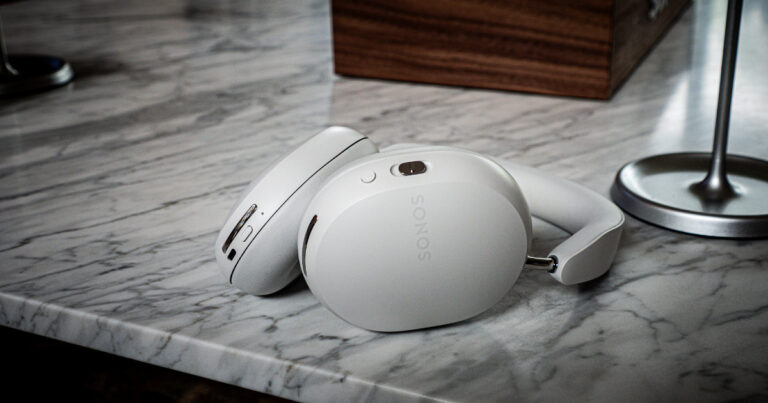
Desperate for a product that actually drives sales, Sonos is having another crack at the premium headphone market, with a US FCC certification filing revealing a new model branded the Ace Ultra, despite the failure of the original Ace which sold just 200,000 units against an internal target of one million.
The filing, lodged on 10 August under model number RM052 with internal references to S52a, confirms the new headphones will be offered in five colours, Greige, Shadow Black, Agave, Blush and Sand, a sharp departure from the black and white only original, with the branding lifted straight out of Samsung’s “Ultra” playbook.
The timing could not be worse. Sonos shares fell 17.8% after the Company’s latest results, not because of the numbers delivered, revenue was actually up 9% to US$375 million, but because investors baulked at forward guidance, with management flagging memory cost inflation creating a US$35 million headwind in Q4 and GAAP gross margin expected to collapse to 39% to 41%, a 10-point drop from the 50.4% delivered in Q3.
Their latest headphone news is barely hours old and the stock story is still dominated by the margin guidance issues flagged late last month.
What The Filing Reveals
The certification documents include testing for Bluetooth as well as 2.4GHz and 5GHz Wi-Fi, and this is where the story gets interesting for Sonos owners.
The original Ace used Wi-Fi only for TV Audio Swap, a direct peer-to-peer link to compatible Sonos soundbars.
The new filing points to full infrastructure Wi-Fi, the same mode used by the Roam, Move and Era speakers, meaning the Ace Ultra could join the home network, receive an IP address, register with the Sonos discovery protocol and appear as a genuine room or zone in a multi-room system.
That was the single biggest failure of the original product, and according to Sonos engineers in community discussions, the Qualcomm QCC5181 chip inside the first Ace simply could not handle infrastructure Wi-Fi, the Sonos zone protocol, active noise cancellation and Bluetooth decoding simultaneously on battery power. The new filing, reviewed by Lowpass and What Hi-Fi, suggests the Ace Ultra resolves this with a more powerful processor, with the documents also hinting at onboard voice support.
If confirmed at launch, Ace Ultra wearers would be able to speak a command and control audio in any room of the house, something no Sony, Bose or Apple headphone can do.
Notably, Sonos has not officially confirmed the product or the Ace Ultra name, and the Company did not respond to requests for comment overnight.
AI Punt As Rivals Circle
Sonos CEO Tom Conrad has already disclosed a product launch event set down for September, while talking up “conversational computing” and “predictive intelligence” in the home, claiming Sonos has spent 20 years building “the operating environment for AI in the home” across sound, form, systemness and intelligence.
The FCC filing is the first product in a new hardware wave designed to push the Company deeper into AI, alongside the Amp Multi installer product due to ship shortly.
The move comes as Sony, Bose, Denon and JBL all move to launch new premium headphone models, with Sonos walking straight back into the same Sony, Bose and Apple fight that mauled the original Ace, this time with memory costs inflating build costs at exactly the wrong moment.
The full-year memory headwind is now estimated at US$58 million, with management conceding the pressure will persist into fiscal 2027 and gross margins could settle around 40%. Inventory is up 37% year-on-year to US$158 million, driven by higher memory costs and new product launches, and long-serving CFO Saori Casey has announced her retirement, adding leadership transition risk just as the Company attempts its biggest product pivot in years.
The one bright spot for local observers, APAC revenue surged 27% year-on-year, the fastest growing region in the Sonos portfolio, which makes the Australian launch and pricing of the Ace Ultra more strategically important than the original ever was.
The Original Ace Was A Dud At A Premium Price
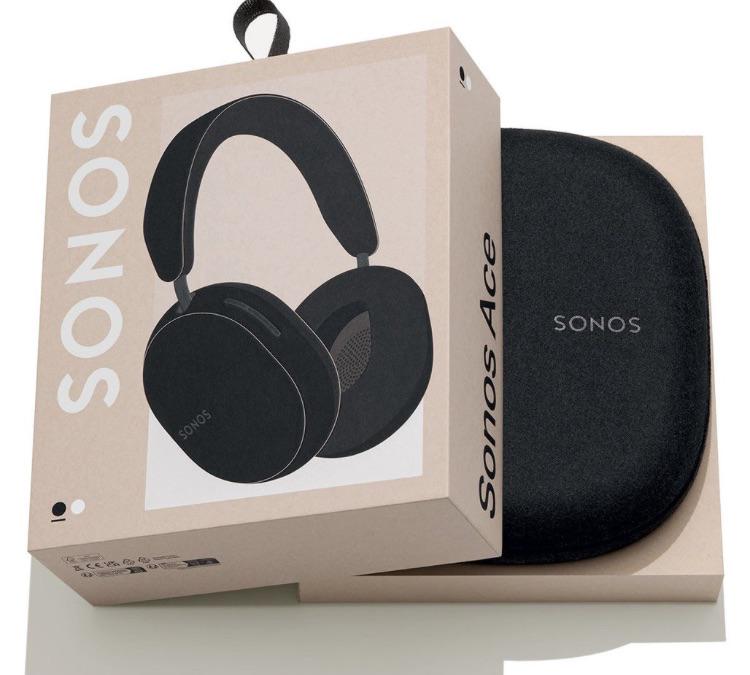
When the original Ace arrived in 2024 at AU$699, there was plenty to like. Build quality was excellent, they were comfortable, battery life was competitive and tonal balance made them a legitimate alternative to premium models from Sony, Bose, Sennheiser, Apple and Bowers & Wilkins.
The problem was they didn’t behave like a Sonos product.
Consumers reasonably expected headphones from the company that helped define wireless multiroom audio to work like another Sonos endpoint. They didn’t.
The Ace could not appear as another room in a Sonos system, nor could users routinely send music from an existing Sonos speaker directly to their headphones. TV Audio Swap remains one of the Ace’s best features, but the broader integration Sonos owners expected simply wasn’t there, claim analysts.
Even Conrad has admitted the original arrived without enough whole-home integration or differentiation in a crowded category.
The result was just 200,000 units sold against an internal target of one million, surplus stock discounted out in an effort to recover cash, and a product that never closed the perceived-value gap on Sony’s WH-1000XM6 and Bose’s QC Ultra 2nd Gen, both of which routinely discount below AU$600 in the Australian market.
Trust Takes Longer To Reinstall Than Software
The original Ace also had the misfortune of launching into the teeth of consumer fury over the Company’s disastrous 2024 app upgrade, which stripped functionality and turned expensive audio systems into involuntary beta tests, a debacle that ultimately cost the previous CEO his job.
Sonos has spent the past two years rebuilding navigation, restoring functionality and trying to convince existing customers that software updates will no longer break their systems. The redesigned app introduced in 2026 is a big improvement, but trust takes longer to reinstall than software, and the Ace Ultra will be the first major hardware release judged entirely on whether that trust has been restored.
Pricing The Story To Watch In September
Local pricing on the Ace Ultra will be the story to watch when the product breaks cover in September, especially if Sony and Bose launch new models at the same time.
The original launched here at AU$699 into a market where the XM6 and QC Ultra routinely sell below AU$600 on promotion. If memory cost inflation pushes the Ultra towards or beyond the AU$750 mark, Sonos will be asking Australian consumers to pay a premium over Sony and Bose for an ecosystem story that burned early adopters the first time round.
The big punt this time is that AI will be seen as a genuine benefit rather than a gimmick. If the Ace Ultra can deliver conversational computing, the feature needs to solve actual problems. Voice control that understands natural requests across rooms could be genuinely useful. AI that recommends music you didn’t ask for, or adds another assistant between the user and the play button, is considerably less exciting.
Nobody shopping for premium headphones is lying awake wondering why their cans lack artificial intelligence. They want audio performance.