Sonos Posts Profit Bounce Under New CEO, but Analysts Warn the Turnaround May Be Short-Lived
 David Richards
04 Feb 2026
David Richards
04 Feb 2026

Sonos may be back in the black, but analysts aren’t convinced the recovery will last.
The US-based audio company has delivered a sharply improved quarterly profit following a change at the top and aggressive cost-cutting, yet revenue growth remains elusive and analysts are questioning the long-term quality of the business.
For the quarter, Sonos reported revenue of US$545.7 million, down slightly from US$550.8 million a year earlier, despite the period covering the critical Black Friday and Christmas sales window. Gross margin improved materially to 46.5%, up from 43.8%, driven largely by deep cuts to operating expenses rather than renewed consumer demand.
Asia Pacific — where Australia is the company’s largest market — continued to slide, with regional revenue falling to $27.33 million from $28.6 million in the same period last year.
The headline number that impressed investors was profit.
Sonos posted non-GAAP earnings of $0.93 per share, beating analyst expectations by nearly 37%, while adjusted EBITDA surged to $132.1 million, well ahead of forecasts.
But the earnings beat came at a cost.
Marketing spend was slashed from $86.6 million to $59.4 million, with retailer support also cut — a move that has unsettled long-time channel partners, particularly in Australia, where Sonos built its brand over two decades through bricks-and-mortar retail.
Operating margin jumped to 18.4%, more than double last year’s result, while free cash flow margin rose to 28.8%. Sonos now carries a market capitalisation of $1.78 billion.
“Fiscal 2026 is off to a good start for Sonos as we make progress toward a return to growth,” said CEO Tom Conrad(Seenbelow).
Conrad, appointed permanently in July 2025 after serving as interim chief executive, was brought in following the sacking of former CEO Patrick Spence, whose tenure was marked by a widely criticised app overhaul and ill-fated product decisions — including a premium streaming box — that nearly derailed the company.
Since taking over, Conrad has pivoted Sonos toward direct-to-consumer sales and monetising its existing customer base, a strategy that is already straining relationships with traditional retailers who once championed the brand.
Despite the improved margins, analysts remain sceptical.
“Even a bad business can shine for one or two quarters, but a top-tier one grows for years,” one analyst said. “Sonos hasn’t shown that. Trailing twelve-month revenue of $1.44 billion is barely higher than it was five years ago. That’s not a great result — it’s a warning sign.”
StockStory echoed those concerns, noting that Sonos’s revenue has declined at an average rate of 5.1% annually over the past two years, even as consumer discretionary peers rebounded.

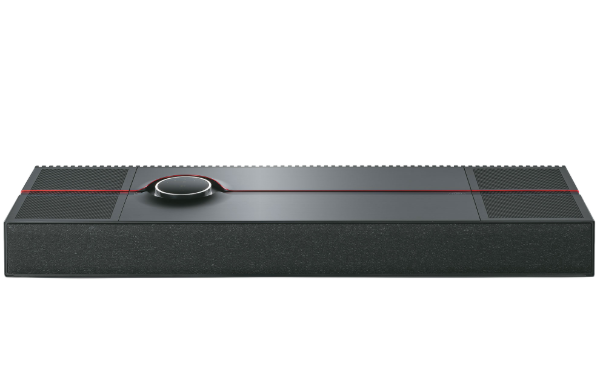
Sonos Era 100 Pro.
The company’s core speakers business — accounting for more than 84% of revenue — continues to shrink, averaging 1.7% annual declines over the past two years. Growth has been confined to smaller ancillary components, which rose 7.9%, but not nearly enough to offset weakness in the main category.
Sonos is now banking on an incoming wave of new products to drive 5.2% revenue growth over the next 12 months, but analysts note that margins have improved largely through cost reduction rather than sustainable demand.
Worse, competition is about to intensify.
Samsung-owned Harman, fresh from its acquisition of Sound United, is preparing to launch a major new range of Denon speakers and soundbars, with JB Hi-Fi set as a key retail partner — putting direct pressure on Sonos in its most important channels.
The verdict from the market is clear: Sonos has stabilised, but it hasn’t yet proved it can grow. And after years of missteps, investors and retailers alike are waiting to see whether this rebound is the start of a real comeback — or just another short-lived bounce.