Samsung’s IFA Split Signals a Smaller, Smarter Appliance Future
 David Richards
03 Sep 2026
David Richards
03 Sep 2026
Europe is already embracing compact, integrated and energy-efficient appliances. Despite Samsung’s claim that Australia “has bigger houses”, local housing data suggests the same transformation is coming here.
Last night at an event attended by ChannelNews and ApplianceNews, Samsung has broken with more than a decade of IFA tradition, abandoning its long-standing exhibition space at Messe Berlin’s CityCube in favour of a smaller, standalone event in central Berlin.
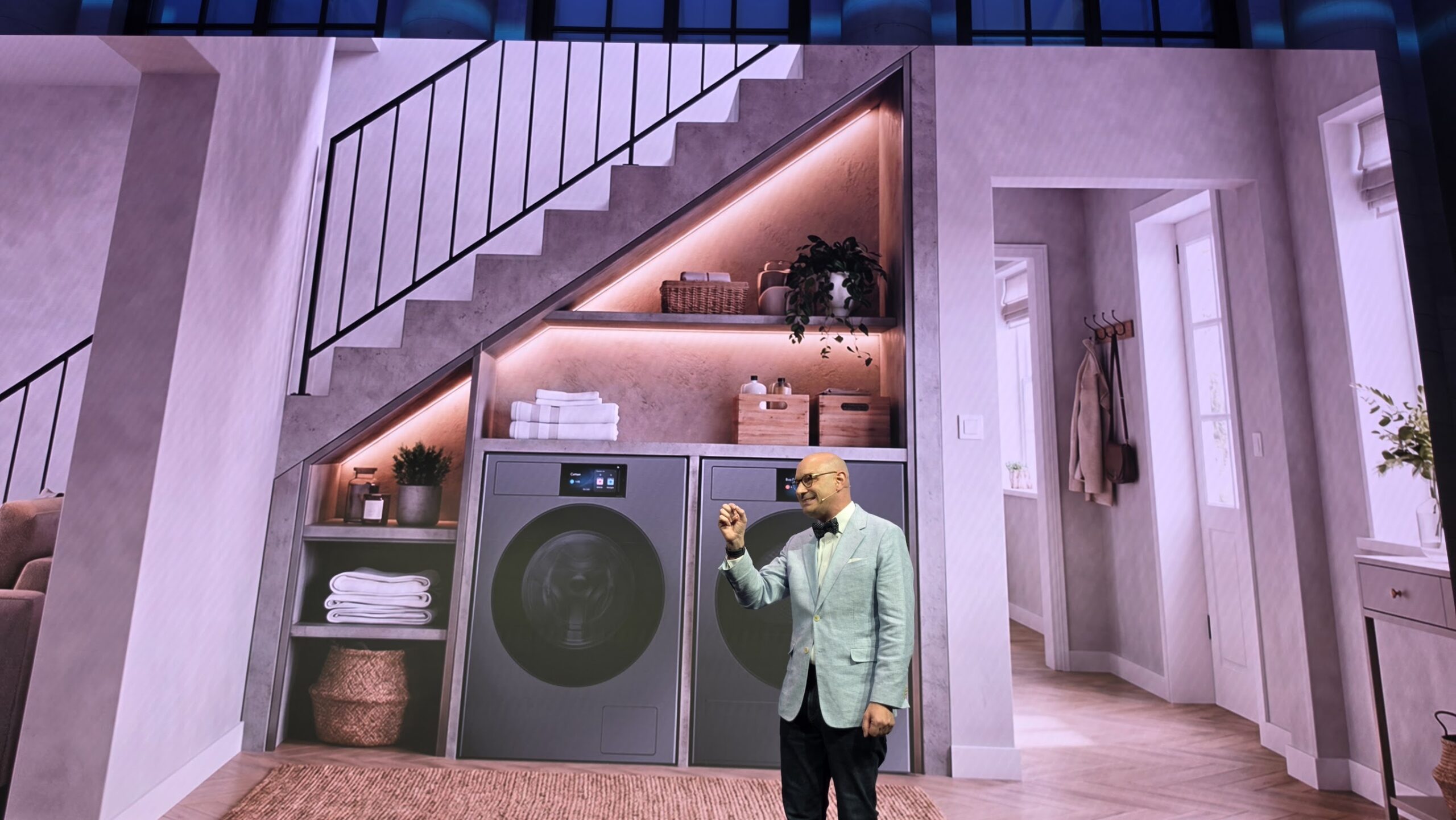
The South Korean technology giant used the Humboldt Carré conference venue to showcase its latest Bespoke appliances, artificial intelligence capabilities and integrated kitchen designs two days before IFA 2026 officially opened.
It is the first time Samsung has exhibited away from the Messe Berlin grounds since it began attending IFA in 1991, apart from the scaled-down 2020 event. Samsung retains a presence at the exhibition centre as the main sponsor of the IFA Creator Hub.
The move follows a similar strategy at CES 2026, where Samsung shifted its main showcase from the Las Vegas Convention Center to the Wynn.
Samsung’s decision raises questions about the future of major technology exhibitions, but the products shown in Berlin also point to a potentially significant change in the Australian appliance market.
Speaking at the event, Samsung Europe chief marketing officer and vice-president Benjamin Braun I questioned him, about the company’s response to growing Chinese competition and the increasing importance of smaller appliance size and energy efficiency.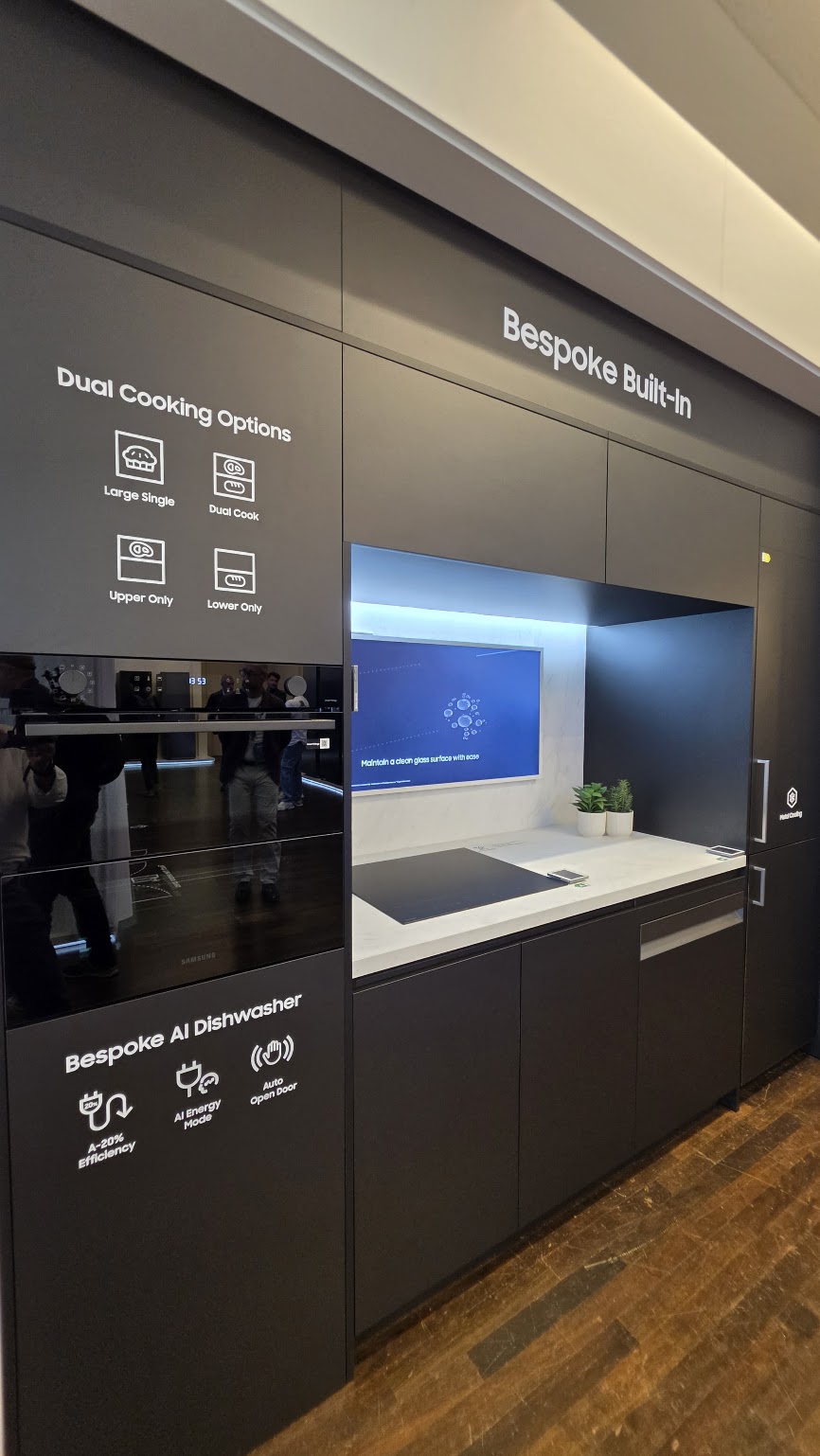
His immediate response was: “But Australia has bigger houses.”
Historically, that has been true. Australian appliance buyers have traditionally had more room than their European counterparts for large refrigerators, top-loading washing machines and oversized laundry appliances.
But the Australian market is changing.
Federal and state governments are pushing higher-density development as they attempt to address the housing shortage. More Australians are being directed towards apartments, townhouses and smaller housing estates, the same types of homes that have shaped the European appliance market.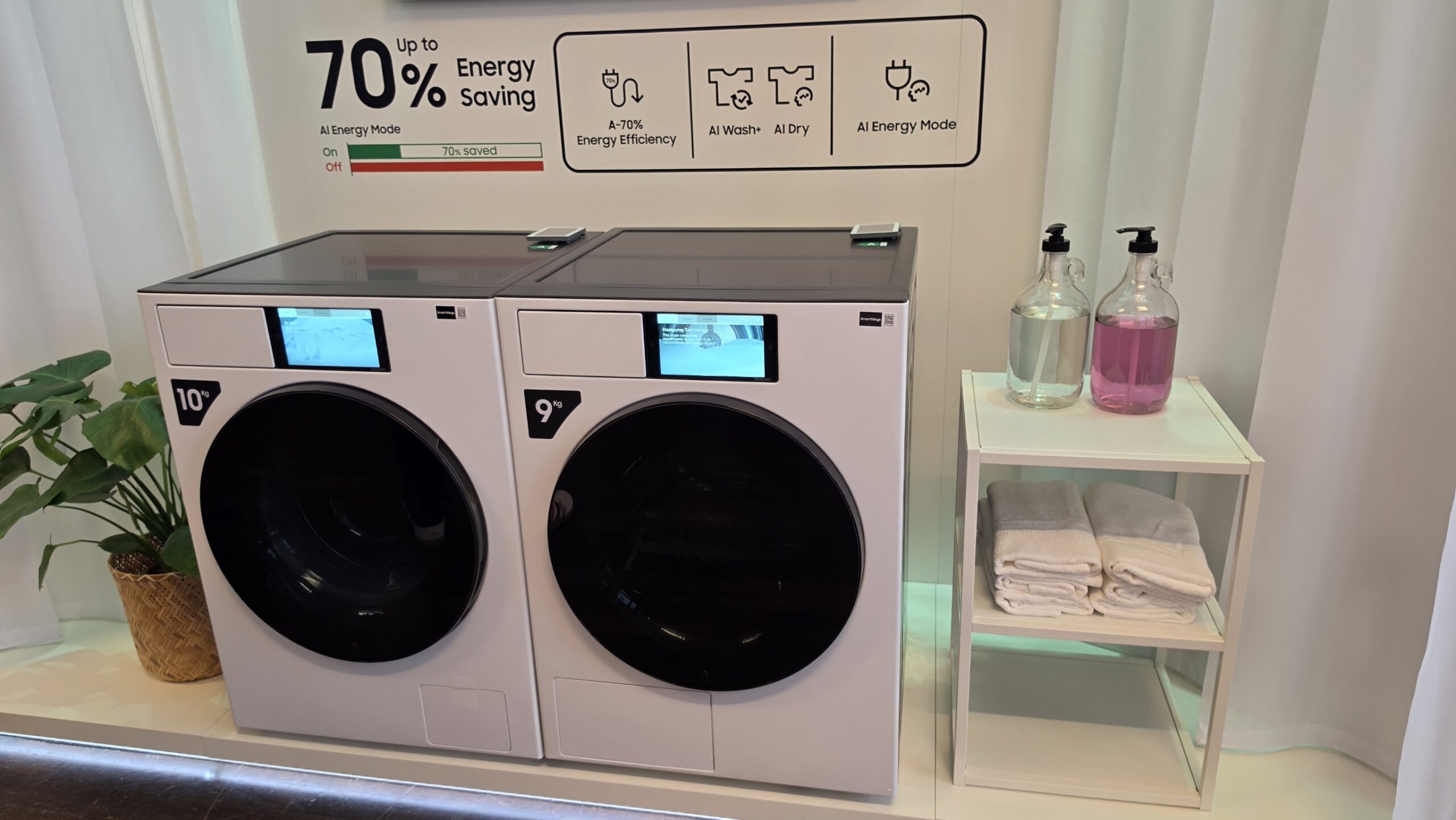
Australian Bureau of Statistics data puts the average floor area of a new detached house at 232.3 square metres, compared with 137 square metres for “other residential” dwellings, a category that includes apartments and townhouses.
The growing proportion of these smaller homes is reducing the average size of Australian dwellings. ABS projections also suggest Australia could have between 3 million and 3.5 million lone-person households by 2041, up from 2.3 million in 2016.
These trends challenge the assumption that Australian consumers will continue to demand US-style, oversized appliances.
Samsung’s European product strategy may therefore be more relevant to Australia than the company acknowledges.
A standout feature of its Berlin showcase was the expansion of appliances designed to sit flush with cabinetry. Samsung is removing protruding control panels and curved doors in favour of uniform surfaces intended to blend into contemporary kitchens and utility spaces.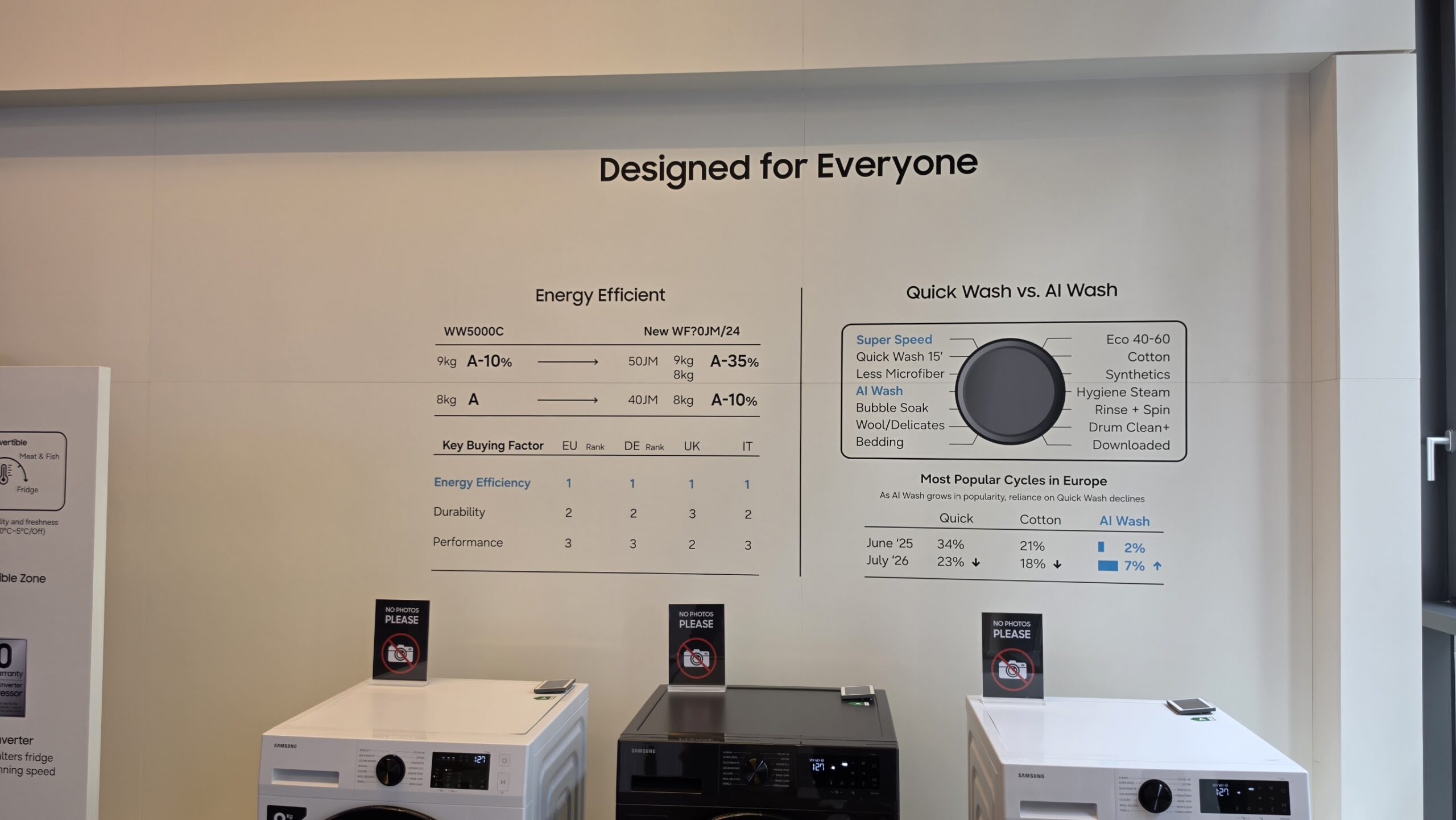
It is an “invisible appliance” strategy carried over from the Milan design fair: appliances remain connected and increasingly intelligent, but visually become part of the furniture.
Samsung is extending this flat-design approach across its mainstream and mid-range 24-inch front-load washing machines. The development-stage models displayed in Berlin feature wide-opening doors, integrated touch controls and automatic detergent dispensers incorporated into the flat façade.
Final specifications, pricing and commercial availability have not been announced.
The concept is particularly relevant to apartments and townhouses, where appliances increasingly need to fit within standard cabinetry rather than occupy a large standalone laundry.
Samsung also showed how it plans to increase appliance capacity without increasing external dimensions.
Its new 13kg Bespoke AI Washer uses the company’s SpaceMax engineering to fit a larger drum into a standard 600mm-deep chassis. The design is intended to accommodate bulky items such as bedding while retaining dimensions suited to a European kitchen or compact laundry.
Energy efficiency was another central theme.
Samsung expanded its Bespoke AI Washer range with new 10kg and 13kg models. The company claims the 10kg version achieves an Energy Efficiency Index of 15.5, consuming up to 70.2 per cent less energy than the minimum threshold for a European Class A rating.
According to Samsung, the improvement was achieved through upgraded motor efficiency, better thermal management and shorter washing cycles using its Bubble Shot and Ecobubble technologies.
Energy costs have long influenced European appliance buying decisions. With Australian electricity prices also under pressure, energy consumption is becoming a more important consideration for local households.
This creates a potential opportunity for Samsung to bring smaller and more efficient European-style appliances to Australia—particularly as apartments and townhouses account for a greater share of new housing.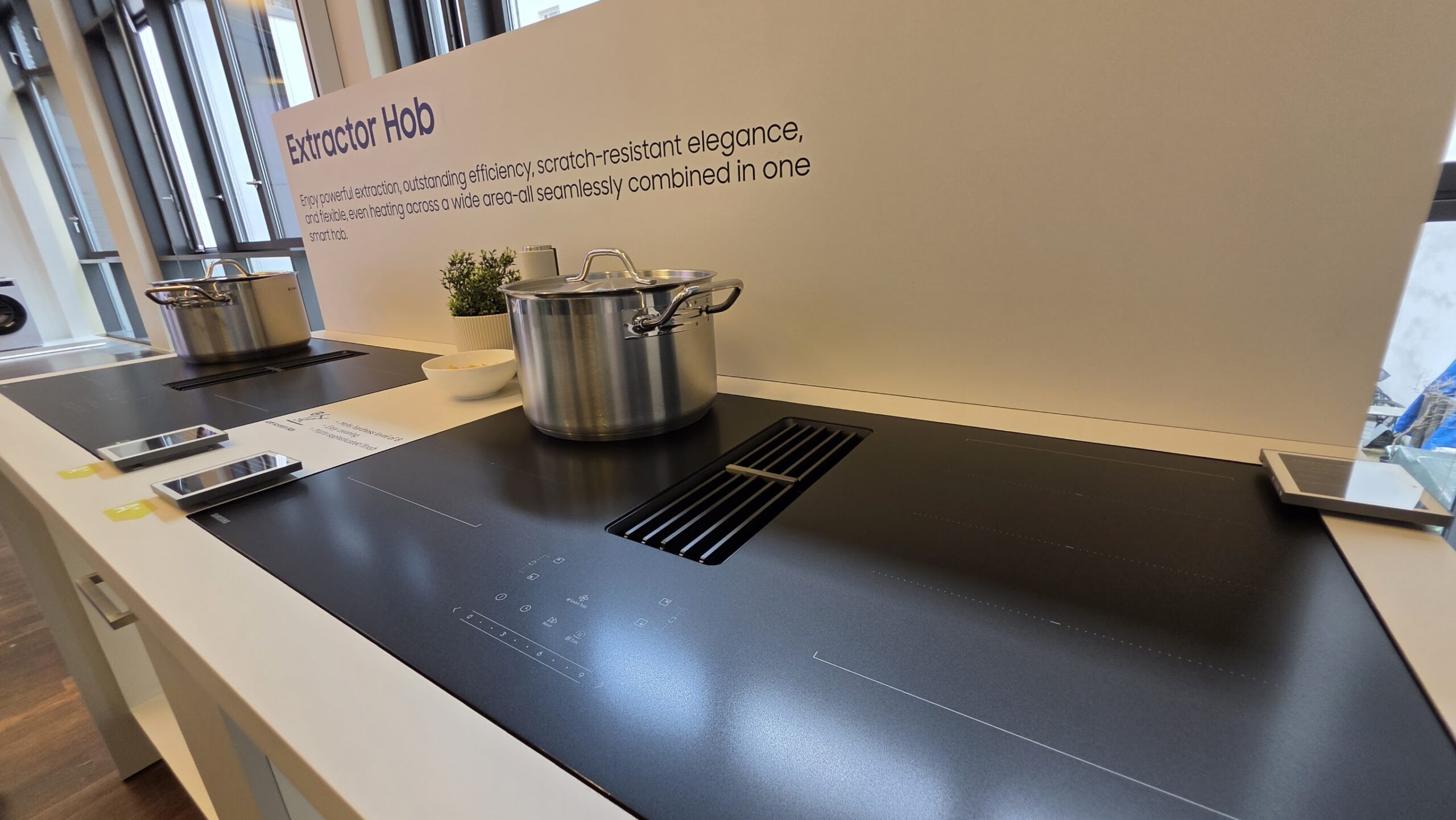
Artificial intelligence remained central to the company’s pitch.
A new Bespoke AI Refrigerator with Family Hub uses enhanced vision sensors to improve food recognition, automate inventory tracking and provide recipe suggestions through Samsung’s SmartThings platform.
The practical value of such features will depend on how reliably the system identifies products and whether consumers are prepared to maintain a connected food inventory. But Samsung is clearly positioning AI as the layer linking its appliances, energy management and smart-home ecosystem.
The Berlin event was more about showing products than discussing them. ChannelNews and Appliance News were the only Australian media attending, despite the potential implications for the local market.
Braun is right that Australia still has many large houses. But that is only part of the story.
Australia is building more compact homes, creating more single-person households and confronting higher energy costs. Those forces are likely to increase demand for appliances that use less space and electricity while integrating more cleanly with residential cabinetry.
Samsung’s understated, offsite IFA showcase may therefore have revealed more about the future Australian appliance market than the company intended.
The big-appliance era is not over, but Australia is moving closer to the European model—and Samsung already has the products designed for it.