Samsung Unveils World’s First 300Hz OLED Laptop Display
 Joe Gallop
24 Aug 2026
Joe Gallop
24 Aug 2026
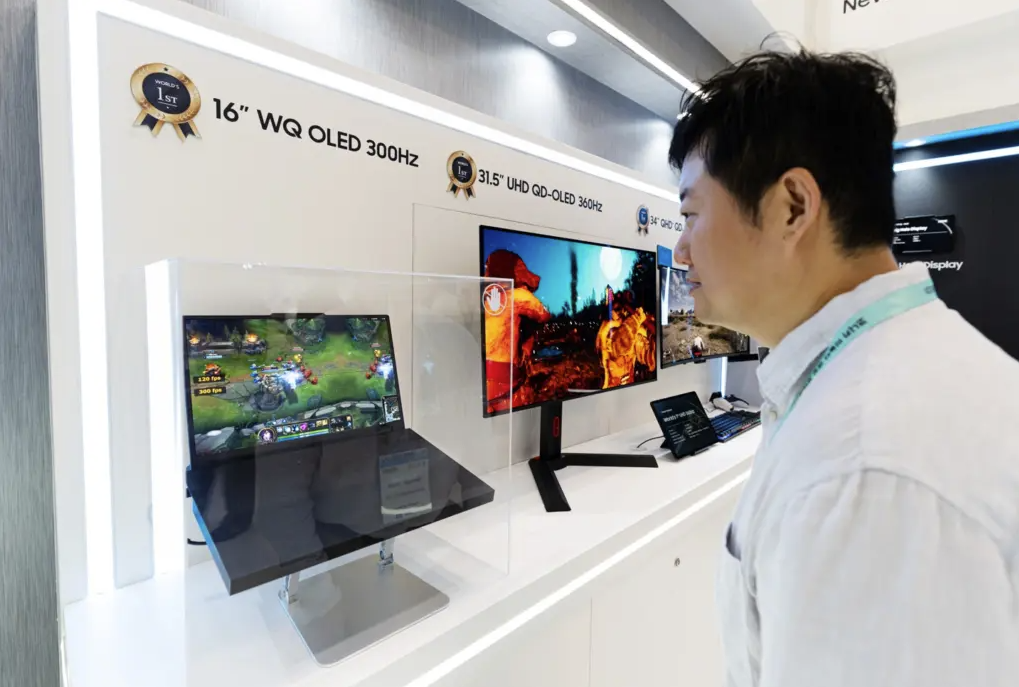
Samsung Display has unveiled the world’s first 300Hz OLED panel for laptops as it pushes beyond the 240Hz limit of existing portable OLED screens.
The 16-inch, 2.5K panel, which was demonstrated at the IMID 2026 display conference in South Korea, is being targeted at premium gaming laptops.
Its variable refresh rate of up to 300Hz should produce smoother motion and reduce visual blur during fast-paced games, while taking advantage of OLED technology’s rapid pixel response times, deep blacks and pixel-level lighting control.
Samsung has not disclosed the display’s peak brightness, confirmed which manufacturers will use it or provided a commercial launch date. However, the panel will likely appear first in expensive gaming systems from brands such as ASUS, Lenovo and Razer.
The company also revealed two QD-OLED panels aimed at desktop gaming monitors. These include a 31.5-inch 4K panel operating at 360Hz and a 34-inch, 21:9 ultrawide display offering the same refresh rate.
Another exhibit focused on addressing a longstanding weakness of foldable smartphones.

Samsung’s new 7.6-inch wide-viewing-angle OLED uses redesigned organic light-emitting materials and structural changes to reduce the loss of brightness commonly visible around the curved edges of a foldable screen’s crease.
The company also demonstrated what it claims is the world’s largest stretchable OLED display. The 20-inch prototype combines two stretchable panels using joining technology designed to make the divide almost invisible, creating the appearance of one continuous screen.
Samsung has not announced plans to commercialise the stretchable display, but the technology could eventually be used in vehicles, digital signage and other specialised applications requiring screens that conform to unusual surfaces.
Other experimental products shown at Samsung Display’s booth included an eye-tracking humanoid display, a necklace-style AI OLED pendant and an OLED-equipped turntable.
No Australian availability or pricing has been announced for products incorporating the new panels.
Display prototypes can take an entire product cycle or longer to reach consumers, meaning the 300Hz laptop OLED may not appear in locally available gaming machines immediately.