REVIEW: Ecovacs Winbot W3 Omni, The Robot That Fired My Window Cleaner
 David Richards
02 Nov 2026
Ecovacs’ $1,299 Winbot W3 Omni climbs floor-to-ceiling glass on its own, washes its own pads, runs for 130 minutes without a power point in sight and, by my maths, pays for itself inside a year. My window cleaner is not thrilled.
There are few phrases in the English language that strike fear into a homeowner’s wallet quite like “the window cleaner’s coming tomorrow.”
In our house, my wife delivers that line every few months, and every few months I quietly calculate what it is going to cost me. We live in a home full of floor-to-ceiling glass, spread across multiple floors, which means extension ladders, a brave man on the second and third storeys, and an invoice that never seems to get any smaller.

Cleaning big windows is, whichever way you look at it, a pain in the backside. Unless you are a sadist with cleaning tendencies, in which case, good luck to you, and are you available on weekends?
So when the all-new Ecovacs Winbot W3 Omni landed, my hand went up faster than a kid who knows the answer.
The Short Version
At $1,299, the W3 Omni delivered a return on investment within about 12 months in my household. It cleans windows and glass walls, inside and out, it gets right into the corners, it doesn’t drip, and it doesn’t need a power point or an extension cord to do it.
It is, quite frankly, a godsend. It saves time, it saves money, and it is a lot safer than me up a ladder.
No Power Point, No Problem
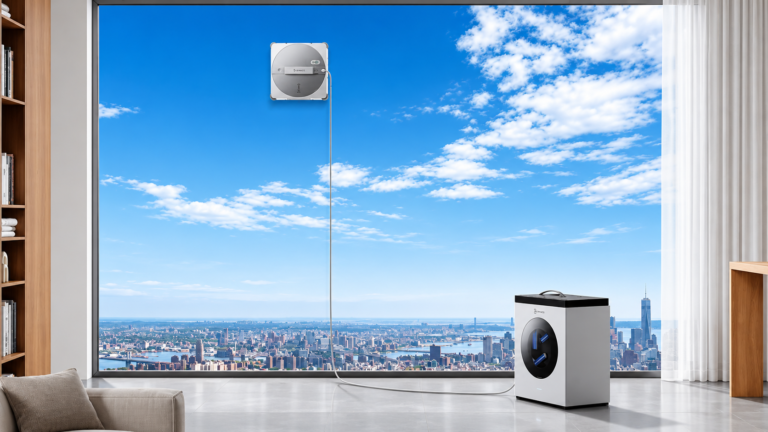
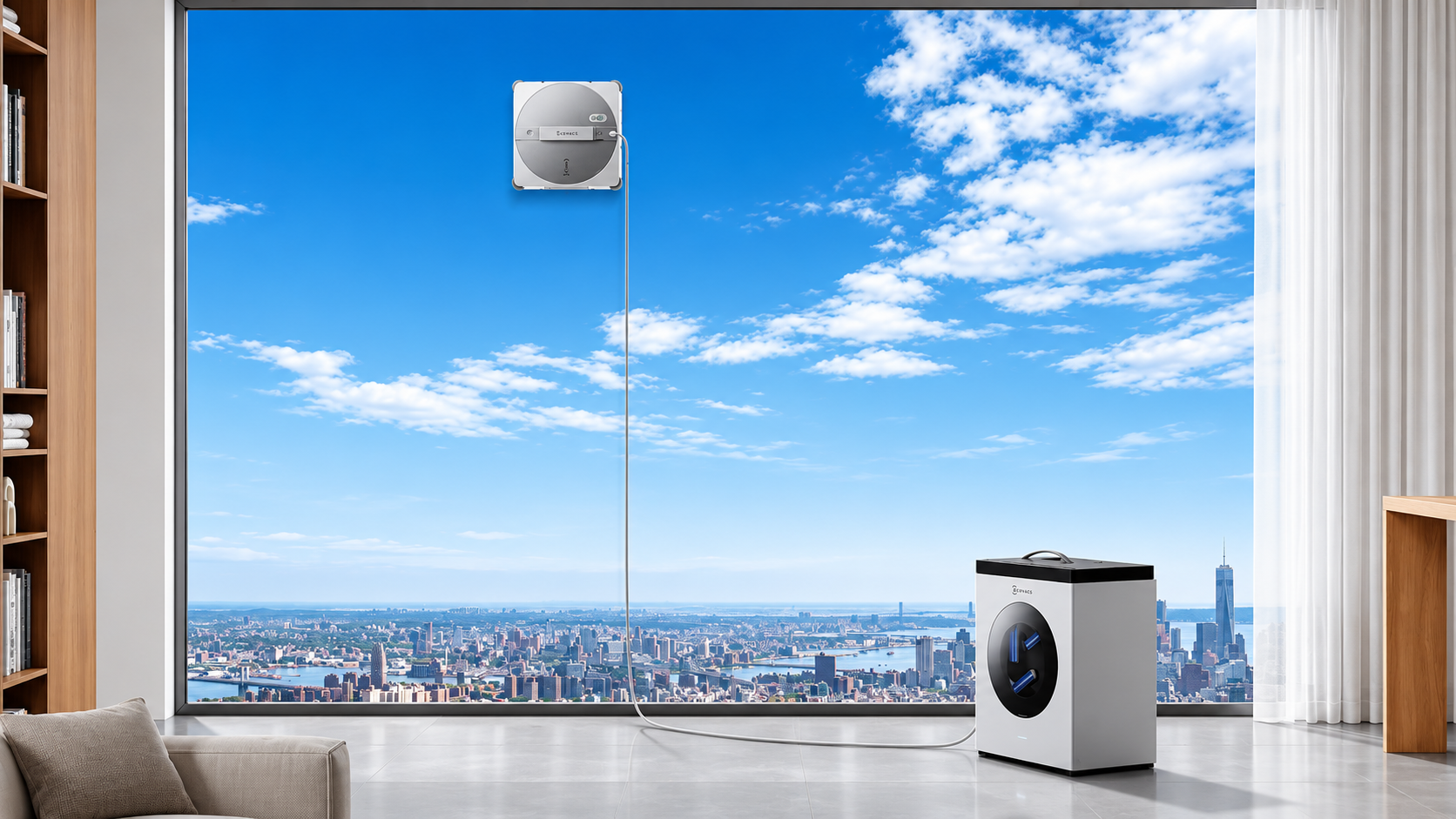
The big change over its predecessor is the portable base station. It has a built-in 5,200mAh battery that powers up to 130 minutes of continuous cleaning, so you don’t need to go hunting for a power outlet or drag an extension cord from room to room like a reluctant snake handler.

You do still have to carry the system from window to window. It’s a robot, not a butler. But a redesigned, automatically retracting cord on the station makes the whole exercise far tidier than it has any right to be.
The Spa Treatment, For Pads
The base station is the brains of the operation, managing power and the water that runs through the system.
Its party trick is Vortex Wash. The all-in-one dock washes, scrubs and refreshes the robot’s microfibre wiping pads in about a minute, using 16 high-pressure nozzles and 200 RPM scrubbing discs. My own cleaning cloths have never been treated this well. Frankly, neither have I.
The system comes with two microfibre cloths on a quick-mount frame attached to the robot head, which wanders up and down the glass with the quiet determination of a man who has been told the in-laws are coming.
It Sucks. In A Good Way.
This thing has serious sucking power. Ecovacs quotes up to 10,000Pa of maximum suction (3,300Pa while moving), which is what keeps it glued to the glass instead of on the patio.
A lot of thought has gone into the microfibre cloth, too. It doesn’t just clean, it forms an airtight seal so the vacuum pump can do the heavy lifting of holding the robot in place.
A three-nozzle, wide-angle spray system loosens grime before the pads wipe it away, and some clever but simple engineering keeps the cloth wet but not too wet. The result: no streaks, no drips.

Cornered
The first thing I noticed was how it got into the corners, delivering a clean, sparkling window without leaving a puddle on the sill.
Ecovacs claims up to 99.25% edge coverage with 1.1mm accuracy, achieved by actively lifting and adjusting pressure as it approaches frames and corners. For comparison, my own edge coverage is roughly “I’ll get it next time.”
Ecovacs is well known for the navigation in its robot vacuums, and that know-how has climbed up the wall. The Winbot uses the company’s WIN-SLAM 5.0 navigation, with multi-sensor detection to map the window and avoid obstacles with 1mm to 2mm accuracy.
Salt Of The Earth (And The Glass)
We live by the ocean, which is lovely right up until you look at the windows. Salt builds up as a thin film on the glass with depressing regularity, and that is exactly the sort of job that has kept our window cleaner in business.
Safety First, Because Gravity Never Takes A Day Off
When a robot is hanging off a third-storey window, safety isn’t a feature, it’s the whole point. Ecovacs has built in 12-level protection, eight hardware-based fall-protection measures and a three-layer safety tether rated to 100kg. That tether could hold the robot, the base station and a decent portion of my Christmas lunch.
The robot also beeps loudly when it’s finished or needs recharging, telling you to switch off the vacuum and take it off the glass. Think of it as the only member of the household who announces when a chore is done.
Seven Ways To Clean
The W3 Omni works with the Ecovacs Home app, which offers seven cleaning modes: Fast, Deep, Thorough, Edge, Spot, Zone and Heavy-Duty. That’s more options than I’ve ever offered a window.

BMW Thinking
This is evolution, not revolution, and that’s a compliment. Like a BMW, the new model may look much like the old one, but under the bonnet the technology has been vastly improved.
That only happens when management is committed to products that keep getting more practical, more cost effective and better suited to the way we actually live.
Verdict
The Ecovacs Winbot W3 Omni is neat, well designed and, above all, well thought out.
You do have to learn to trust it. Watching a $1,299 robot clamp itself to a third-floor window takes a bit of faith the first time. But trust me when I say the technology has earned it.
If you have big windows, this is a must-have. If you are a window cleaner, I’m sorry.
Ecovacs Winbot W3 Omni, $1,299