Retailers Brace for Hit as Global CPU Shortage Drives Prices Up and Supply Down
 David Richards
27 Mar 2026
David Richards
27 Mar 2026

Retailers selling PCs are facing a fresh wave of disruption as a deepening global shortage of central processing units (CPUs) threatens to push up prices, delay shipments and weaken already fragile consumer demand.
The supply squeeze—driven by surging demand for artificial intelligence chips—is hitting at a time when retailers are still grappling with steep memory cost increases, compounding pressure on margins and raising concerns that PC sales could slow sharply in the months ahead.
At the centre of the الأزمة are Intel and AMD, whose constrained CPU output is increasingly being redirected toward lucrative AI workloads for companies such as Nvidia, Google, Amazon and Broadcom. That shift is leaving PC manufacturers scrambling for supply—and retailers with fewer products to sell.
Major PC brands including Acer, Apple, HP and Dell are already reporting falling CPU volumes, with some saying conditions have worsened significantly since the start of the year. Lenovo, the world’s largest PC maker, has not commented.
For retailers, the consequences are immediate. Lead times for CPUs have blown out from one to two weeks to as long as 12 weeks, while prices have surged between 10% and 15% on average this year. When combined with memory cost increases of up to 30%, the total impact is forcing vendors to pass on higher prices—risking a drop in consumer demand.
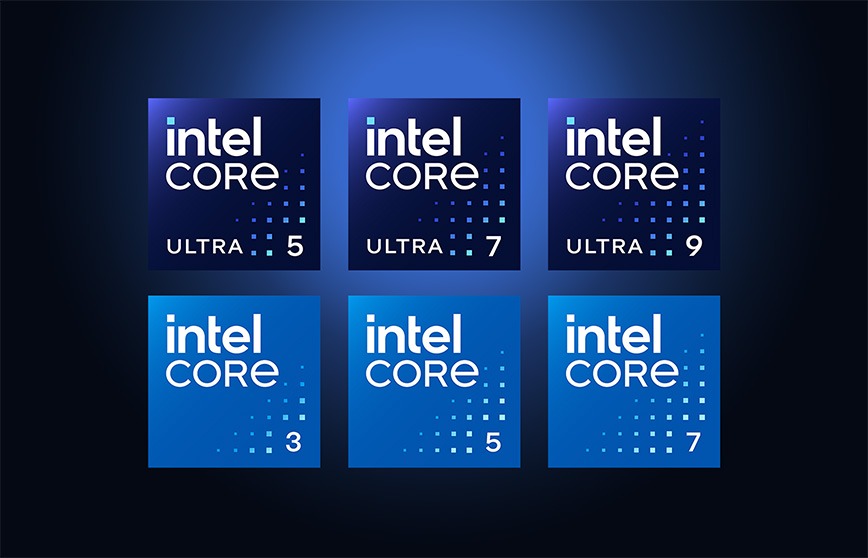
High res file with embedded renditions – New badges for Core Ultra 5, 7 and 9, and Core 3, 5 and 7.
“Previously, the average lead time for a CPU was around one to two weeks, but now the wait time has prolonged to an average of eight to 12 weeks,” an executive at a server manufacturer told Nikkei Asia.
Intel and AMD have both notified customers of price rises, effective from March and April respectively. Intel said the increases reflect “sustained demand, increased component and material costs, and evolving market dynamics.” AMD did not respond to requests for comment.
The strain is also spreading to the gaming PC segment, where companies such as ASUS and MSI warn that supply will tighten further in the April-to-June quarter. One gaming PC executive said the situation is becoming untenable: “Even if we pay more, we still cannot get more. The CPU shortage is getting more serious day by day—no less than the memory chip situation.”
Compounding the problem, chipmakers are prioritising higher-margin server CPUs over those used in consumer PCs, further restricting supply to retail channels.
The shortage is beginning to reshape the market. With x86 processors from Intel and AMD increasingly scarce, PC makers including Dell, ASUS and HP are accelerating development of systems based on Arm architecture. At ASUS, Arm-based chips now power roughly 30% of its Copilot AI PCs, up from 20% late last year.
“The supply gap is widening and expected to continue,” said Jose Liao, general manager of ASUS’s systems business.
Despite this shift, Intel and AMD still dominate the market, with x86 processors accounting for more than 85% of PC CPUs and around 78% of server chips as of 2025.
Both companies acknowledge ongoing constraints. Intel CEO Lip-Bu Tan recently said supply issues are limiting the company’s ability to meet demand, while AMD CEO Lisa Su said the company is working to expand capacity amid strong growth in server processors.
With AI demand continuing to surge, industry insiders warn the CPU shortage could worsen—leaving retailers caught between rising costs, constrained supply and increasingly price-sensitive consumers.