Quantum Rods Set To Outshine QLED TVs In The Race For Brighter Screens
 Joe Gallop
18 Nov 2025
Joe Gallop
18 Nov 2025
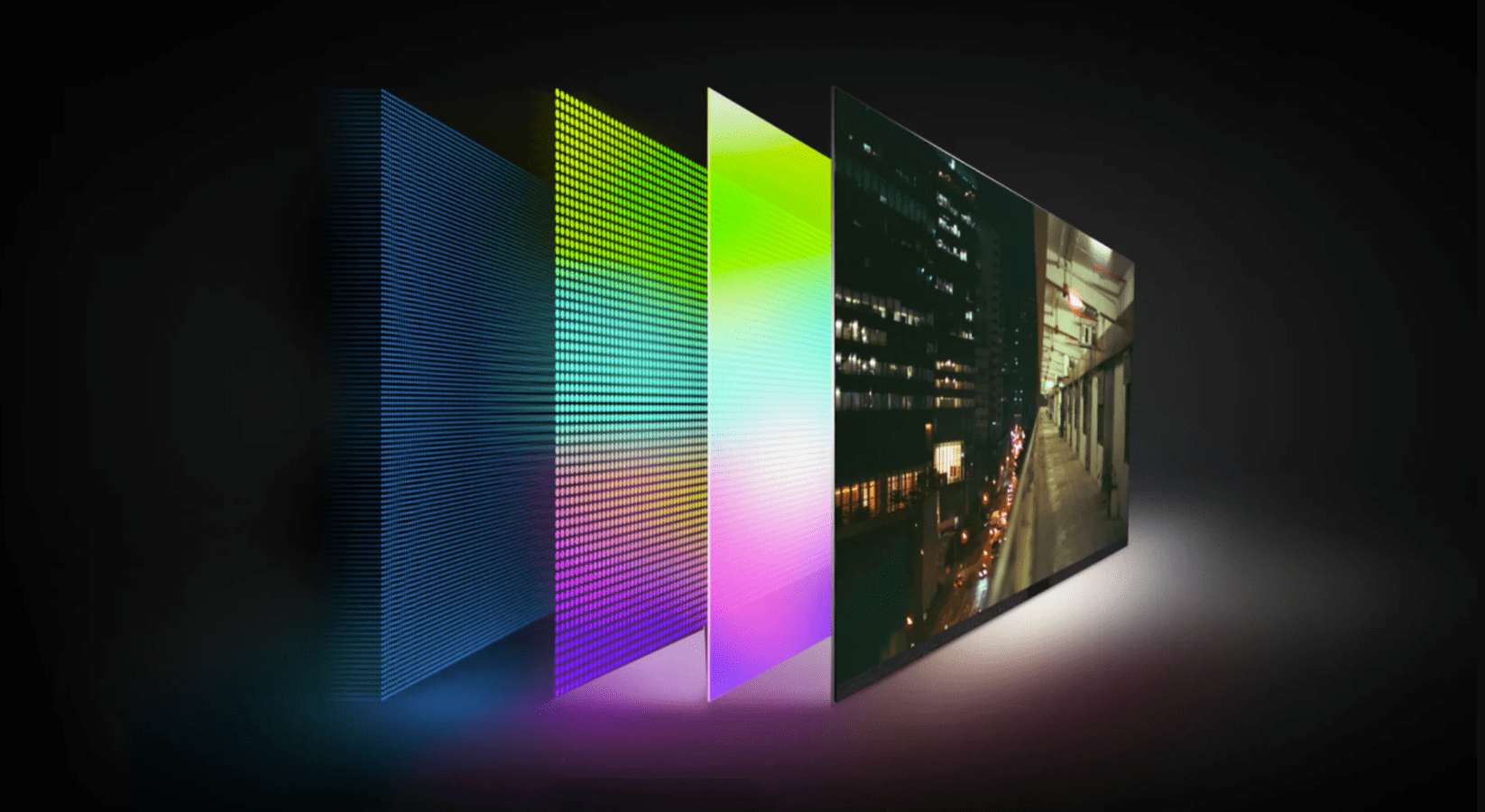
A week after we reported on the rapid rise of next-gen perovskite quantum dots pushing TV colour closer to full Rec.2020, another potential display disruptor has stepped into the spotlight.
At the SID-MEC conference in Germany, researchers revealed fresh progress on “quantum rods” (QRs).
The elongated, alignable nanocrystals could outshine today’s quantum dots in both brightness and efficiency.
Quantum rods function similarly to quantum dots, converting blue light into vivid red and green.
However, their key advantage lies in alignment.
Unlike spherical dots, rods can be oriented in a single direction, allowing displays to channel light more efficiently.
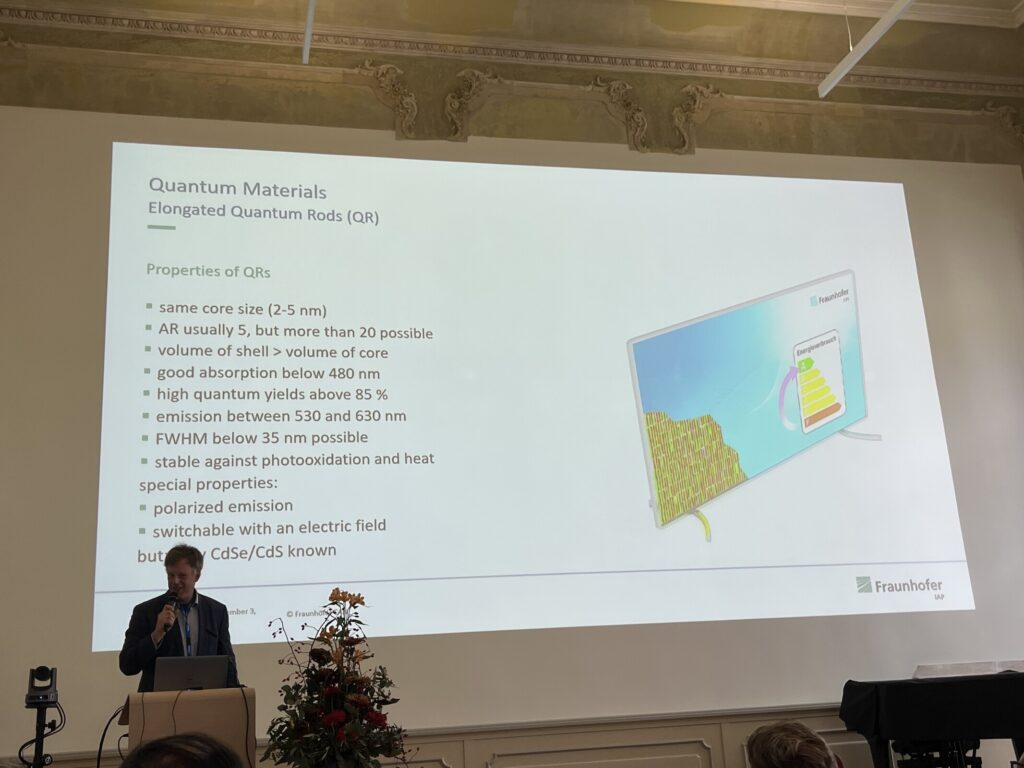
Image credit: Andreas Sebayang
According to Jan Niehaus of Fraunhofer IAP-CAN, who presented the work, that directional control could slash power consumption without dimming peak brightness – an enticing combination for both high-end TVs and battery-sensitive mobile devices.
At the conference, Niehaus confirmed that researchers have now successfully transferred a full quantum-rod layer onto a substrate and validated its thermal stability, an early but important proof of feasibility.
The material reportedly holds up under temperatures required for modern HDR-capable panels, hinting at suitability for ultra-bright TVs.
Where QRs would fit into the market remains open.
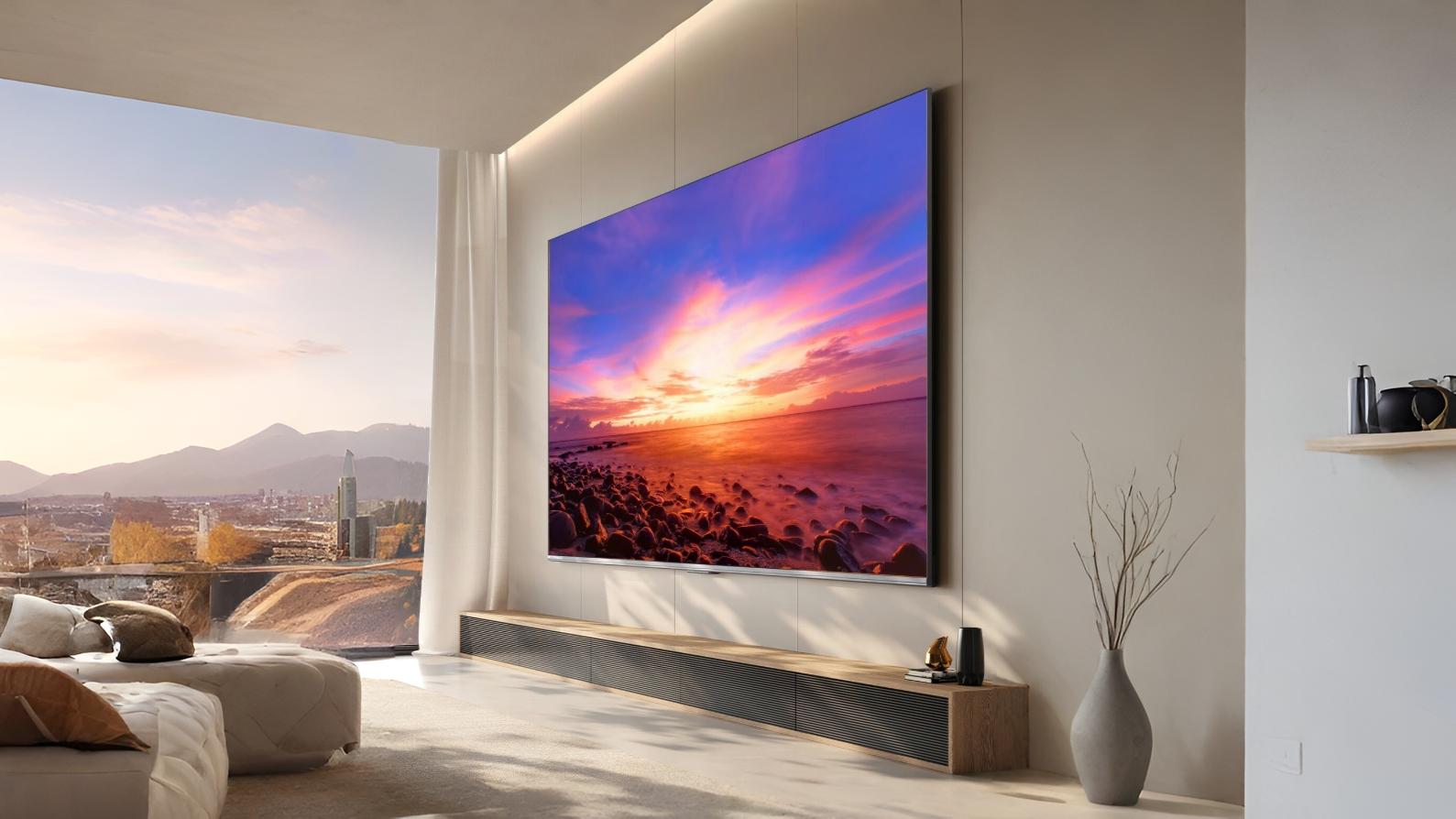
They could debut as a drop-in upgrade for today’s QLED LCDs (which still rely on a backlight and quantum-dot film), but their long-term promise lies in future self-emissive quantum-dot displays, which are variously branded as QLED, QD-LED, EL-QD, QED or QE.
In these emissive systems, aligned rods could deliver significantly more light per watt than the quantum dots we see in TVs today.
This comes amid broader momentum in quantum-material research.
As reported last week, perovskite quantum dots are pushing colour performance toward – and in some cases past – 95% of Rec.2020.
Meanwhile, researchers in Hong Kong recently set a record 31% efficiency in red QR-LEDs, suggesting the two technologies may evolve in parallel.
For now, quantum rods remain firmly in the lab. But if industry interest continues to build, tomorrow’s living-room TVs, and perhaps smartphone screens, could be brighter, richer and far more energy-efficient.