Next-Gen Quantum Dots Could Push TVs Closer to True HDR Colour
 Joe Gallop
11 Nov 2025
Joe Gallop
11 Nov 2025

The next wave of quantum dot technology could finally bring consumer TVs closer to the full Rec.2020 colour gamut used in modern HDR formats like HDR10+ and Dolby Vision.
Perovskite quantum dots (P-QDs), emerging as third-generation quantum dots, promise colour reproduction beyond today’s QD-OLED and LCD displays.
While current QLED and miniLED TVs using second-generation indium-based quantum dots cover roughly 75% of Rec.2020, P-QDs could exceed 95%, potentially outperforming both QD-OLEDs (85–90%) and the upcoming RGB LED LCDs (around 90%).
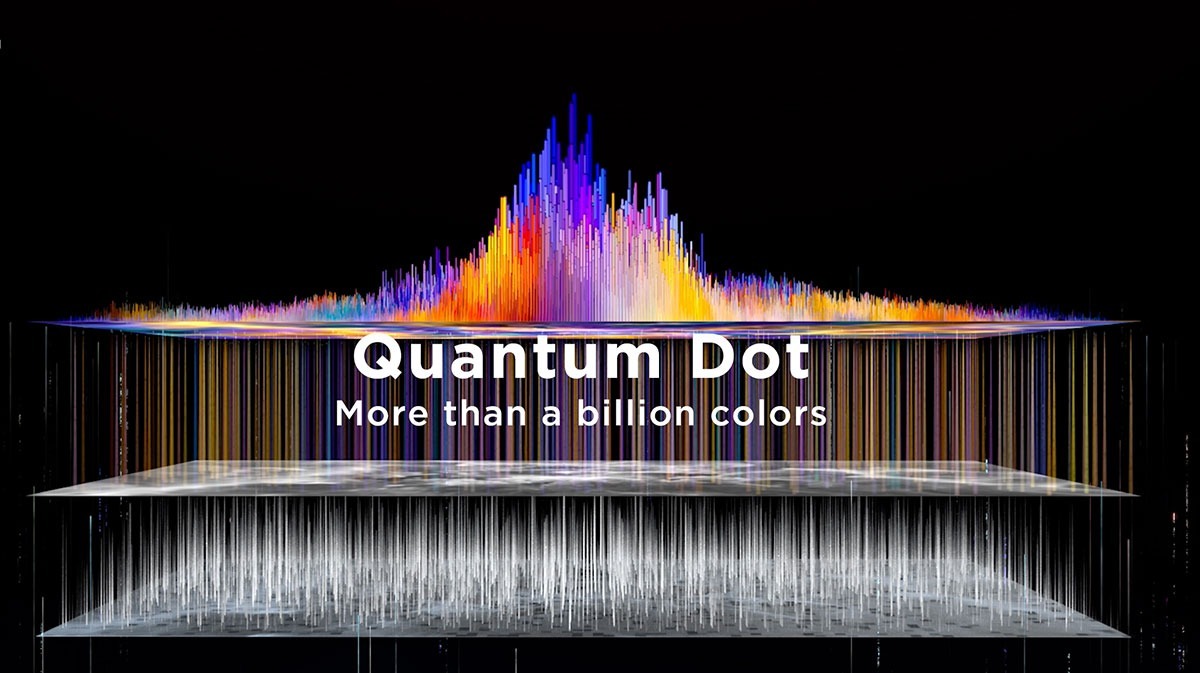
Quantum dots enhance display colour by converting blue LED light into red and green.
First-generation cadmium-based dots have been largely phased out due to toxicity concerns, while indium-based dots have limitations in colour purity.
Perovskite dots overcome many of these constraints, offering ultra-high colour fidelity and lower power consumption.
TCL is reportedly experimenting with the technology in its unconfirmed 2026 flagship X11L, marketing it as “Super Quantum Dot,” claiming nearly 100% Rec.2020 coverage.
Samsung is also exploring perovskite quantum dots, while South Korean firm SN Display recently earned CES 2026 Honoree recognition for its perovskite colour conversion films, capable of delivering more than 95% Rec.2020 coverage across TVs, monitors and tablets.

Meanwhile, major TV makers are also advancing RGB LED LCD technology.
Samsung unveiled the world’s first Micro RGB TV in Korea earlier this year, featuring micrometer-scale red, green and blue LEDs for precise color control, AI-driven frame optimisation and 100% Rec.2020 coverage.
LG has teased its own Micro RGB LCD TV for 2026, while Hisense, Samsung and TCL expand their RGB LED lines.
Researchers are also pushing the boundaries of quantum rod LEDs (QR-LEDs).
A team at the Hong Kong University of Science and Technology achieved a record 31% efficiency in red QR-LEDs, boosting brightness and colour performance for next-generation TVs and smartphones.
While widespread adoption may still be a few years away, the era of near-perfect HDR colours in consumer displays is fast approaching.