PC Market Sees Early 2026 Lift as Buyers Rush Ahead of Price Hikes
 Joe Gallop
20 Apr 2026
Joe Gallop
20 Apr 2026

Global PC shipments posted modest growth in the first quarter of 2026, rising 3.2% year-on-year to 63.3 million units, driven by pre-emptive buying ahead of expected price increases.
The uptick was largely driven by businesses and consumers bringing forward purchases ahead of expected price hikes linked to surging memory costs, alongside a wave of upgrades triggered by the end of Windows 10 support, according to Counterpoint Research.
Major vendors capitalised on the refresh cycle. Lenovo retained its top position with shipments up 9% to 16.5 million units, capturing a 26% market share and delivering its strongest ever first-quarter result.
Dell and Apple also recorded solid gains, up 8% and 11% respectively, with Apple benefiting from the March launch of new MacBook models. Asus emerged as the fastest-growing vendor, surging 20% on strong consumer notebook demand. HP was the outlier, with shipments declining 5%.
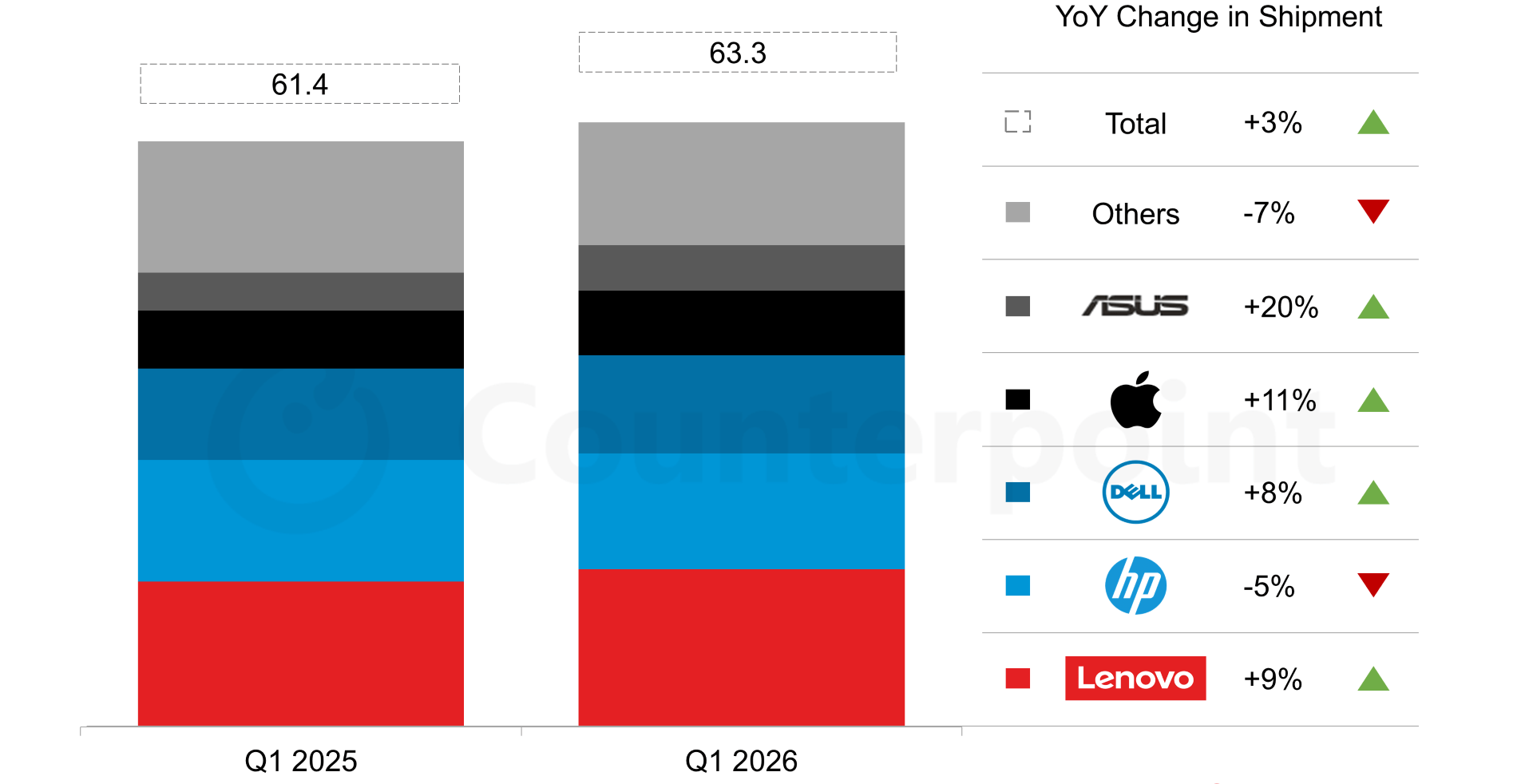
The top five vendors now account for nearly 80% of global PC shipments, highlighting increasing consolidation at the premium end of the market, while smaller OEMs continue to struggle.
But the near-term boost may not be sustainable. Memory prices, particularly DRAM and NAND, nearly doubled in Q1 and are expected to keep rising – albeit at a slower pace. Analysts warn this will push up overall component and retail prices, weighing on demand through the remainder of 2026.
Despite this, the market has some resilience. Around 40% of PCs in use still run Windows 10 or older systems, leaving a sizeable upgrade opportunity. At the same time, momentum is building around AI-capable PCs, with new chipsets from Qualcomm and ongoing rollouts from Intel and AMD expected to drive longer-term demand.
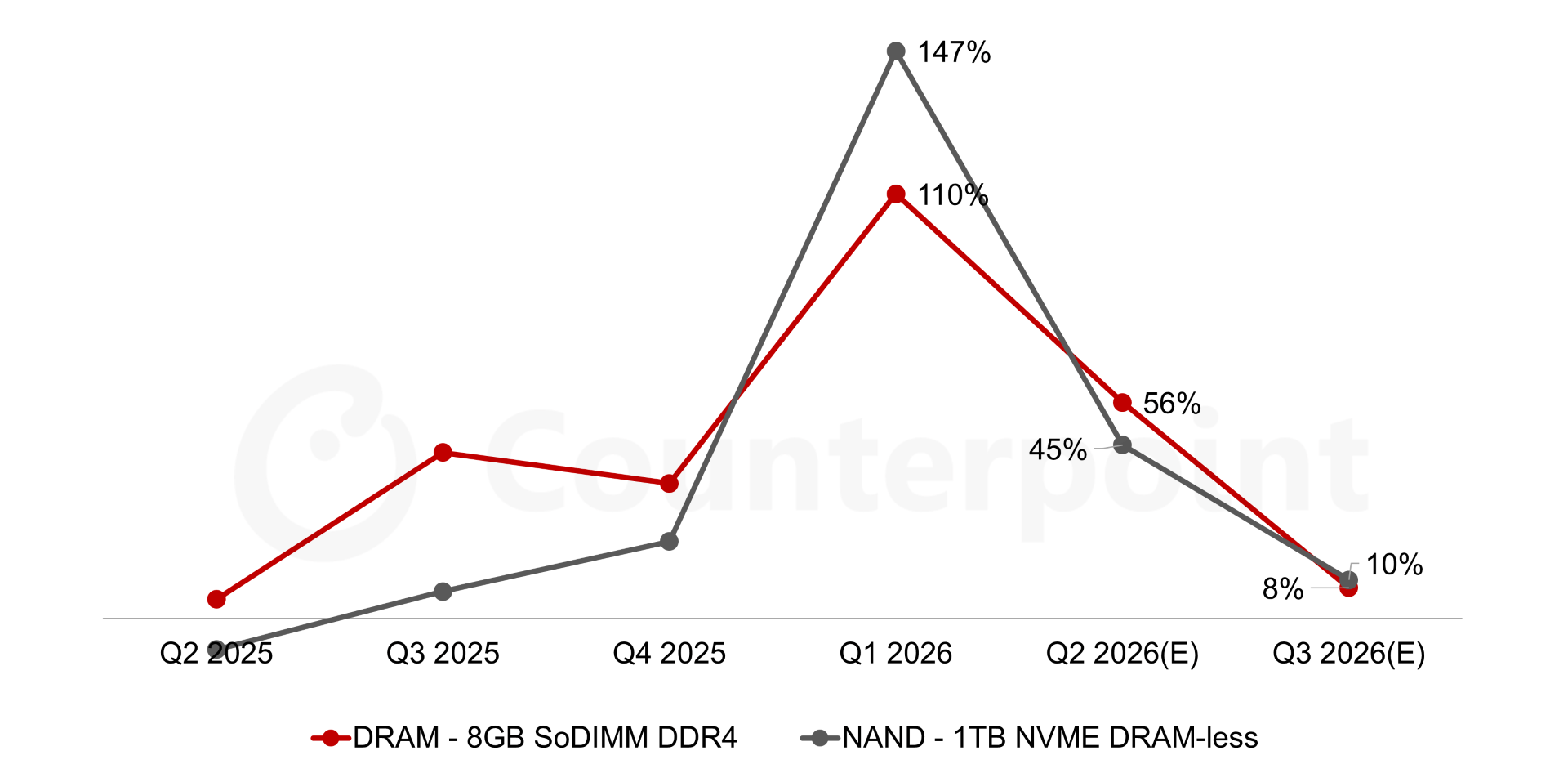
Counterpoint says 2026 will be a critical test for PC makers, with success hinging on supply chain stability and a shift toward higher-margin devices.
Counterpoint Senior Analyst Minsoo Kang said: “The aggressive expansion in AI infrastructure investment is driving up overall component costs, which will likely impact the pricing of CPUs and other key components in PC.”
Counterpoint Associate Director David Naranjo added: “As we move through 2026, supply-side pressures from DRAM and NAND pricing will continue to weigh on volumes, and the refresh cycle alone will not be enough to offset the expected decline.
“Looking ahead to 2027, easing memory constraints combined with the continued ramp of AI PCs should help stabilise the market and support a return to modest growth.”