OZ Retailers Warned By Minister After Massive UK M&S Ransomware Attack
 David Richards
05 May 2025
David Richards
05 May 2025
Retailers in Australia have been warned to double check their cyber protection following the massive attack on the global UK retailer Marks & Spencer who is still being held to ransom, with UK Security service called in to investigate.
Cabinet Office Minister Pat McFadden, who is responsible for national security in the UK has warned retailers whose back-end providers are holding millions of credit card profiles on their systems to move to check their current security arrangements.
Currently the large UK retailer is reeling from the attack with the Company currently being held at ransom.
A M&S insider has told Sky News it could be “months” before the retailer fully recovers from the attack and that the company had no plan for such an incident.
Hackers have been holding the High Street brand to ransom for more than a week now, forcing it to suspend online orders and halt recruitment.
Recent studies indicate a significant increase in cyberattacks targeting Australian retailers.
According to the Australian Cyber Security Centre (ACSC), the retail sector experiences a high volume of cyber incidents annually, with financial losses amounting to millions of dollars.
Several retail groups including JB Hi Fi and The Good Guys don’t hold online transaction data on their servers, instead they use third party secure networks to protect card information.
In April 2025, multiple major Australian superannuation funds were targeted in coordinated cyberattacks, resulting in data breaches and some members losing their retirement savings. Funds like Host plus, Rest, Australian Super, and Australian Retirement Trust were among those affected. 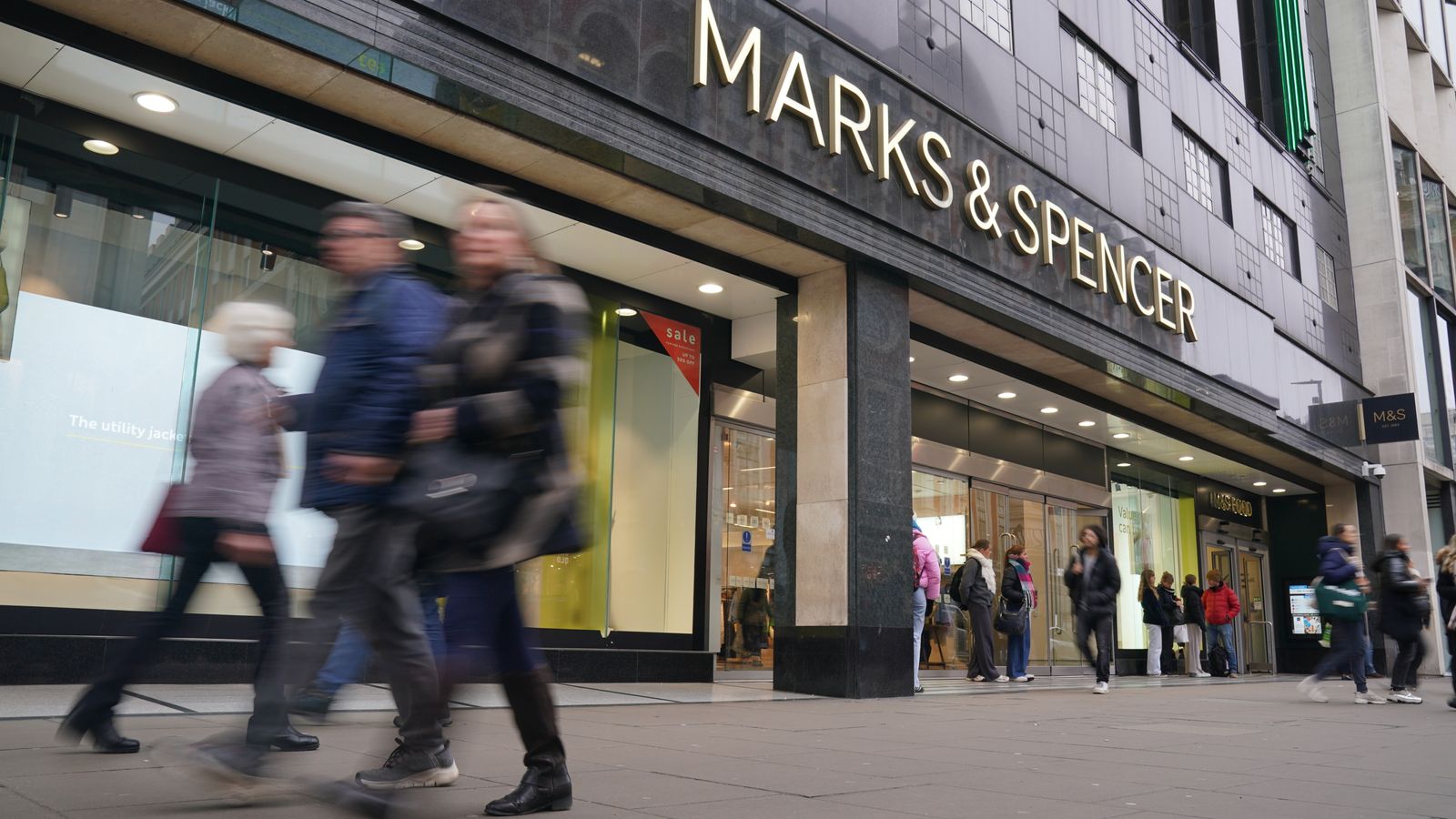
The breaches involved attackers likely changing account details overnight to steal money. Experts have highlighted security weaknesses in the superannuation sector as a contributing factor.
“These attacks need to be a wake-up call for every business” Pat McFadden said.
Concern over the attack led to a briefing with security officials including Richard Horne, chief of the National Cyber Security Centre, an arm of listening post GCHQ, in the wake of hacks on M&S and the supermarket chain Co-op.
A ransomware attack was the cause of the disruption at M&S, with hackers using a potent kind of malware to lock down some of the British retailer’s systems and render them inaccessible.
“In a world where the cyber criminals targeting us are relentless in their pursuit of profit, with attempts being made every hour of every day, companies must treat cyber security as an absolute priority,” McFadden will say next week.
The minister will announce further steps the government is taking to help protect businesses against hacking attempts, including through the Cyber Resilience Bill. As part of that legislation ministers will require 1,000 companies providing IT services to critical national infrastructure to shore up their cyber defenses.
Recently Woolworths who also owns Big W confirmed that it’s been forced to shut down a major payment system after their Everyday Rewards members backend was targeted by scammers.
The retail giant has removed the Everyday Pay option from its Everyday Rewards app due to a “sophisticated external phishing scam” affecting selected customers.
A Woolworths spokesperson confirmed that the supermarket took the drastic action after the account details of some Everyday Rewards members were compromised.
The retail giant has assured members that the payment details and data on their accounts remains secure, and there has been no breach or hack of the Everyday Rewards system as a whole.
In Australia, the Optus data breach was one of the biggest security breaches ever in Australian history. As the second-largest telecommunications company in Australia, this security incident brought up questions about Australian data security policies and how companies handle them.