Oura Ring Lawsuit Exposes Accuracy Problem Facing Wearables
 David Richards
27 Aug 2026
David Richards
27 Aug 2026
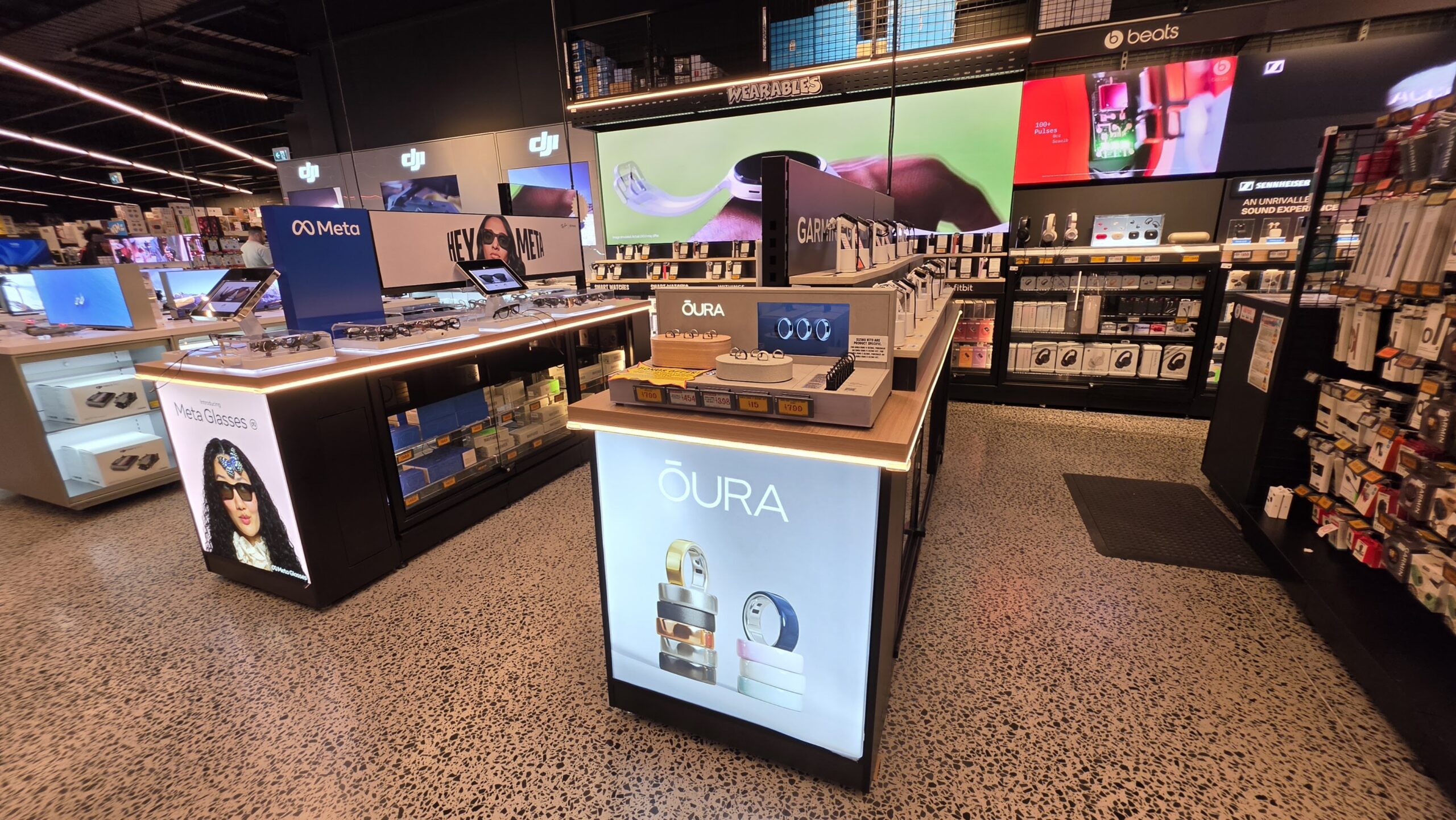
Oura rings are expensive, but a new US court action is raising a much bigger question: just how accurate are the sleep and health claims being made by Oura and the wider wearable industry?
A lawsuit filed against Finnish company Oura has ignited a debate over whether consumer wearables can accurately identify different stages of sleep, with critics arguing that devices from Oura, Samsung and other manufacturers are ultimately estimating rather than directly measuring what is happening in the brain.
The legal action alleges Oura has taken advantage of consumers struggling with sleep by selling what the lawsuit describes as AI-based inference as reliable science.
The suit goes as far as claiming Oura’s sleep-stage measurements can be little better than a “coin flip”.
The allegations have not been proven in court and Oura disputes claims that its technology is misleading, pointing to research supporting the performance of its sleep-tracking algorithms.
However, the case has opened up a much broader issue for the booming wearable technology market.
A sleep technology expert writing for The Verge argues that “accuracy” can itself be something of a red herring when assessing consumer wearables because none of these devices performs the same measurements as a clinical sleep study.
Independent testing has generally found that leading wearables are reasonably good at determining when somebody falls asleep and when they wake.
It is when they start breaking a night’s sleep into REM, deep and light sleep that the picture becomes significantly less certain.
Unlike clinical polysomnography, which can measure brain activity, eye movements and other physiological signals, consumer wearables generally use sensors measuring movement, heart rate, heart-rate variability, temperature and other signals.
Proprietary algorithms then interpret those signals to estimate which sleep stage the wearer was experiencing.
In other words, the ring or watch isn’t directly “seeing” REM or deep sleep. It is making an educated calculation based on other data.
Those calculations can also be affected by factors including how a device is worn, sleeping position, movement, sensor contact and battery performance.
Useful Tool, Not A Sleep Laboratory
This doesn’t necessarily make sleep wearables useless.
Their real value may be in identifying long-term patterns rather than providing a clinically precise account of every night’s sleep.
A wearable that consistently measures somebody using the same methodology can potentially identify when their normal pattern changes significantly.
It is effectively a health “check engine light”, something that may alert a user to a change worth investigating rather than a device capable of making a medical diagnosis.
That distinction is important.
If somebody is sleeping badly because they drank too much alcohol, went to bed late or was repeatedly woken during the night, they probably don’t need a $600 smart ring to tell them they had a poor night’s sleep.
Where wearables potentially become valuable is when they identify persistent changes for which there is no obvious explanation. That information can then be used to start a conversation with a doctor.
What they cannot do is replace a sleep clinic or clinical polysomnography.
Marketing Claims Could Face Scrutiny
This is where the Oura litigation could become significant for the wider wearable industry.
If the case proceeds, it could force health technology companies to be far more precise about the distinction between what their products actually measure and what their algorithms estimate.
Wearable companies increasingly market sophisticated health, recovery, stress and sleep features, while disclosures inside their apps may state that particular measurements are designed for wellness purposes and are not medical diagnoses.
The danger is that consumers may not appreciate that distinction when confronted with highly detailed graphs showing REM sleep, deep sleep, readiness scores, recovery and other apparently precise measurements.
Even Google’s AI-generated response to the question “Is the Oura Ring accurate for sleep stages?” makes the distinction clear, describing the device as reasonably accurate at tracking overall sleep duration and identifying when someone falls asleep or wakes, while noting that individual sleep stages are estimates.
Questions For Oura’s Australian Claims
The debate comes as Oura steps up its marketing activities in Australia and New Zealand.
The company recently held a media briefing promoting its State of Sleep Report 2026, which claimed New Zealanders were the world’s longest sleepers.
Oura said its analysis of members in Australia and New Zealand found the two countries recorded more sleep than any other country analysed, while simultaneously struggling with recovery because of high levels of daytime stress.
The US lawsuit now raises an obvious question about how consumers and media should interpret increasingly detailed claims derived from wearable data.
It also exposes a potentially uncomfortable issue for the entire wearable industry.
Smart rings and watches can collect enormous quantities of useful information, and increasingly sophisticated AI can identify patterns within that data.
But an algorithmic estimate is still an estimate.
The Oura case could ultimately help determine how clearly technology companies have to tell consumers the difference.