OPINION: NRL’s $4 Billion Gamble: How the Race to Out-Spend the AFL Could Hand Rugby League to US Interests Clueless To How The Game Is Played
 David Richards
21 May 2026
David Richards
21 May 2026

NRL boss Peter V’landys is courting a US media giant that barely knows the game exists in an effort to rake in more money in TV rights for the NRL, Sources warn it could be the most reckless move in the sport’s history.
The National Rugby League is pursuing a record-breaking $4 billion broadcast deal, and in doing so, may be about to make the most consequential mistake in the game’s history.
According to sources with direct knowledge of the negotiations, Australian Rugby League Commission (ARLC) Chairman Peter V’landys has been actively courting Paramount Skydance Corporation, the American media conglomerate that owns Network Ten and streaming platform Paramount+, in a bid to drive up competition for the post-2027 broadcast rights.
The strategy, sources say, is partly a bluff, using Paramount as a threat to force incumbent rights holders Nine Network and Foxtel-owned Kayo to dramatically increase their bids or risk losing the game entirely.
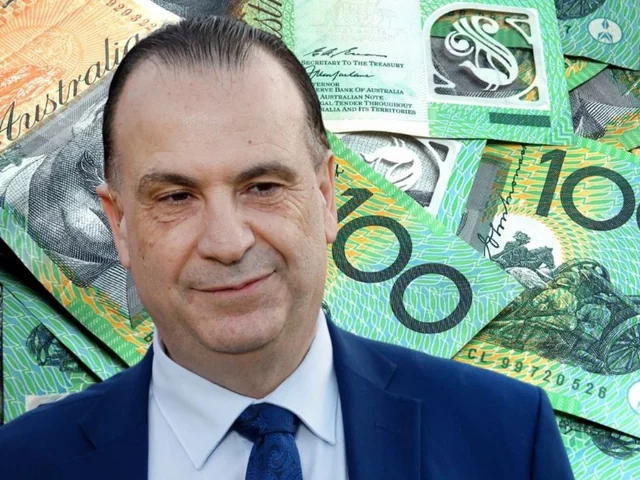
Peter V’landy leading NRL negotiations
But insiders warn the gambit carries very real danger: what happens if Paramount calls that bluff?
“The risk is that you end up handing the crown jewels of Australian rugby league to a US company that views the NRL the same way it views any other line item on a balance sheet, Source with knowledge of the negotiations claim.
The Deal On The Table
The NRL is targeting a total rights package worth $4 billion over five years, running from 2028 through to 2032, in an explicit attempt to match and ultimately eclipse the AFL’s $4.5 billion broadcast agreement.
To generate maximum competitive tension, V’landys has introduced an unorthodox tender structure that invites multi-platform bids, deliberately fragmenting rights across free-to-air, streaming and digital players.
On paper, it is a sophisticated play.
In practice, it has created a scenario in which the sport could end up partly or wholly broadcast by a company whose US executives are fundamentally unfamiliar with the game, the culture, and the audience.
A Company Distracted By A $110 Billion Deal
Complicating the picture significantly is the state of Paramount Skydance itself.
On February 27, 2026, the corporation received regulatory approval to acquire Warner Bros.
Discovery in a landmark $110.9 billion all-cash transaction.
Sources say US management at Paramount have since entered a holding pattern on new expenditure commitments as they digest one of the largest media mergers in history.
That leaves V’landys in a precarious position.
If Paramount is genuinely constrained, unable or unwilling to commit serious capital to Australian rugby league rights while integrating a $110 billion acquisition, the leverage he has sought to create may prove illusory, while the uncertainty itself risks undermining the confidence of the incumbent bidders.
The Warning From The Melbourne Cup
Critics of the strategy point to Network Ten’s recent history with premium Australian sport as exhibit A.
When Ten assumed broadcast rights for the Melbourne Cup, one of the nation’s most-watched annual events, the results were alarming.
In their first year back in 2019, the network drew a metro audience of 1.44 million, compared to Seven’s 1.83 million in their final year, a loss of approximately 500,000 viewers from the outset.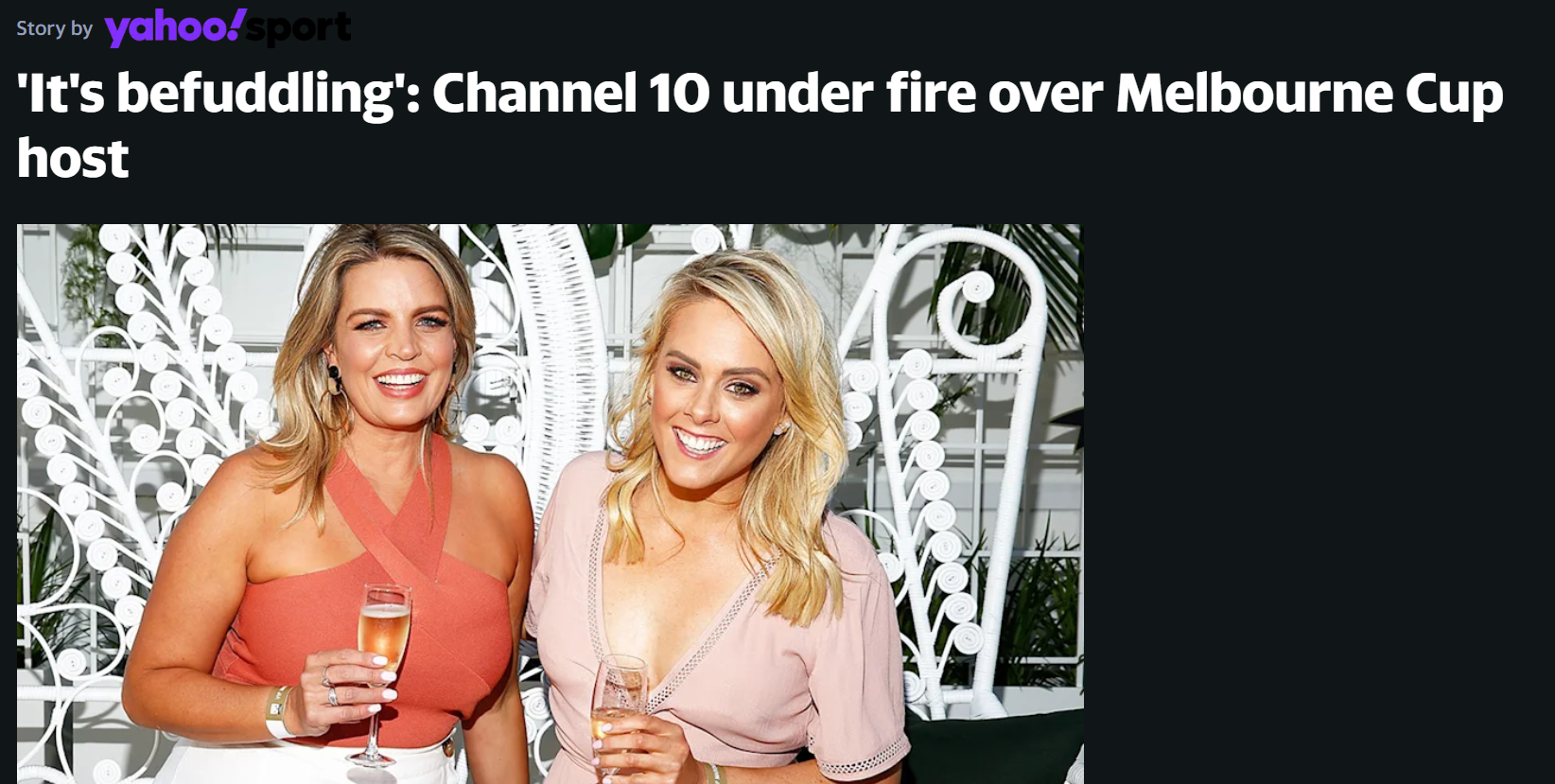
The decline continued year after year.
Ten’s coverage drew sustained industry criticism for its content and format, and the network ultimately walked away from renewal negotiations entirely.
Nine subsequently won the rights on a six-year deal from 2024 to 2029. In their first year, 3.7 million viewers tuned in, a 30% increase on Ten’s final year, demonstrating conclusively that the broadcaster, not the event, had been the problem.
The NRL would be handing rights to a network with a documented track record of alienating exactly the kind of mass Australian sports audience the game depends on.
The Subscriber Trap
There is a further structural problem that has received little public attention. If Paramount+ were to acquire streaming rights currently held by DAZN-owned Foxtel and Kayo, the millions of subscribers who currently watch NRL through those platforms would not automatically transfer. Foxtel and Kayo have no obligation, commercial or otherwise, to hand their subscriber base to a direct competitor.
The result would be a scenario in which devoted NRL fans, many of whom already pay for Foxtel or Kayo subscriptions, face the prospect of paying for an additional Paramount+ subscription to access the same content. The commercial, reputational, and fan-relationship damage of such an outcome would be significant, and potentially lasting.
A Global Pattern With Local Consequences
The dynamic playing out in Australian rugby league is not unique.
In the United States, Rupert Murdoch recently dined at the White House and personally warned Donald Trump that if streaming platforms gain rights to a greater proportion of NFL games, it would effectively destroy the commercial viability of broadcast networks. The Wall Street Journal, owned by News Corp, reported that Murdoch’s Fox, the smallest of the NFL’s broadcast partners, faces an existential threat from the deep pockets of Amazon, YouTube, and their streaming rivals.
The parallel in Australia is direct. Without NRL and AFL, Nine’s free-to-air business becomes structurally compromised.
That has implications well beyond sport: Nine is one of the primary vehicles through which Australian political and civic life is broadcast to the nation. Network Ten, by contrast, carries considerably less political weight, national reach, or institutional credibility.
What’s At Stake
There is no doubt the NRL has a legitimate commercial interest in maximising rights revenue and closing the gap on the AFL.
But the manner in which that ambition is being pursued is drawing serious concern from within the industry.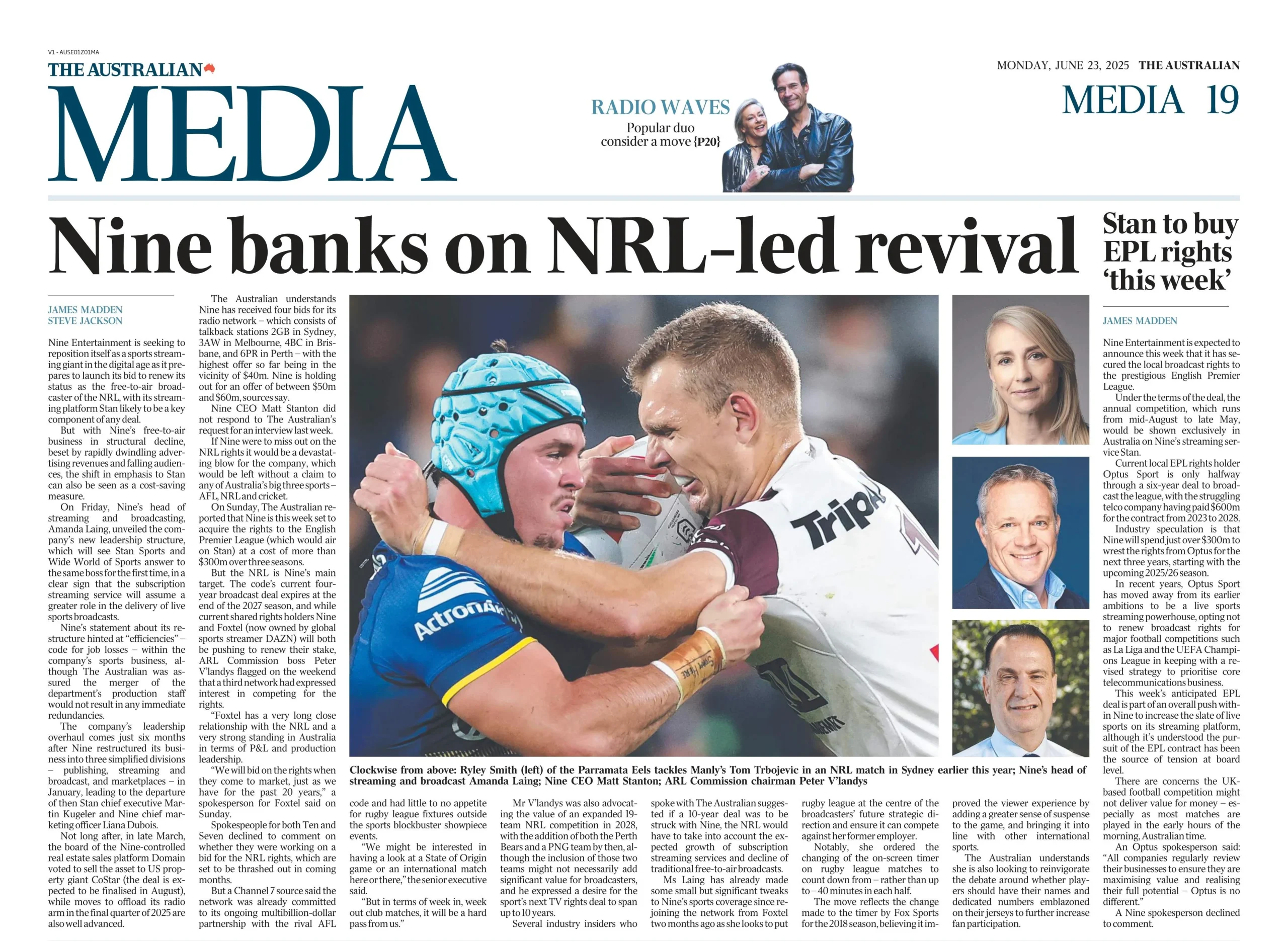
Australia’s media landscape has already witnessed the damage that broadcast mismanagement can cause to premium sport.
The English Premier League’s disastrous period on Optus Sport, which saw one of the world’s most-watched competitions rendered effectively inaccessible to mainstream Australian audiences, ended with Nine stepping in to rescue the rights. Sponsors walked. Fans were furious. The damage is now being repaired by the Nine network.
The NRL is not a niche interest. It is one of the two defining pillars of Australian sports broadcasting.
Handing any meaningful portion of it to a cash-constrained American conglomerate, one still digesting a $110 billion acquisition and whose local network has repeatedly demonstrated an inability to hold a mass sports audience, is not a negotiating tactic. It is a risk the game may not recover from.
A decision on the post-2027 rights is expected shortly.