OpenAI Takes Google Head-On with New Search Engine
 Varun Godinho
26 Jul 2024
Varun Godinho
26 Jul 2024
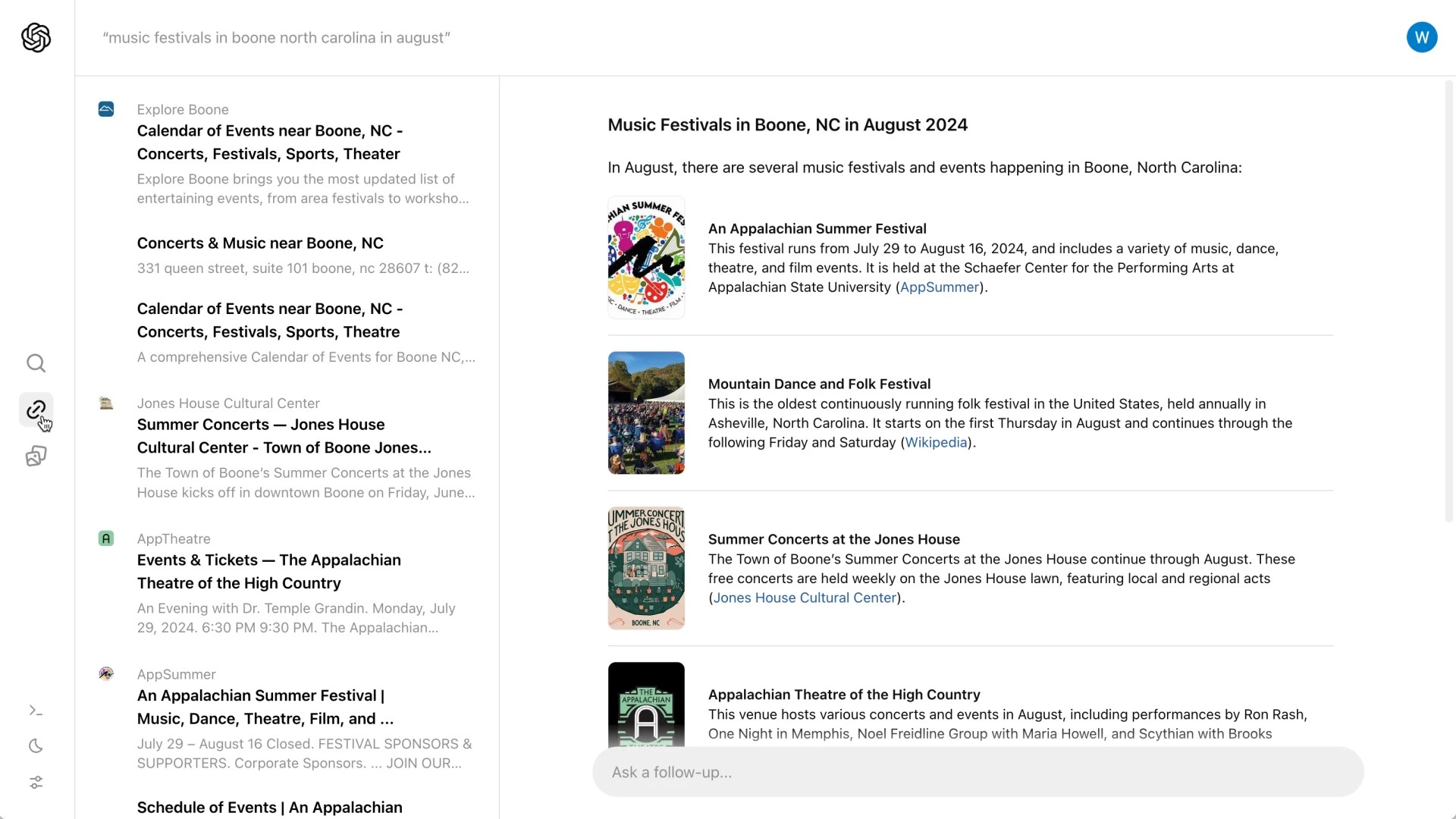
OpenAI, the creators of ChatGPT, has announced that it is trialing its new AI search engine platform called SearchGPT.
The search engine market has until now been dominated by Google, although OpenAI contends that its AI-powered SearchGPT will go one step further with “conversational capabilities”.
Hence, not only will it offer users real-time access to information across the internet, but it will also allow them “to ask follow-up questions”, with the shared context building with each query.
For now, OpenAI’s search engine is powered by GPT-4 family of models and is available as a prototype with around 10,000 users testing it at this stage, reported The Verge. In the example cited by OpenAI in a blogpost, the search engine summarises its findings on music festivals in Boone, North Carline, in August, and then presents short descriptions of the events followed by an attribution link.
In another example, it starts with a user typing ‘Best Tomatoes Grown in Minnesota’, with a follow-up question of ‘Which of these can I plant now?’.
After the results appear, you can ask follow-up questions or click the sidebar to open other relevant links.
OpenAI is working with third-party partners and using direct content feeds to build its search results.

In May, News Corp signed a global multi-year deal with OpenAI and its CEO Sam Altman, to allow the ChatGPT creator to use current and archived content produced by News Corp-owned outlets including those from Oz such as The Australian, news.com.au and The Advertiser as well as News Corp’s overseas publications.
“Sam and the truly talented team at OpenAI innately understand that for AI-powered search to be effective, it must be founded on the highest-quality, most reliable information furnished by trusted sources. For the heavens to be in equilibrium, the relationship between technology and content must be symbiotic and provenance must be protected,” said Robert Thomson, chief executive at News Corp.
Other publishers which are believed to be collaborating with OpenAI include Reuters and The Atlantic.
“SearchGPT is designed to help users connect with publishers by prominently citing and linking to them in searches,” according to OpenAI’s blog post. “Responses have clear, in-line, named attribution and links so users know where information is coming from and can quickly engage with even more results in a sidebar with source links.”
OpenAI’s latest move may now pit it in more direct competition with not just Google, but also Perplexity, a startup which positions itself as an AI “answer” engine.