Nine Olympics Coverage Set To Lose Youth Audience
 David Richards
01 Jul 2024
David Richards
01 Jul 2024

Struggling TV network Nine Entertainment, who paid $315M to get the rights to the Olympics for the next five years, is facing a major problem with their core youth audience that advertisers are chasing, set to watch social media highlights over live free to air coverage that comes with advertising claims researchers.
The media company that last week announced that they were set to sack 200 staff, lobbed the highest bid with the International Olympic Committee, paying $305 million in cash and another $10 million in free advertising to get the rights with new research revealing that free to air broadcasters around the world are going to struggle to get eyeballs with second tier sponsors in Australia already failing to deliver the revenues that the network anticipated when they bid for the Olympics.
The International Olympic Committee, the organizer of the Games, who derives 60% of its revenue from selling broadcast rights are concerned that shifting habits in media consumption are casting a shadow over their future revenue generating programs because of the increasing numbers of people — especially the young, catching up on sporting action via short video clips and social media.

Tokyo 2020 Olympics – The Tokyo 2020 Olympics Opening Ceremony – Olympic Stadium, Tokyo, Japan – July 23, 2021. General view of a firework display with the Olympic rings seen inside the stadium during the opening ceremony REUTERS/Dylan Martinez TPX IMAGES OF THE DAY
Viewing data reveals that global TV viewership of the Olympic Games has sharply declined in recent years.
The big plus for Nine is the Brisbane Olympics in 2023 which is set to appeal to local advertisers.
Nine’s $305 million for five events covers the summer games in Paris next year, the Summer Olympics in Los Angeles in 2028, Brisbane in 2032, and the winter games in Milan 2026 and an unannounced city in 2030.
The 2020 Summer Olympics, held in Tokyo in 2021 after being delayed due to the COVID pandemic, were watched live on TV and the internet by 3.05 billion people worldwide, down 5% from the 2016 Olympics in Rio de Janeiro and a 15% drop from the 2012 Games in London, according to the IOC.
In contrast, highlights and other recorded video clips were viewed 28 billion times on the internet during the Tokyo Olympics, compared to 11.6 billion times for Rio and 1.9 billion times for London.
Younge people that ChannelNews has spoken to said that they are “More likely to watch clips than a liver event”.
“I don’t like watching the advertising, so I go to social media” said one North Sydney student.
Observers claim that the very foundation of the Olympics could be jeopardized if the number of people watching live events on TV continues to decline.
In Australia Free TV is running scare campaigns in an effort to get the Federal Government to prop up struggling free to air TV networks as consumers flock to streaming networks such as Kayo, Binge, Netflix, Disney, and Prime Video.
The growing prevalence of pay-per-view broadcasting for professional sports, driven by escalating broadcast rights fees, is another issue hitting viewer numbers.
Being able to watch sports on traditional TV is no longer a given, meaning audiences are increasingly made up of core sports fans rather than casual viewers claims Nikki Asia.
What’s not known is what strain the funding of their Olympics deal will have on the Nine Entertainment network that is currently reeling from a harassment scandal with staff still waiting to see who is set to be sacked across both their TV entertainment and media networks.
The outlook for the 2024 Summer Olympics, scheduled to be held in Paris from July 26, appears bleak for the Nine Network with cost cutting impacting staff moral and advertising slumping in Australia, due to inflation pressures.
A Seven Network executive recently admitted that they are “glad they don’t have the financial burden of an Olympics”.
Twenty million Australians tuned into the Seven Network to watch the Tokyo 2020 Olympic Games, with Seven using the event to boost its user data for 7plus. Nine is planning to push their Stan offering for exclusive events.
According to a Japanese Sports Foundation’ survey, highlighted by Nikki Asia over 90% of respondents across all age groups — from those in their twenties to their 70s — regularly watched sports on TV in 2006.
By 2022, that figure had fallen to 61% among respondents in their 20s and 71% among those in their thirties.
One option for the Olympic Federation is eSports which is attracting record youth audiences.
According to observers the eSports industry has seen tremendous growth over the years, both in terms of viewership and revenue.
The increasing viewership is what contributed to the revenue growth – and it’s not just because those viewers are generating revenue.
Seeing the potential of reaching a large and engaged audience, brands are ditching traditional Olympic sponsorship opportunities for an investment in eSports marketing, both directly and indirectly.
This has contributed to rapid revenue growth in the industry, only slowed down by COVID limiting significant public eSports events over 2020 and 2021.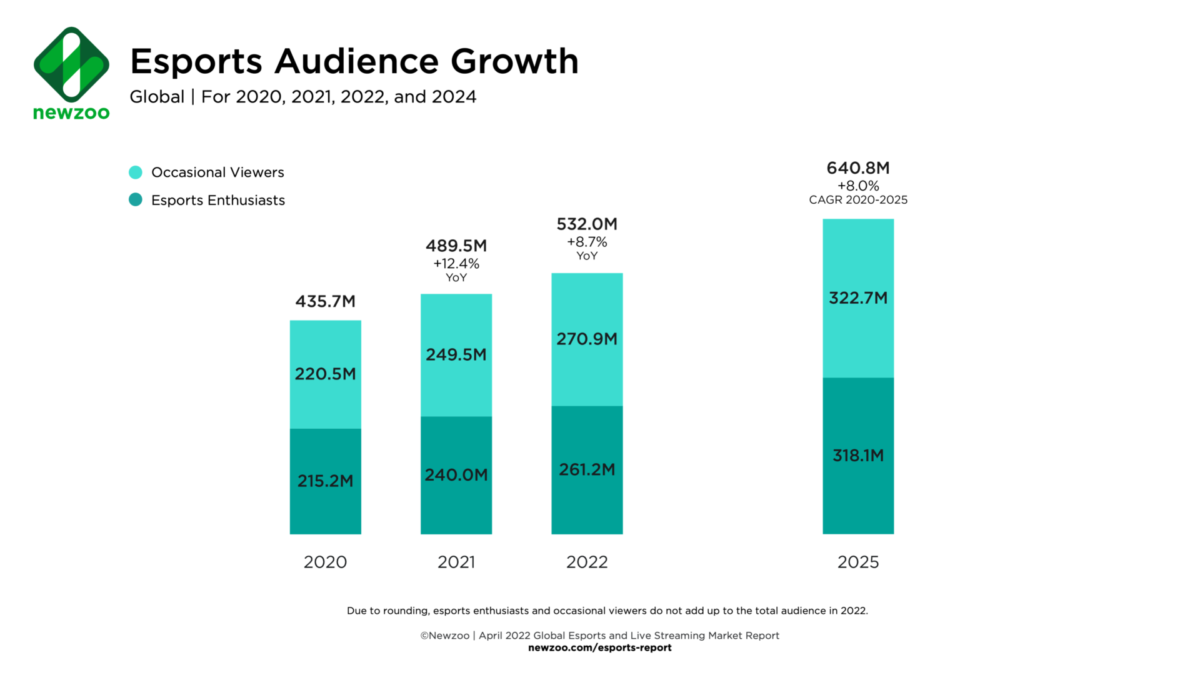
In 2022 there were 249.5 million occasional viewers and 240.0 million eSports enthusiasts, a combined eSports audience of 532.0 million.
By 2025, Newzoo predicts that the Compound Annual Growth Rate (CAGR) for eSports enthusiasts from 2020 to 2025 will be approximately 8.0%.
They expect that the number of occasional viewers will grow to 322.7 million.
And that there will be 318.1 million eSports enthusiasts, making the total audience 640.8 million.
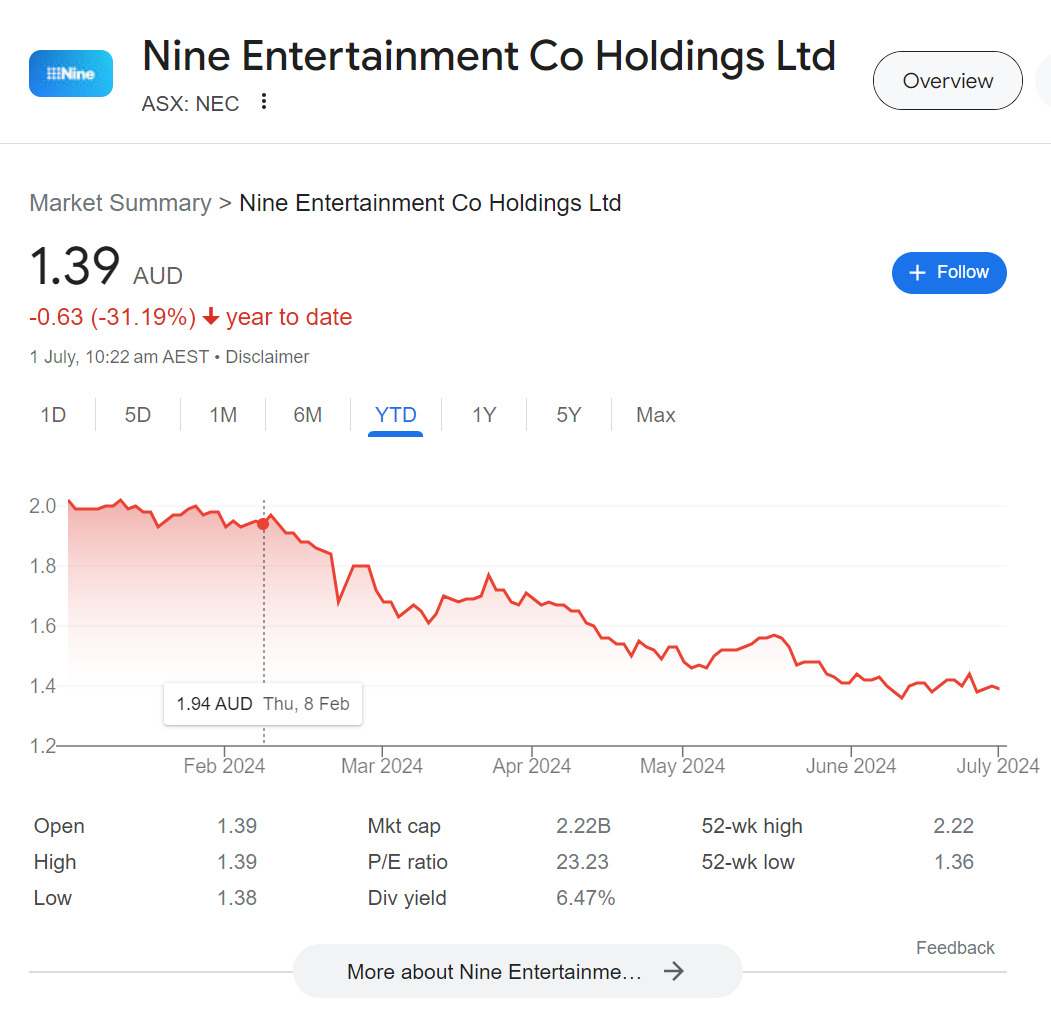
Nine shares are down 31.19% year to date.