New AI Collar Promises To Decode What Pets Are Really Saying
 April Ossington
27 May 2026
April Ossington
27 May 2026
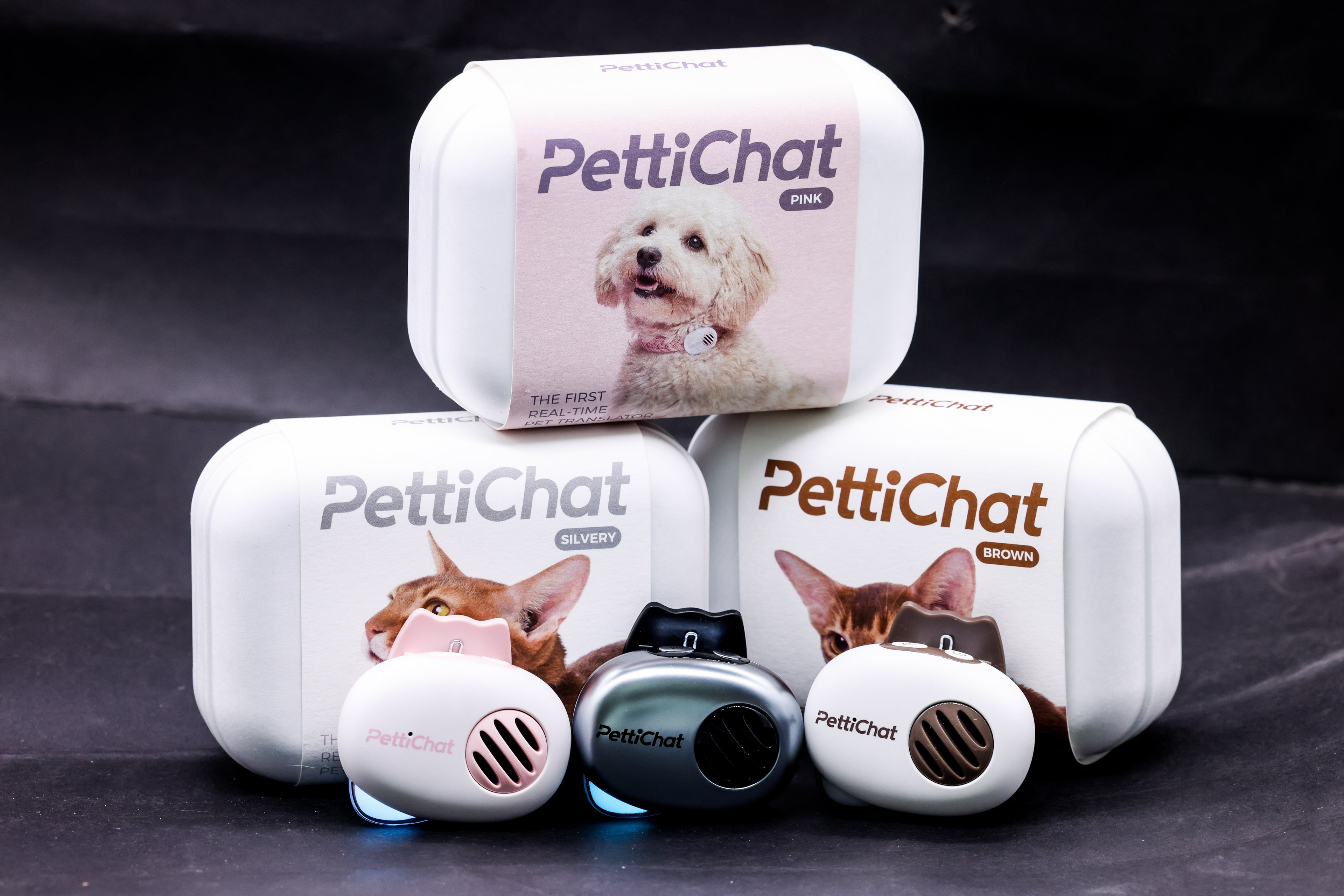
A Chinese technology startup is attracting global attention after unveiling an AI-powered pet collar that claims to translate animal sounds into human language almost instantly.
The device, called PettiChat, has been developed by company Meng Xiaoyi and is designed to interpret barks, meows and other pet vocalisations using artificial intelligence. According to the company, the wearable gadget can deliver translations with up to 95 per cent accuracy.
Interest in the collar appears to be growing rapidly, with reports suggesting roughly 10,000 units have already been reserved since pre-orders opened earlier this month.
The collar attaches to a standard pet collar and works alongside a companion smartphone app. Meng Xiaoyi says the technology analyses emotional sound patterns and behavioural cues collected from millions of animal voice samples to determine what pets may be trying to communicate.
Examples shown by the company include phrases such as “pay attention to me”, “I want those treats” and “leave me alone, you’re bothering me”.
PettiChat also claims to work in reverse by converting human speech into signals animals may better understand.
The company says translations are delivered in around 1.2 seconds, positioning the gadget as a real-time communication tool between pets and owners.
Despite the ambitious claims, questions have quickly emerged around the science behind the technology. Critics have pointed out that there is currently no publicly available research verifying the device’s reported accuracy rates.
Social media users have also reacted with a mix of curiosity and scepticism.
“I wonder how they proved the accuracy,” one user wrote on X.
Another joked: “95 per cent accuracy means one in 20 translations is completely made up. Your cat says ‘feed me’ and the collar replies ‘I’ve been contemplating the void’.”
Others questioned whether the technology could genuinely interpret emotion and intent from animal noises alone, particularly given the complexity of animal behaviour.
The waterproof device is currently listed for around A$235 based on current exchange rates, although buyers must also pay for an ongoing app subscription to unlock full functionality.
Alongside translation features, the collar includes pet tracking tools, movement alerts and a chat history that stores previous interactions. The company says the microphone system can also be disabled manually to help ease privacy concerns.
Meng Xiaoyi describes PettiChat as a collaboration between AI engineers, veterinarians, animal behaviour specialists and pet owners, with the aim of improving communication between humans and animals.
“Imagine finally understanding every bark, wag and little mood of your furry friend,” the company said in promotional material.
The launch arrives amid growing interest in using artificial intelligence to better understand animal communication. Researchers are increasingly exploring whether AI can identify hidden patterns in animal vocalisations that humans cannot detect.
Photo by Ludemeula Fernandes
Google DeepMind is currently working with researchers from the Wild Dolphin Project on DolphinGemma, an AI model trained using one of the world’s largest collections of dolphin sounds. Scientists hope the project may eventually reveal whether dolphins use structured forms of communication similar to language.
Wild Dolphin Project founder Dr Denise Herzing said AI could help uncover subtleties in animal communication that traditional research methods may miss.
“We do not know if animals have words,” she said. “Feeding dolphin sounds into an AI model will give us a really good look at patterns and subtleties humans can’t pick out.”
For now, however, whether dogs are truly asking for treats or simply barking at passing birds remains open to interpretation.