UPDATED: NBN Gains Strategic Edge as Amazon Deal Reshapes Australia’s Satellite Future
 David Richards
15 Apr 2026
David Richards
15 Apr 2026

NBN Co’s partnership with Amazon is rapidly emerging as a pivotal advantage in Australia’s broadband landscape, following Amazon’s $11.57 billion acquisition of satellite operator Globalstar—a move that could dramatically expand the NBN’s reach, capability, and competitiveness.
The deal supercharges Amazon’s low Earth orbit (LEO) satellite network—now branded Amazon Leo—by adding Globalstar’s infrastructure, spectrum licences, and direct-to-device (D2D) technology. For NBN, which signed a wholesale broadband agreement with Amazon in late 2025, the implications are significant: enhanced service capability, deeper integration with mobile ecosystems, and a stronger position against Elon Musk’s dominant Starlink platform.
An NBN Spoksperson told ChannelNews that ” When NBN Co launches its Low Earth Orbit (LEO) satellite broadband services to eligible customers it plans to offer uncapped data plans, using the secure, high-speed and low latency Amazon Leo network”.
NBN Co will offer LEO satellite broadband services, on a wholesale basis, through participating RSPs to sell to customers within the existing nbn satellite footprint, which covers approximately 300,000 eligible, fixed location premises in parts of regional, rural and remote Australia.
Yhy claimed “Over the last two decades, we have changed the way customers connect in regional, rural and remote Australia, and we’re thrilled to be engaging with our partners and customers to bring this exciting step change to people in the bush”
“Alongside our fibre and fixed wireless upgrades, LEO is the latest, major leap forward for our satellite customers. Our proposed entry into the LEO market in Australia reflects our unique role as Australia’s national wholesale broadband provider, with a focus on developing service models that support customer experience and provide significant benefits to regional Australian customers including professional installation and onsite support”
The new nbn LEO satellite broadband products will be powered by Amazon Leo’s global, state-of-the-art network, and our agreement provides access to the company’s global scale and leverage future roadmap.
NBN Co is working in close collaboration with Amazon Leo on product development and is on track to begin testing and trials in the second half of 2026 with our RSPs. Upon successful completion of the trials, nbn LEO will progressively roll out to eligible premises across Australia.
At the core of the benefit is capability expansion. Globalstar’s network—currently used by Apple for satellite-enabled iPhone services—introduces D2D functionality that could allow NBN, via Amazon, to support connectivity not just to fixed premises but directly to mobile devices. This opens the door to new wholesale offerings across regional and remote Australia, where traditional infrastructure has long struggled to deliver consistent service.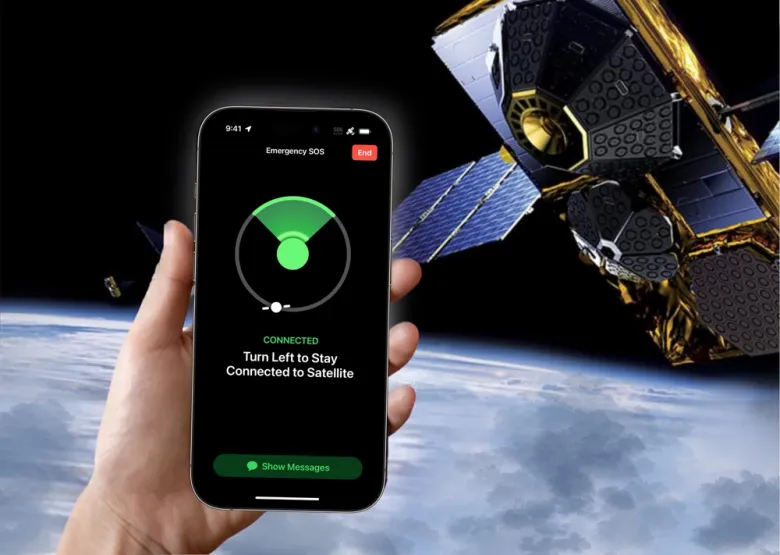
Amazon has made clear its ambition to work with telecom operators globally to extend “reliable, high-speed connectivity… no matter where they are,” aligning directly with NBN’s mandate to serve hard-to-reach communities.
The timing is critical. With Telstra and Optus already reselling Starlink services, NBN has faced mounting pressure to remain competitive in satellite broadband. The Amazon partnership—now strengthened by Globalstar—positions NBN as a credible counterforce, capable of delivering comparable or potentially superior services through a wholesale model.
Further strengthening the proposition is Amazon’s roadmap. The company plans to launch services in Australia from mid-2026, with a next-generation D2D system expected by 2028, promising higher spectrum efficiency and the ability to support hundreds of millions of connected devices globally. For NBN, this means future-proofed infrastructure and the ability to evolve alongside rapid advances in satellite technology.
Expanding into Aviation
Beyond residential broadband, Amazon Leo is also targeting the high-end mobility market. The company recently launched a new satellite antenna for airlines capable of 1 Gbps download speeds.
Delta Airlines has already signed a deal to roll out the service on 500 aircraft starting in 2028.
This adds a lucrative secondary revenue stream to the network that NBN Co is now tethered to, ensuring long-term infrastructure stability.

There are also ecosystem advantages. Apple’s ongoing investment in Globalstar—up to $1.5 billion—combined with its continued use of the network, could help drive global carrier adoption. That, in turn, may accelerate uptake in Australia, indirectly strengthening NBN’s wholesale opportunities through broader industry alignment.
In practical terms, the partnership could transform service delivery. By combining Amazon’s expanding satellite constellation with Globalstar’s assets, NBN stands to enable continuous connectivity for households, enterprises, and government users—even in areas beyond traditional mobile or fixed network coverage.
The result is a clear strategic shift: NBN is no longer just defending its satellite footprint—it is positioning itself at the centre of a next-generation global connectivity platform.
As Amazon scales toward thousands of satellites and intensifies its push against Starlink, NBN’s early alignment with the tech giant is shaping up as a decisive advantage in the race to connect Australia’s most remote users.