MediaTek’s New Flagship Chip Joins Apple and Samsung in 2nm Race With 61% Power Cut
 Joe Gallop
16 Sep 2026
Joe Gallop
16 Sep 2026
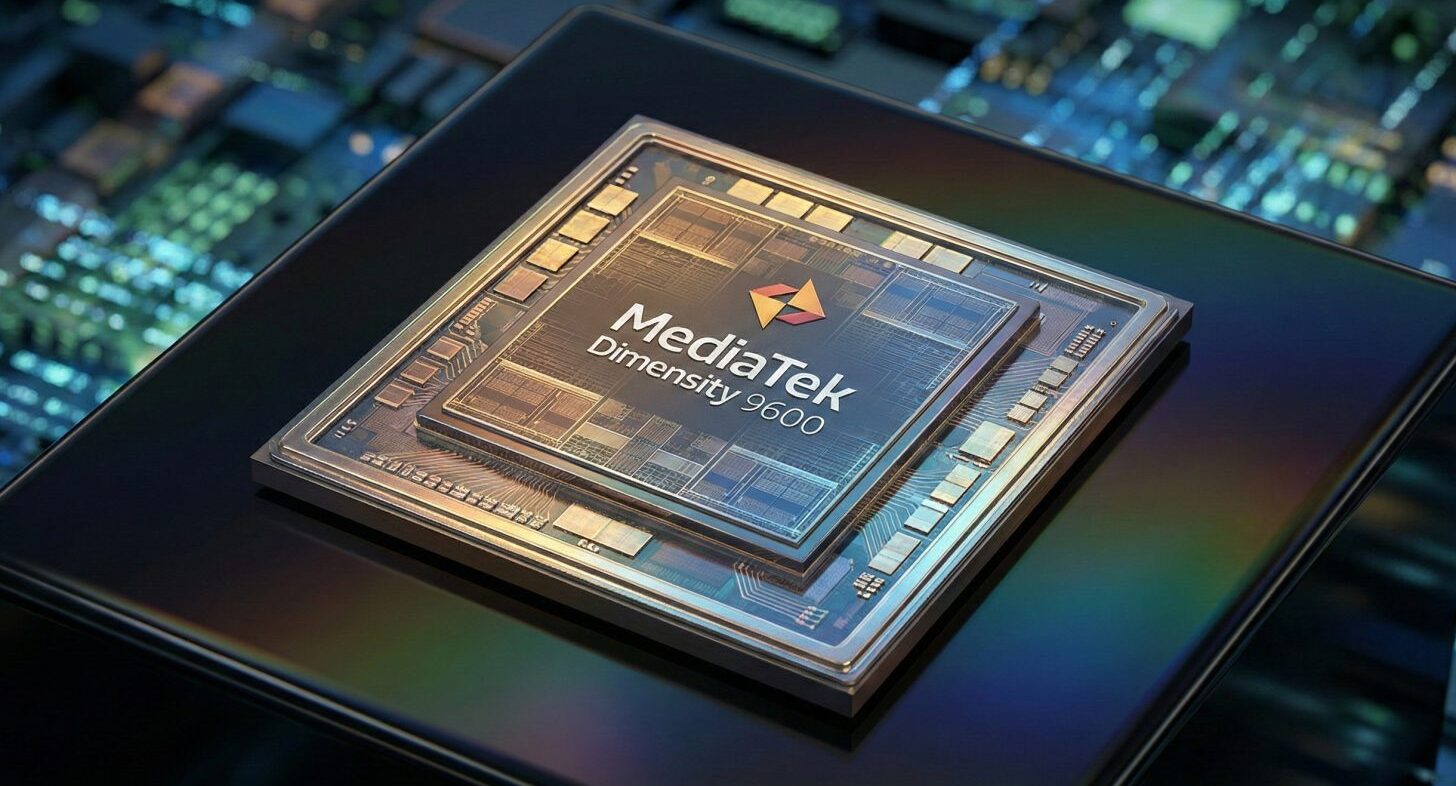
MediaTek has unveiled its Dimensity 9600 Pro flagship smartphone processor, joining Apple and Samsung in adopting advanced 2nm manufacturing technology.
Produced using TSMC’s latest process, the chip targets premium Android phones with a stronger focus on power efficiency, gaming and on-device artificial intelligence.
MediaTek claims the Dimensity 9600 Pro delivers 17% faster single-core performance and a 15% improvement in multi-core performance compared with its previous-generation flagship.
Its new 2+3+3 “All Big Core” CPU design features two C2-Ultra cores running at up to 4.55GHz, three C2-Pro cores at 4.35GHz and three additional C2-Pro cores at 3.1GHz.
The company claims multi-core power consumption has fallen by 61%, potentially allowing handset manufacturers to improve battery life without fitting larger batteries.
The Dimensity 9600 Pro follows Samsung’s 2nm Exynos 2600 and Apple’s A20 Pro, which powers the new iPhone Duo and iPhone 18 Pro range.

MediaTek has also introduced a dual-NPU architecture designed to run more complex AI workloads without relying on cloud processing.
Its NPU 1090 supports models containing up to 30 billion parameters and delivers a claimed 51% improvement in large language model prefill performance. A second efficiency-focused NPU reduces power use for always-on AI by 40%.
The processor introduces support for LPDDR6 memory and UFS 5.0 storage, helping move data more quickly for AI, gaming and multitasking workloads.
Its G2-Ultra NX graphics processor offers up to 27% higher peak performance, 18% faster ray tracing and 24% lower power consumption at peak output, according to MediaTek. Supported games can run at up to 185 frames per second.
For cameras, the Imagiq 1290 image processor supports 4K video at 240 frames per second, 4K120 cinematic log recording and up to 17 stops of dynamic range.
MediaTek also announced the Dimensity 9600M, intended to bring selected flagship capabilities to more affordable devices.
The first smartphones using both processors are expected to launch this quarter.
Oppo and Vivo are among the manufacturers expected to adopt the flagship chip, although specific models and Australian availability have not been confirmed.