LG Electronics Faces Existential Threat as Rival TCL Prepares to Shatter Its OLED Monopoly
 David Richards
19 May 2026
David Richards
19 May 2026
The South Korean consumer electronics giant, long the unchallenged king of OLED display technology, is staring down a disruption that could permanently reshape the global television industry with Australian retailers set to benefit from a new generation of products featuring high quality OLED at significantly cheaper prices than previously when LG Display panels were used.
LG Electronics, the company that built a highly profitable stranglehold on the OLED TV market which consumers paid a high price for, while simultaneously monetising confidential user data harvested from those same televisions, is now confronting a threat it cannot manufacture its way out of.
TCL, the Chinese display giant that ironically also manufactures RGB televisions for LG, is preparing to unleash a fundamentally cheaper method of producing OLED panels, one that market analysts say could slash production costs by up to 35% p and blow open a market LG has dominated for over a decade.
A Monopoly Built on Expensive Technology
LG’s OLED empire was constructed on a single, expensive foundation: LG Display’s White OLED manufacturing process, which relies on vacuum deposition and fine metal mask technology. The process produces undeniably premium picture quality, but it is slow, wasteful and costly, constraints that have dogged LG Display’s profitability for years despite commanding premium prices from consumers.
That same technology made LG Display the indispensable supplier to virtually the entire OLED TV industry. Samsung, Sony, Panasonic, Philips and others have all sourced their OLED television panels from LG Display, a dependency that handed LG enormous leverage over the premium TV market.
That leverage is now expiring.
TCL’s Cheaper, Cleaner Weapon
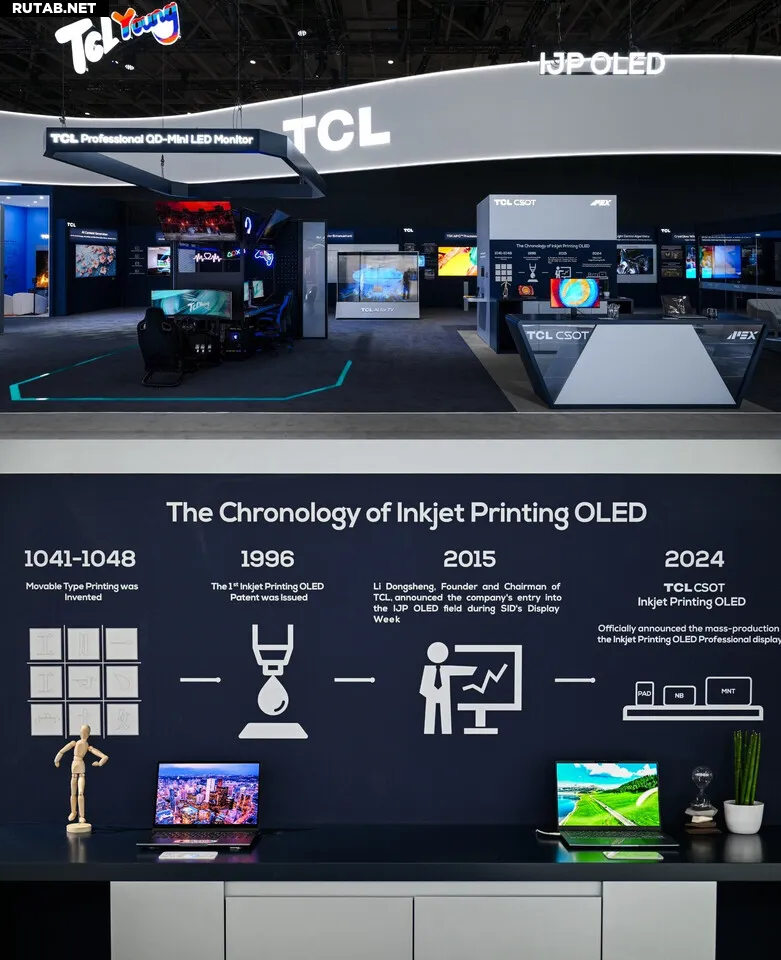
TCL’s CSOT division has become the first display manufacturer in the world to construct a production facility built around inkjet-printed OLED technology.
Where LG’s process sprays OLED material in a vacuum using fine metal masks, wasting significant quantities of expensive organic compounds, TCL’s inkjet printing approach deposits material with surgical precision, using less of it, wasting far less during production, and doing so with equipment that costs significantly less to purchase and maintain.
According to market research firm Omdia, the result is a manufacturing cost advantage of between 20 and 35% compared to current OLED production methods. For an industry where panel costs have perpetually squeezed margins, that gap is not a minor efficiency improvement. It is a structural competitive advantage.
The first printed OLED panels off TCL’s production lines are expected imminently, initially targeting notebooks, monitors and tablets, product categories where LG also competes. Inkjet-printed TV panels are to follow.
The Dominoes Are Already Falling
The strategic consequences are not hypothetical.
Every major television brand currently locked into sourcing OLED panels from LG Display, Sony, Samsung, Panasonic, Philips and others, will soon have an alternative supplier offering comparable quality at materially lower cost.
The competitive pressure to switch sourcing will be immense.
For LG Electronics, the damage is compounded. The company spent years and billions of dollars building large-format OLED production capacity on the assumption it would remain the only viable supplier. That infrastructure, and the debt and depreciation that came with it, does not disappear simply because a cheaper process has arrived.
Samsung Display and BOE are also constructing new mid-sized OLED facilities, though notably neither is adopting inkjet printing technology, suggesting TCL’s cost advantage may prove durable rather than temporary.
A Reckoning Long in the Making
Industry analysts have long noted that LG’s OLED TV business has struggled to generate consistent profit despite its premium positioning. Panel costs were always the ceiling on margins.
TCL has now found a way to lower that ceiling, for everyone except LG.
What is emerging is not merely a new competitor. It is a potential reordering of who controls the economics of the premium television market, and with it, who captures its profits.
LG Electronics, for the first time in the OLED era, may not have an answer.