LG Display Eyes Cheaper, Brighter And Longer-Lasting OLED Panels By 2029
 Dominic Bayley
25 Nov 2026
LG Display is reportedly shifting its OLED manufacturing strategy, with plans to upgrade an existing South Korean factory to accommodate a new production technology that could significantly reduce costs and improve display performance.
According to Korean newspaper Aju Press, the company is preparing to convert its 8.5-generation P8 facility in Paju into a dedicated manufacturing line for its maskless FLiPP technology.
The move follows reports that LG Display has scrapped plans for a new 10.5-generation factory intended to produce ultra-large OLED television panels.
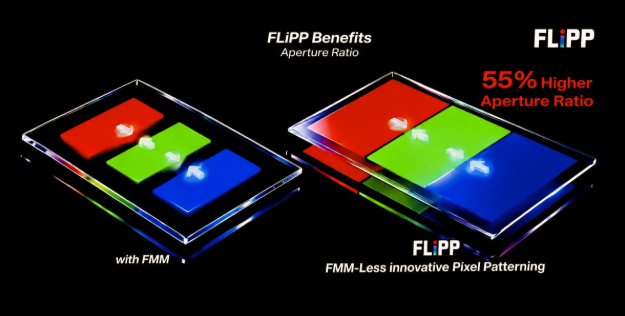
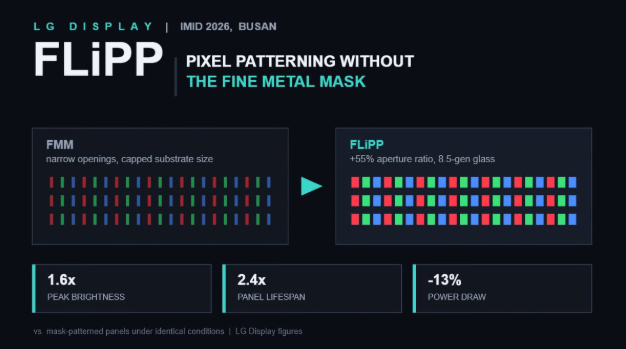
Unlike conventional OLED manufacturing methods that rely on fine metal masks (FMMs), FLiPP eliminates the need for these components, potentially making production more efficient and economical.
LG Display claims the technology can increase brightness by 60%, deliver 2.4 times the lifespan and reduce power consumption by 13% compared with panels produced using conventional FMM technology under identical conditions.
The improvements stem from a roughly 55% increase in the proportion of the display area occupied by light-emitting RGB pixels.
Industry sources suggest investment in the facility could begin in the first half of 2027, with commercial production commencing in 2029. However, LG Display has not officially confirmed the schedule.
While initial production is expected to focus on OLED displays for laptops and tablets, the technology could eventually benefit the television market. LG Display has previously confirmed that FLiPP can accommodate panels measuring up to 100 inches.
The company’s decision to repurpose an existing factory contrasts with the approach taken by its major competitors, which are investing heavily in new manufacturing facilities.
Samsung Display has already established an 8.6-generation OLED factory, while Chinese rival BOE has commenced production at a similar facility in Chengdu.
TCL CSOT is also expanding its OLED manufacturing capabilities, with a new 8.6-generation printed OLED factory in Guangzhou expected to enter mass production in late 2027.
The developments come as competition intensifies among display manufacturers to make OLED technology more affordable and accelerate its adoption across televisions, laptops and tablets.