iPhone 17 Air to Lead Apple’s September 10 Launch with 5.5mm Ultra-Thin Design
 Isabella Alexiou
09 Sep 2025
Isabella Alexiou
09 Sep 2025
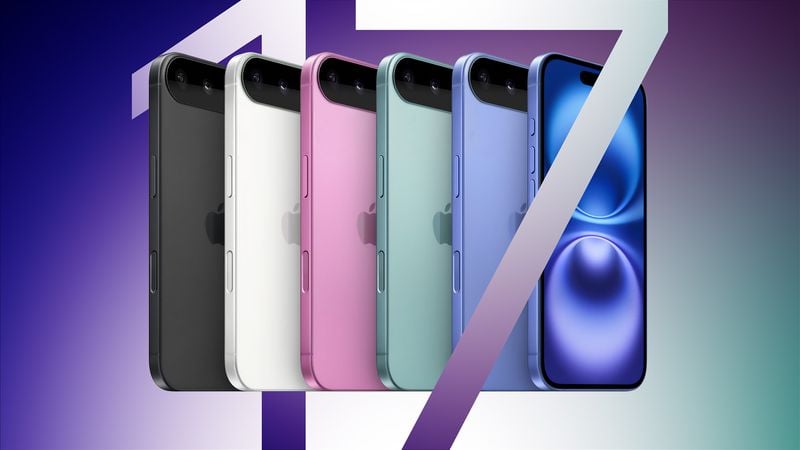
Apple will unveil its iPhone 17 lineup on Wednesday, September 10, at the Steve Jobs Theatre in Apple Park, with the headline addition of an ultra-slim “iPhone Air” model expected to measure between 5.5mm and 6.25mm thick.
The launch event, teased by CEO Tim Cook as “awe dropping,” will reveal four models: iPhone 17, iPhone 17 Pro, iPhone 17 Pro Max, and the new iPhone Air, marking one of Apple’s most significant design departures in years.
The iPhone Air, also referred to as the “iPhone Slim,” represents Apple’s push into ultra-thin devices.
Bloomberg’s Mark Gurman suggests it will be 6.25mm thick, 2mm thinner than the current iPhone 16 Pro’s 8.25mm profile.
Other leaks point to an even slimmer 5.5mm design based on dummy models used for case manufacturing.
However, the extreme thinness may come with compromises.
Reports from The Information suggest the iPhone Air’s battery will be significantly smaller, with only 60-70% of users expected to achieve full-day battery life.
Apple may offset this with next-generation silicon-anode batteries from supplier TDK, though confirmation awaits the official reveal.
Leaked footage allegedly from Chinese manufacturing facilities shows the iPhone 17 Pro Max featuring a dramatically enlarged camera island covering most of the phone’s upper portion.
The system appears to include three main cameras in a triangular arrangement with two additional smaller sensors.
In a departure from the all-glass Pro design, the new models reportedly feature a half-metal, half-glass back panel, with glass sections necessary for wireless charging compatibility.
All four models are expected to use aluminium frames rather than the titanium found in the iPhone 16 Pro.
A dedicated camera button, similar to the iPhone 16 Pro’s implementation, may join the standard controls.
Some prototypes suggest Apple is testing a unified volume/action button system.
The iPhone 17 and iPhone Air will feature the A19 chip, while Pro models receive the A19 Pro processor, addressing increased demands from AI applications.
All models are expected to include 12GB of RAM, up from 8GB in current Pro models.
To manage heat from the more powerful processors, iPhone 17 Pro models may incorporate vapour chamber cooling technology, a first for Apple.

This system uses liquid that becomes vapour to draw heat away from internal components.
Reverse wireless charging capabilities may finally arrive, allowing users to charge AirPods or Apple Watch by placing them on the phone’s back, a feature Android competitors have offered for years.
Analyst reports suggest Apple may increase prices by USD $50 (approximately $75) across the entire lineup due to tariff-related costs.
During a July earnings call, Tim Cook disclosed Apple paid USD $800 million in tariff costs in the June quarter, expecting USD $1.1 billion for the September quarter.
This would push the base iPhone 17 to USD $849 (approximately $1,275) and the iPhone 17 Pro to USD $1,049 (approximately $1,575).
However, Apple may offset the increase by raising base storage from 128GB to 256GB.
Australian pricing typically runs higher than direct conversion suggests, potentially placing the iPhone 17 around $1,499 and the Pro at $1,799.
The iPhone 17 standard models will offer black, white, steel grey, and potentially pastel green or purple options.
Pro models continue with Dark Blue, Grey, Black, and Silver, with rumours of a bold orange addition.
The iPhone Air may receive exclusive colour options, including a “Sky Blue” finish originally considered for Pro models.
Following Apple’s typical schedule, pre-orders should open Friday, September 12, with retail availability from September 19.
Despite the anticipation, investor sentiment remains cautious.
Apple shares typically fall on iPhone announcement days, and with the stock near all-time highs after adding USD $430 billion in market value since July, profit-taking seems likely.
The company faces questions about its AI strategy compared to competitors, with revenue growth expected to slow despite the recent 10% increase in Q3, Apple’s fastest in three years but still trailing rivals Meta and Alphabet.
At 30-times projected profits, Apple trades as the second-most expensive among the six largest S&P 500 companies, raising valuation concerns despite the product refresh.
The iPhone 17 launch represents a critical moment for Apple to demonstrate innovation leadership while justifying premium pricing in an increasingly competitive smartphone market.
Whether the slim design and technical upgrades prove sufficient to drive the upgrade cycle remains the key question for Wednesday’s reveal.