Home AI Demand & Data Centre AI Processing Set To Impact OZ Power Grids Claim Experts
 David Richards
12 Jan 2025
David Richards
12 Jan 2025
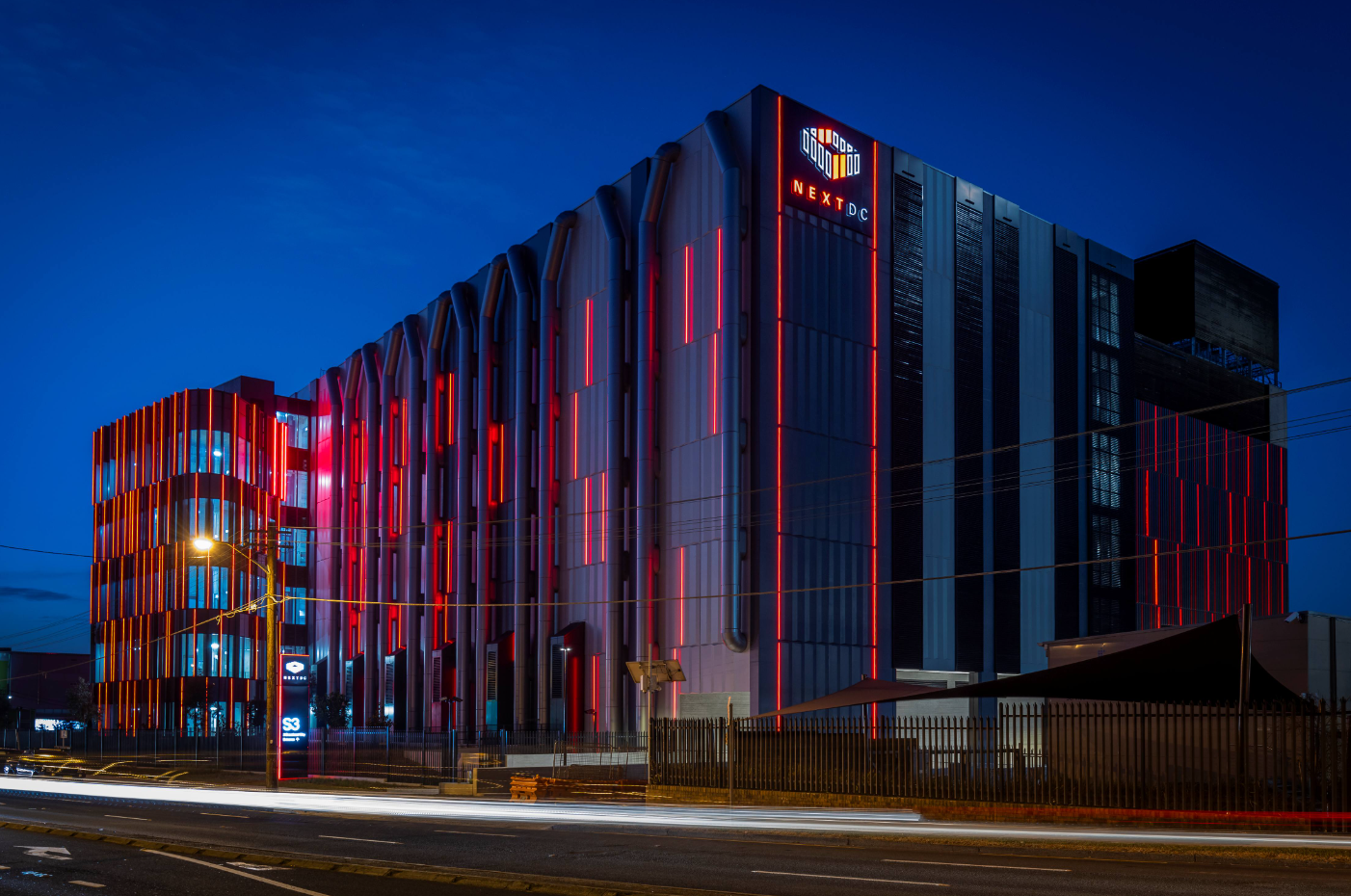
Large capacity data centres that are currently being expanded in Australia to cater for AI, could become a major problem with the AI reconfigured racks of servers sucking up huge amounts of power, with distorted power supplies tipped to impact home appliances and entertainment devices in the future.
New evidence revealed at CES show that the demand of AI processing in the home and in business, are set to impact data centres close to residential areas, by distorting the normal flow of electricity with experts claiming that power supply to millions of US homes already being affected by AI processing.
Australians are being warned to watch what is happening in the US, to get a feel as to what could happen to power supply in Australia as technology adopts AI across TV’s, appliances and hundreds of household products.
An exclusive Bloomberg analysis of the issue, reveals that more than three-quarters of highly-distorted power readings across the US are within a short distance of significant data center activity.
In Artarmon on Sydney’s North Shorth new data centres are being built out right next to where thousands of people live and where the NSW Government are allowing developers to build out large residential towers and commercial office space.
The term for distorted power supplies, is “bad harmonics.” It may seem a bit esoteric, but you can think of it like the static that can be heard when a speaker’s volume is jacked up higher than it can handle claim power experts.
Bloomberg claims that electricity travels across high-voltage lines in waves, and when those wave patterns deviate from what’s considered ideal, it distorts the power that flows into homes.
Bad harmonics can force home electronics to run hot, or even cause the motors in refrigerators and air conditioners to rattle. It’s an issue that can add up to billions of dollars in total damage.
More importantly, bad harmonics are symptomatic of much deeper problems that are engulfing power supply grids around the world.
It appears that when homes experience good, or stable, power quality, it means that the flow of electricity for lights and appliances is being delivered at an even and predictable pace.
The worse power quality gets, the more the risk increases. Sudden surges or sags in electrical supplies can lead to sparks and even home fires.
Left unaddressed, one problem can morph into another. That means the bad harmonics of today can be a sign of potential disaster down the road.
“Harmonics are a pretty good canary in the coal mine for early signs of stress and problems,” said Bob Marshall, chief executive officer of US Company Whisker Labs.
Whisker Labs tracks power quality in real-time using roughly 1 million residential sensors, which are spread so widely across the country that nearly 90% of US homes are within half a mile of one.
A Bloomberg analysis of exclusive sensor data coupled with data from DC Byte, a market intelligence firm, showed a strong link between proximity to data centers and worsening harmonics.
More than half of the tracked households showing the worst distortions of power quality are located within 30 kilometres of significant data centre activity, according to the analysis, which covered readings from February through October 2024.
Experts have been warning for some time now about the impact data centres will have on power grids across the globe.
The AI boom has only underscored the issue: The digital economy is sucking up so much power that demand is now straining available supplies of electricity in many parts of the world, leading to concerns over price increases and even widespread outages. And that’s only projected to worsen as more data centers are built.
“We need to understand those risks,” Hasala Dharmawardena, a senior member of the Institute of Electrical and Electronics Engineers told Bloomberg investigators.
He warns that power grids similar to those that are already in trouble in Australia have never faced the kinds of strain that comes with AI processing data centres.
He claims that even during population booms similar to what Australia is currently facing, the rise in power demand paled in comparison to the expected installation in the coming years of hundreds, perhaps thousands, of these facilities to power AI.
That stress is adding to problems of aging infrastructure, extreme weather and the electrification of more parts of everyday life, such as the rise of electric vehicles.
It’s especially important to understand the power system impact from AI “because it is such a big hammer” on the grid, Dharmawardena said. “The data center is a very large load. Take your house and increase that by 10,000. That is the difference between your house and a data centre.” he warned.