Google flags mobile-PC covergence, Snapdragon X2 Elite sets the pace
 Nigel Bowen
25 Sep 2025
Nigel Bowen
25 Sep 2025
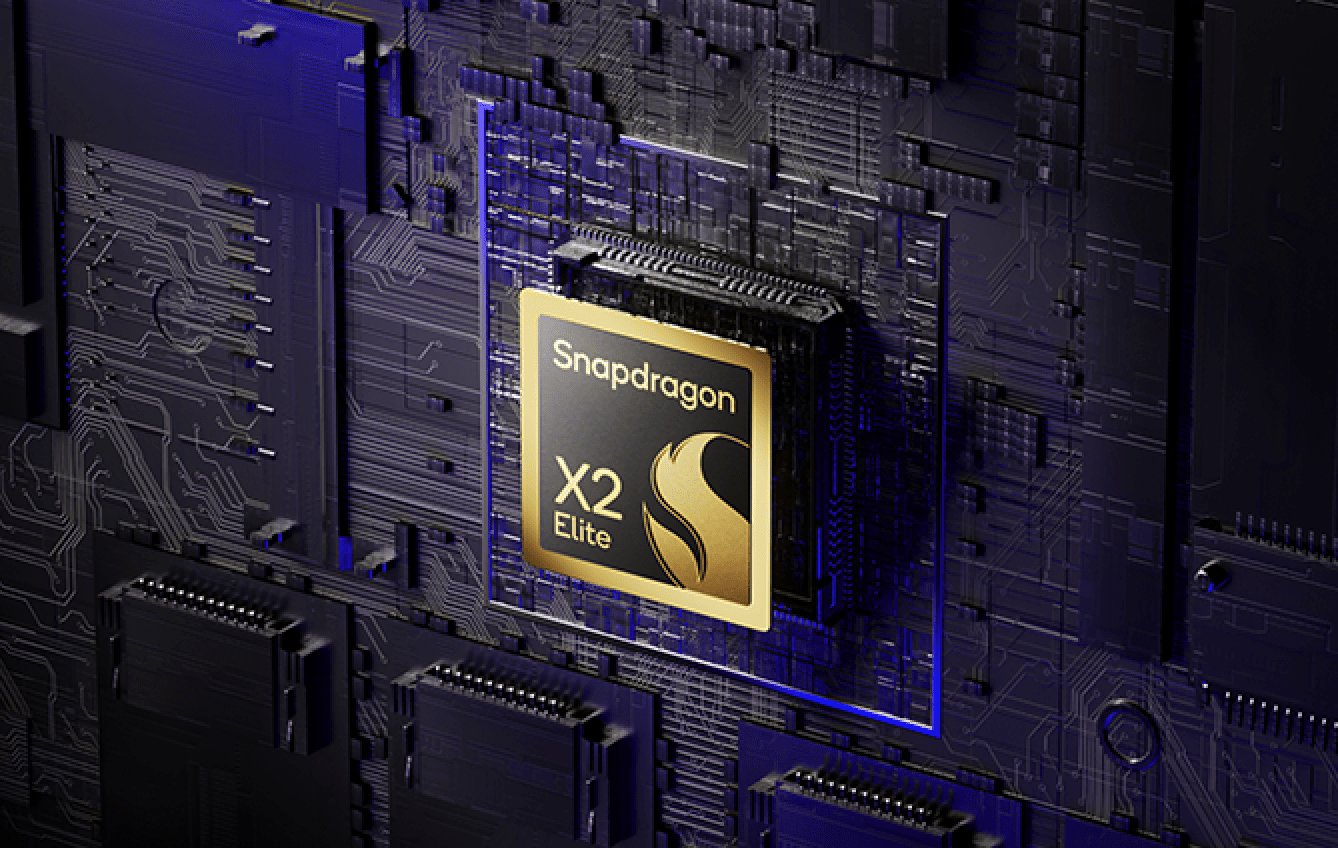
Qualcomm has taken the wraps off its next PC chips, Snapdragon X2 Elite and X2 Elite Extreme, the follow-ups to last year’s Snapdragon X Elite.
The headline promise is simple – more speed and better battery life in the same laptop sizes.
Or as Qualcomm puts it, these new chips are “the fastest and most efficient processors for Windows PCs” and deliver a “legendary leap in performance”.
Qualcomm says CPU performance is up to 31% higher at the same power as last year’s model, or the same speed using 43% less power.
That means snappier machines without paying a battery penalty, or longer run times at today’s performance.
On graphics, the company claims an up to 2.3x per watt improvement. That means for the same battery drain you can get much higher graphics performance. Or keep similar frame rates while the laptop runs cooler and quieter.
The Extreme version is even more impressive.
It carries 18 CPU cores, and two of them can briefly boost to 5GHz, which Qualcomm says is a first for an Arm-based laptop chip. (Arm is a UK semiconductor IP company that designs energy-efficient CPU blueprints.)
That occasional 5GHz boost helps with short, heavy jobs like exporting video, compiling code, or big photo edits.
The AI has been improved as well.
The on-chip AI engine is rated at 80 TOPS. Compared to last year’s Snapdragon X Elite, Qualcomm claims about 37% more performance while using 16% less power.

Both Qualcomm and Google have exciting news
On a day-to-day basis, that should make voice transcription, image tools and AI assistants run faster on the device, with less need to ping the cloud.
It also helps preserve battery life during those tasks.
These chips aren’t only for thin, ultraportable devices. Qualcomm says it has tested the Extreme at more than 50 watts, which points to some thicker, higher-powered designs aimed at creators and heavier users.
In related news, there’s also a potential platform shake-up coming from Google.
Rick Osterloh, Google’s senior vice president for Devices & Services, said Google, having long had “very different systems” for PCs and smartphones, had “embarked on a project to combine that”.
“We are building together a common technical foundation for our products on PCs and desktop computing systems,” he noted.
Qualcomm CEO Cristiano Amon is already a big fan of the upcoming common foundation.
“I’ve seen it, it is incredible,” he exclaimed at a recent Google event. “It delivers on the vision of convergence of mobile and PC. I can’t wait to have one.”
If Google really brings Android and ChromeOS much closer on PCs, laptop makers could have another non-Intel/AMD option alongside Windows-on-Arm.
The first laptops with the new processors are expected in the first half of 2026.