Google Developing Android Feature To Reduce Motion Sickness In Cars
 Joe Gallop
15 Dec 2025
Joe Gallop
15 Dec 2025

Google is preparing a built-in Android feature designed to reduce motion sickness when using your phone in a moving vehicle.
The feature, currently known as Motion Cues, has been spotted in recent Android test builds and is widely expected to arrive with Android 17, potentially rolling out first on Pixel devices.
Motion sickness occurs due to “sensory conflict” when your eyes focus on a stationary screen while your inner ear senses movement.
Google’s solution tackles this by adding subtle animated dots or visual markers to the edges of the display.
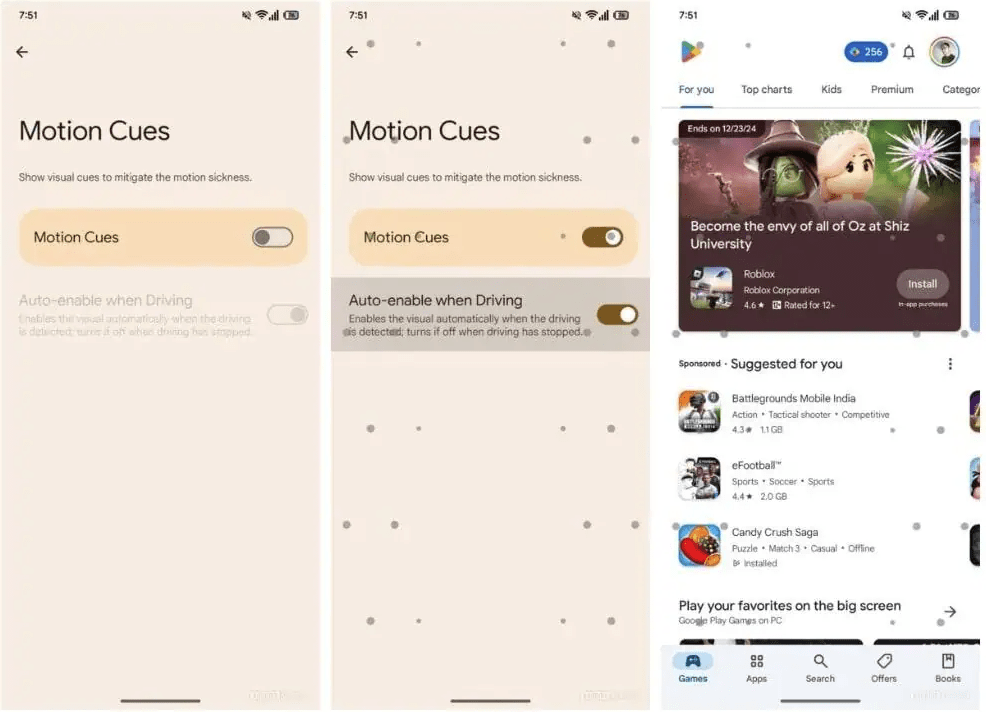
These cues move in real time using data from the phone’s motion sensors, visually matching the movement of the car, bus or train and helping the brain reconcile the mismatch.
The idea isn’t new. Apple introduced a similar tool called Vehicle Motion Cues in iOS 18, and third-party Android app KineStop has offered a comparable experience for years.
What makes Google’s approach different is that it’s being built directly into Android itself, removing the need for separate apps or risky overlay permissions.
Early testing revealed a key limitation.
Motion Cues initially disappeared when users opened system areas like notifications, settings or the lock screen.

To fix this, Google appears to be developing a dedicated system-level API that allows the visuals to stay visible across the entire interface.
Crucially, access will be restricted to trusted system apps, preventing misuse by third-party software.
As the feature requires deep operating system changes, it’s unlikely to arrive via a minor update.
Sources expect Motion Assist to debut as part of Android 17 in 2026, possibly alongside a new ‘Transiting Mode’ that automatically activates comfort features when travel is detected.
Until then, motion-sensitive users can still turn to third-party apps, but a native Android fix may finally be on the way.