Global Smart Glasses Shipments Surge With Meta Dominating
 April Ossington
11 Mar 2026
April Ossington
11 Mar 2026

Shipments of smart glasses increased sharply in the second half of 2025, with global volumes rising 139 per cent compared with the same period a year earlier. New figures from Counterpoint Research indicate that most of the growth was driven by AI-enabled models, which accounted for about 88 per cent of all devices shipped during the period.
The market expansion has been fuelled by two main factors. Meta continues to lead the sector with a growing portfolio of products, while several Chinese technology companies have begun launching their own smart glasses. Brands such as Li Auto, Rokid, BOLON, Baidu and Meizu introduced new models during the year, joined by a number of smaller manufacturers. Together these developments have helped transform smart glasses from a niche gadget into a growing consumer electronics category.
Meta strengthened its lead during the second half of 2025, capturing roughly 82 per cent of the market. The company has held a strong position since its collaboration with Ray-Ban first brought smart glasses to a wider audience. Its performance in 2025 was supported by several product lines at once. Shipments of the original Ray-Ban Meta AI glasses reached their highest point during the third quarter, helped by seasonal demand, while the second-generation version released in September quickly gained traction.
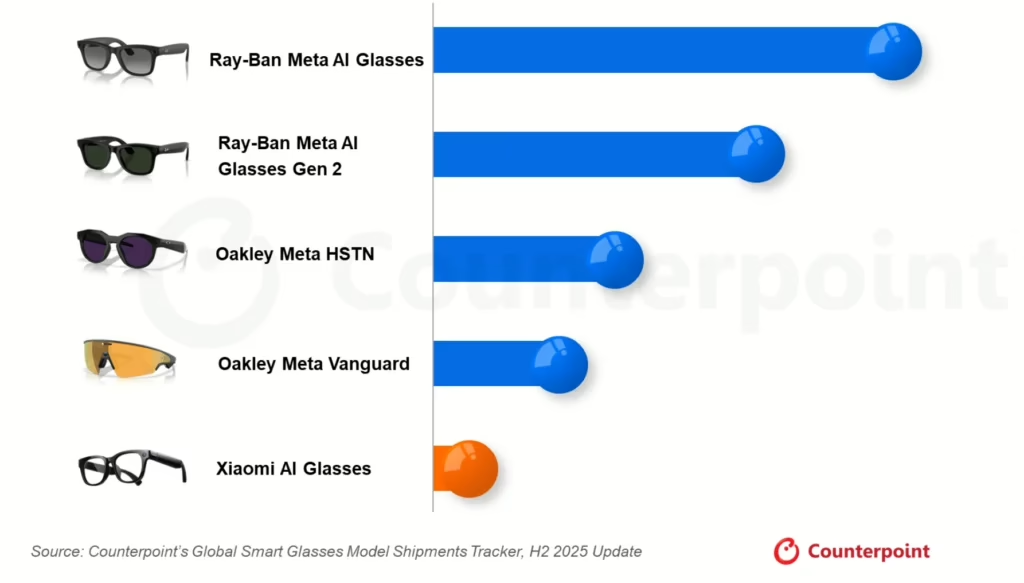
Meta also expanded beyond its lifestyle-focused Ray-Ban range. Sports-inspired models including the Oakley Meta HSTN and Oakley Meta Vanguard represented more than 30 per cent of the company’s shipments in the final quarter of 2025. The move suggests Meta is successfully broadening the appeal of its smart glasses beyond casual use.
Feedback from buyers of the second-generation Ray-Ban model has highlighted improvements in video performance. Hardware upgrades increased recording resolution from 1080p to 3K, while additional features such as improved image stabilisation, hyperlapse recording and slow-motion video were introduced. Despite these improvements, battery life continues to be one of the most common concerns among users, an issue that remains unresolved across the industry.
Pricing trends during the period suggest the market is evolving into two distinct segments. The average selling price of AI-enabled smart glasses rose slightly to around A$550, compared with about A$530 during the first half of the year. The increase was largely driven by Meta’s newer premium products.
At the same time, the cost of basic smart glasses dropped significantly. The average selling price for entry-level models fell to about A$96 as shipments shifted away from higher-priced audio-focused devices from companies such as Huawei and Amazon. Instead, lower-cost models priced below roughly A$75 from smaller manufacturers and white-label brands gained traction.
This split has implications for the companies supplying displays, optics and other components. AI-powered glasses priced around A$550 provide sufficient margins to justify investment in advanced features such as integrated displays, improved cameras and higher-quality audio systems. In contrast, the lower-priced segment functions largely as a simple audio accessory built into a glasses frame.
From a regional perspective, North America remained the largest market for smart glasses with 37 per cent of global shipments. Western Europe followed closely with 30 per cent, supported by new product launches from Meta. India experienced rapid growth after Meta officially entered the market in May 2025, with shipments expanding roughly fifteen times compared with the previous year. Even so, the country still represented only about 2 per cent of the global market.
China presents a more complex picture. Although the number of units shipped increased, its share of the global market declined to 6 per cent. This was largely because many newly launched devices shipped in relatively small volumes during the latter part of the year.
Xiaomi remains the leading brand within China and ranked second globally behind Meta. Its shipments grew more than 200 per cent year-on-year following the launch of its AI glasses in June 2025, helped by subsequent software updates that improved performance and broadened consumer interest.
Analysts say the number of Chinese manufacturers entering the category could reshape the market in the near future. While many companies currently operate at small scale, a few could gain significant traction during 2026 if production volumes increase.
Looking ahead, component costs could present a challenge for manufacturers. Counterpoint noted that rising memory prices may place pressure on margins in 2026. The research firm believes the effect will be relatively limited because AI smart glasses currently command strong profit margins and memory accounts for a small portion of the overall component cost.
However, as the market expands and more brands compete in lower price ranges, the impact of rising component costs could become more noticeable. Similar pressures have already been seen in other consumer electronics sectors where manufacturers compete heavily on price rather than premium features.