EXCLUSIVE: :V-ZUG Takes Fight To Gaggenau As Swiss Appliance Giant Targets Australia’s Wealthy Property Buyers
 David Richards
29 Oct 2026
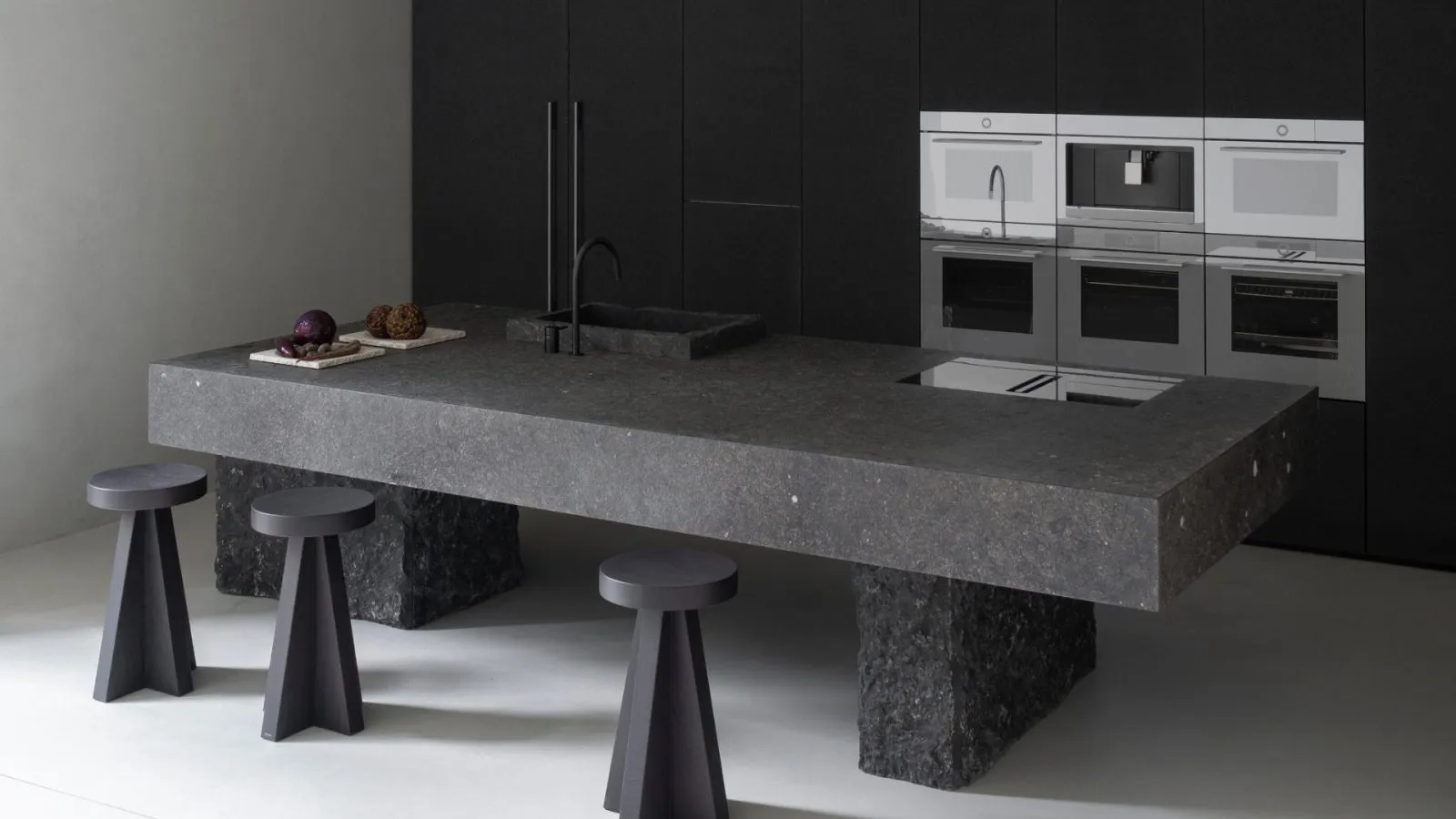
With German appliance giant BSH cutting costs, restructuring factories and battling margin pressure, Swiss luxury appliance manufacturer V-ZUG is stepping up its international expansion, with Australia emerging as a critical battleground in the fight for wealthy consumers, property developers and the premium kitchen market.
Swiss appliance manufacturer V-ZUG is preparing to take a bigger slice of Australia’s lucrative luxury kitchen market, directly challenging established premium brands Gaggenau and Miele as its German rivals confront a tougher global appliance market.
And unlike several competitors that are restructuring operations, cutting jobs and looking to strip costs out of their businesses, V-ZUG is investing in international expansion, new showrooms, product development and relationships with architects and developers of multimillion-dollar properties.
During an exclusive interview with ChannelNews this week at V-ZUG’s Surry Hills studio in Sydney, Yvonne Ongetta Spadaccini, the company’s head of international operations, made it clear that Australia is central to the Swiss manufacturer’s ambitions.
“We are witnessing success in several international markets,” she said.
What became apparent during the interview was that V-ZUG is not interested in competing for the mass market.
Instead, it wants to capture wealthy consumers who are prepared to spend substantially more on premium kitchen appliances, along with property developers who increasingly see luxury European appliances as an important selling point in high-end residential developments.
For Ongetta, joining a company where craftsmanship, heritage and ambition go hand in hand” is rare” she has admitted.
And that’s exactly what attracted her to V-ZUG with its strong Swiss brand, and the possibility to expand its international visibility.
She claims that V-ZUG represents Swiss made quality, precision, design and sustainability, values that we consistently uphold also in our international business.
“I’m personally motivated by working with our teams and partners to make these strengths tangible for customers in very different markets including Australia” she said.
For arch rival Gaggenau, the ultra-premium German appliance brand owned by BSH, the emergence of a more aggressive V-ZUG presents another competitive challenge at a time when its parent company is restructuring parts of its global business.
BSH also owns Bosch, Siemens and NEFF, giving it considerable manufacturing scale and distribution strength.
However, the contrast between the two businesses is becoming increasingly apparent.
While BSH is concentrating on cost reductions, manufacturing efficiency and protecting profitability, V-ZUG is pushing ahead with international expansion and attempting to establish itself as an increasingly desirable alternative to Gaggenau.
The Swiss manufacturer believes its combination of precision engineering, distinctive design, premium finishes and Swiss manufacturing heritage gives it an opportunity to capture customers who have traditionally gravitated towards German luxury appliances.
And in Australia, the company is already seeing evidence of that opportunity. 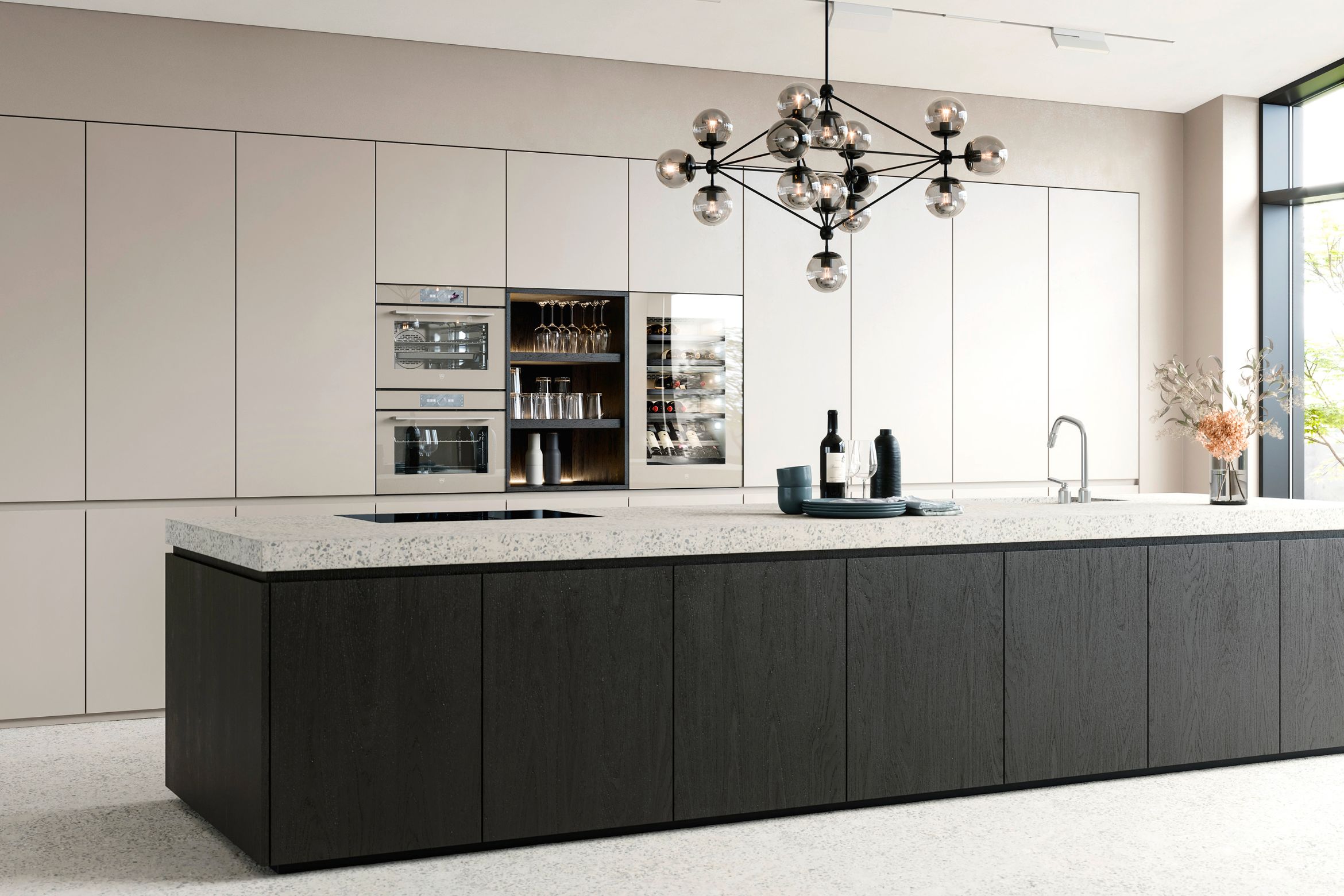
Luxury Property Developers Are Driving Australian Growth
According to Chriss Knott, general manager of V-ZUG’s Australian operation and a former Miele executive, the company’s expanding Australian business is increasingly being driven by property developers and the commercial specification market.
Knott told ChannelNews that approximately 60% of V-ZUG’s Australian business now comes from commercial projects, with the remaining 40% generated by residential customers.
That is a significant split for a brand competing at the very top of the appliance market.
It suggests that V-ZUG is increasingly being specified by architects, interior designers and developers working on premium apartment developments and custom-built luxury homes, rather than relying solely on consumers walking into appliance showrooms.
For developers selling multimillion-dollar apartments, the choice of kitchen appliances has become another way of differentiating a property.
The presence of an established European luxury brand can contribute to a property’s premium positioning, although the extent to which it increases resale value is difficult to quantify.
For V-ZUG, securing a major apartment development can also generate substantial appliance sales from a single commercial relationship.
It is a strategy that places the Swiss manufacturer in direct competition with Gaggenau, Miele and other established premium European brands.
And it could have significant implications for Australian retailers and commercial distributors including Winnings, e&s and Harvey Norman Commercial, all of which compete for high-value appliance sales and relationships with the building industry.
BSH’s Australian Profit Raises Questions
The growing competitive threat comes as questions continue to be raised about the financial performance of BSH’s Australian operation.
ChannelNews has previously reported that the Australian business generated approximately A$495 million in annual revenue but delivered just A$12,000 in after-tax profit.
That represents an extraordinarily thin net profit margin of approximately 0.0024%.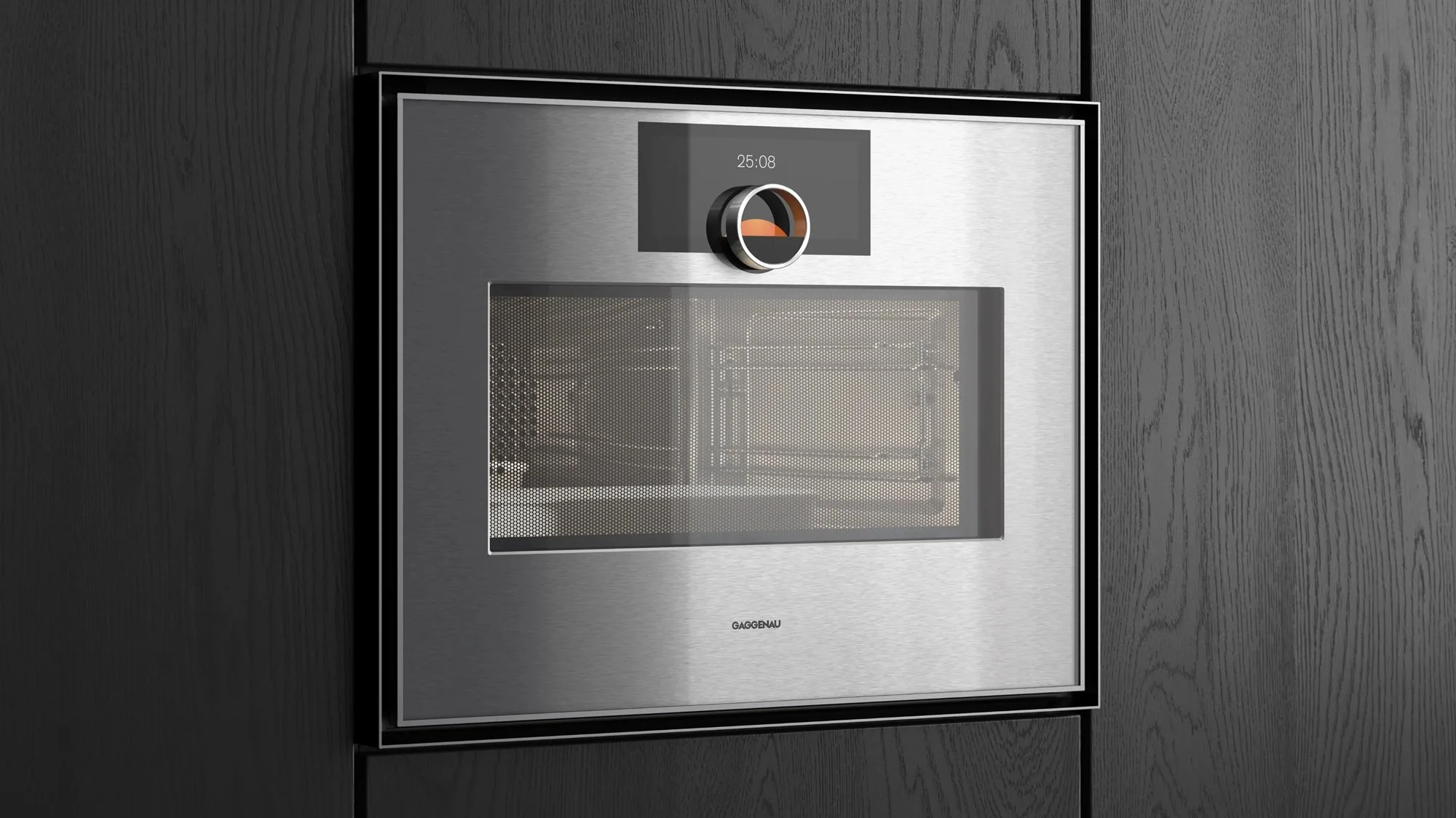
While those figures cover BSH’s entire Australian operation rather than Gaggenau alone, they highlight the financial pressures that can exist even within a major global appliance group.
They also raise questions about the profitability of supplying appliances in Australia, where retailers are demanding competitive pricing, distribution costs remain significant and suppliers face growing competition from established European manufacturers and increasingly ambitious Asian brands.
What is not publicly known is whether Gaggenau’s Australian operation is suffering from declining volumes, lower margins or increased operating costs.
BSH does not separately disclose Gaggenau’s Australian financial performance, making it impossible to determine how profitable the luxury brand is within the wider operation.
Nevertheless, BSH’s broader restructuring, including factory closures and workforce reductions, highlights the pressures facing European appliance manufacturers.
Gaggenau remains a formidable competitor, backed by BSH’s global manufacturing, research and development and distribution capabilities.
The brand has also demonstrated growth in North America, indicating that the problems confronting the wider BSH business should not automatically be interpreted as weakness within Gaggenau.
However, V-ZUG clearly believes there is an opportunity to challenge the established hierarchy of the premium appliance market.
V-ZUG Profits Surge As International Expansion Accelerates
Unlike some competitors struggling to protect earnings, V-ZUG has reported a substantial improvement in profitability.
During the first half of 2026, its net profit increased from approximately A$2.74 million to A$11.81 million, more than quadrupling.
Its operating profit more than doubled, while its EBIT margin improved from 1.1% to 2.8%.
International sales reached approximately A$74.8 million, including A$25.7 million generated by its North American original equipment manufacturing business.
That North American OEM contribution increased from approximately A$14.7 million in the corresponding previous period.
Although OEM sales are not necessarily evidence of growing consumer demand for V-ZUG-branded appliances, they demonstrate the company’s expanding international commercial activity.
Management is now targeting average annual organic international sales growth of more than 10%, overall group sales growth of approximately 3% and an eventual EBIT margin of around 10%.
Those are ambitious objectives for a manufacturer operating in a premium appliance market where even wealthy consumers are becoming more selective about spending.
But Ongetta Spadaccini believes there is considerable room for expansion.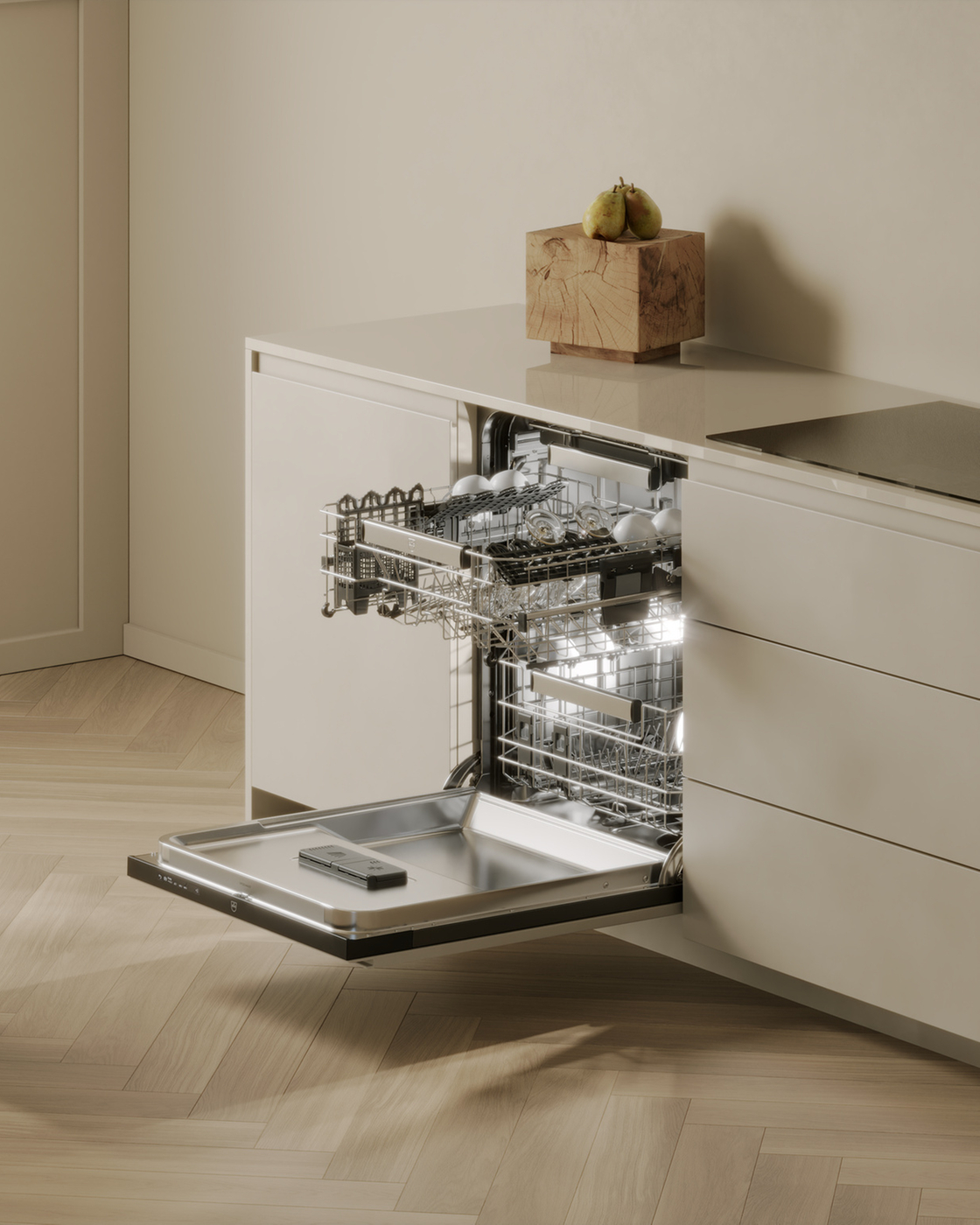
The former Accenture and Bosch Power Tools executive, who joined V-ZUG in April 2026, brings extensive international management and sales experience to the Swiss company.
Her appointment is part of a broader push to establish V-ZUG as a more recognisable international luxury appliance brand.
During our interview, she made it clear that she is looking for “substantial growth”, but not at the expense of profitability, product quality or after-sales service.
That distinction is important.
V-ZUG is not attempting to build a mass-market appliance business.
Instead, it is concentrating on selected countries where affluent consumers, established retail partners and dependable service infrastructure provide opportunities for profitable expansion.
Australia is one of four priority international markets.
Twenty New Retail Outlets And A Push Into China
The scale of V-ZUG’s ambitions became clearer in September when the company announced plans to establish 20 additional partner-operated retail and mono-brand outlets worldwide by the end of 2026.
Those outlets would complement six already operating under the expansion program.
The company has also opened House 12, a luxury brand experience venue in Shanghai, reinforcing its determination to build a stronger presence among affluent Chinese consumers.
China remains an important market for European luxury brands, despite the challenges created by weaker property activity and changing consumer spending patterns.
The UK has also received renewed management attention, with V-ZUG seeking to improve retail penetration and international brand recognition.
Australia, meanwhile, is being positioned as a market where the company can expand through a combination of luxury residential projects, specialist appliance retailers and direct engagement with architects and interior designers.
Knott is now tasked with strengthening the company’s local position, with additional showroom investment, distribution partnerships and premium kitchen specification opportunities under consideration for 2027.
The potential implications for Gaggenau are significant.
For years, the German brand has been one of the preferred names among architects, kitchen designers and wealthy homeowners looking for high-end European appliances.
V-ZUG now wants a bigger share of that business.
And it is increasingly using design, finish options and brand experience to differentiate itself.
Swiss Design Takes On German Engineering
One of the more interesting aspects of V-ZUG’s strategy is its determination to compete on design as much as engineering.
During our discussion, Ongetta Spadaccini expressed confidence in the company’s product offering and its ability to compete directly with Gaggenau.
One industry observer was even more direct.
“They also have better colours,” the observer quipped.
That might sound like a minor distinction in a market where consumers can spend tens of thousands of dollars fitting out a kitchen, but design is becoming an increasingly important competitive weapon.
One of V-ZUG’s standout finishes is Pearl, a soft, shimmering warm grey and champagne-toned mirror glass incorporating fine metallic particles.
The finish changes in depth and appearance depending on how light strikes the surface.
It is particularly suited to lighter kitchen palettes, coastal interiors and warm timber finishes, design trends that are increasingly prominent in Australia’s luxury residential market.
For architects and interior designers, such finishes provide greater flexibility when integrating appliances into expensive custom-built kitchens.
For V-ZUG, the strategy is also about moving beyond the perception that all premium European appliances offer broadly similar stainless-steel or black-glass finishes.
The company wants its products to become part of the visual identity of a luxury kitchen rather than simply functional appliances installed within it.
New Products And A 41-Year-Old Appliance
V-ZUG is also preparing a new generation of products designed to strengthen its position against Gaggenau and Miele.
Among them is the CookTop V6000 Integra, scheduled for launch in 2027.
The company is also expanding its refrigeration, dishwasher and ventilation ranges as it seeks to offer a more comprehensive premium kitchen solution.
However, Ongetta Spadaccini believes that long-term reliability and service are equally important to the company’s luxury positioning.
V-ZUG offers 10-year warranties on eligible products and says it maintains spare-parts support for five years after a product has reached the end of its portfolio life.
During our interview, she recounted the story of an elderly customer who recently approached the company seeking a service call.
The appliance was still operating.
The remarkable part was its age.
It was 41 years old.
For Ongetta Spadaccini, the incident demonstrated the longevity that V-ZUG wants customers to associate with Swiss engineering.
It also highlights another battleground in the luxury appliance market.
Consumers paying premium prices increasingly expect products to last considerably longer than cheaper mass-market alternatives.
And for wealthy homeowners, developers and luxury property managers, dependable service and the availability of spare parts can be just as important as design and performance.
The Battle For Australia’s Luxury Kitchens Is Heating Up
The next 12 months could prove important for V-ZUG’s Australian ambitions.
The company has improving profitability, a more focused international management structure and plans to invest in distribution, product innovation and stronger relationships with the luxury property industry.
Gaggenau, meanwhile, retains considerable advantages, including an established global reputation, extensive product development resources and the financial backing of BSH.
Miele is another powerful competitor with a long-established Australian presence.
But the competitive landscape is changing.
V-ZUG is attempting to turn its Swiss heritage, premium finishes and engineering reputation into a much larger international business.
And its management appears convinced that Australia offers opportunities to accelerate that growth.
Ongetta Spadaccini’s five-year ambition is to build a stronger and more recognisable international V-ZUG business, supported by scalable operations, reliable service networks and established local partnerships.
Achieving that ambition will require more than opening showrooms.
The company must convince architects, developers, retailers and wealthy consumers that its products deserve a place alongside, or in preference to, some of the most established names in luxury appliances.
For Gaggenau, the immediate challenge is not that V-ZUG has overtaken it. There is no publicly available market-share evidence to support such a conclusion.
The threat is that a smaller, increasingly ambitious Swiss competitor is investing in precisely the international markets and high-value customers that Gaggenau has spent decades cultivating.
And while BSH works to improve the efficiency and profitability of its wider appliance empire, V-ZUG is preparing to spend more money building its international presence.
In Australia, where luxury property developers can specify hundreds of premium appliances across a single project, the rewards for winning those relationships can be substantial.
For Gaggenau, Miele and their retail partners, V-ZUG’s expansion is another reason the battle for Australia’s most expensive kitchens is becoming increasingly competitive.