DJI Robot Vac Set To Take Off
 David Richards
25 Jul 2025
David Richards
25 Jul 2025
Best known for its drones and handheld video cameras, Chinese tech giant DJI is expanding into new territory with the launch of its first-ever robotic vacuum cleaner.
Set to be officially unveiled in early August, the new product—called Romo—marks DJI’s entry into the competitive smart home appliance space. The announcement was made via DJI’s official Weibo account, accompanied by a teaser poster and the tagline “Unmatched Power.”
According to sources familiar with DJI’s internal roadmap, the Romo has been in development for more than four years. Retailers in Australia are already aware of the upcoming launch, signalling that a global rollout may follow soon after the Chinese debut.
Leveraging DJI’s core strengths in visual navigation, obstacle avoidance, and intelligent path planning, the Romo is expected to bring advanced features typically reserved for high-end vacuum cleaners.
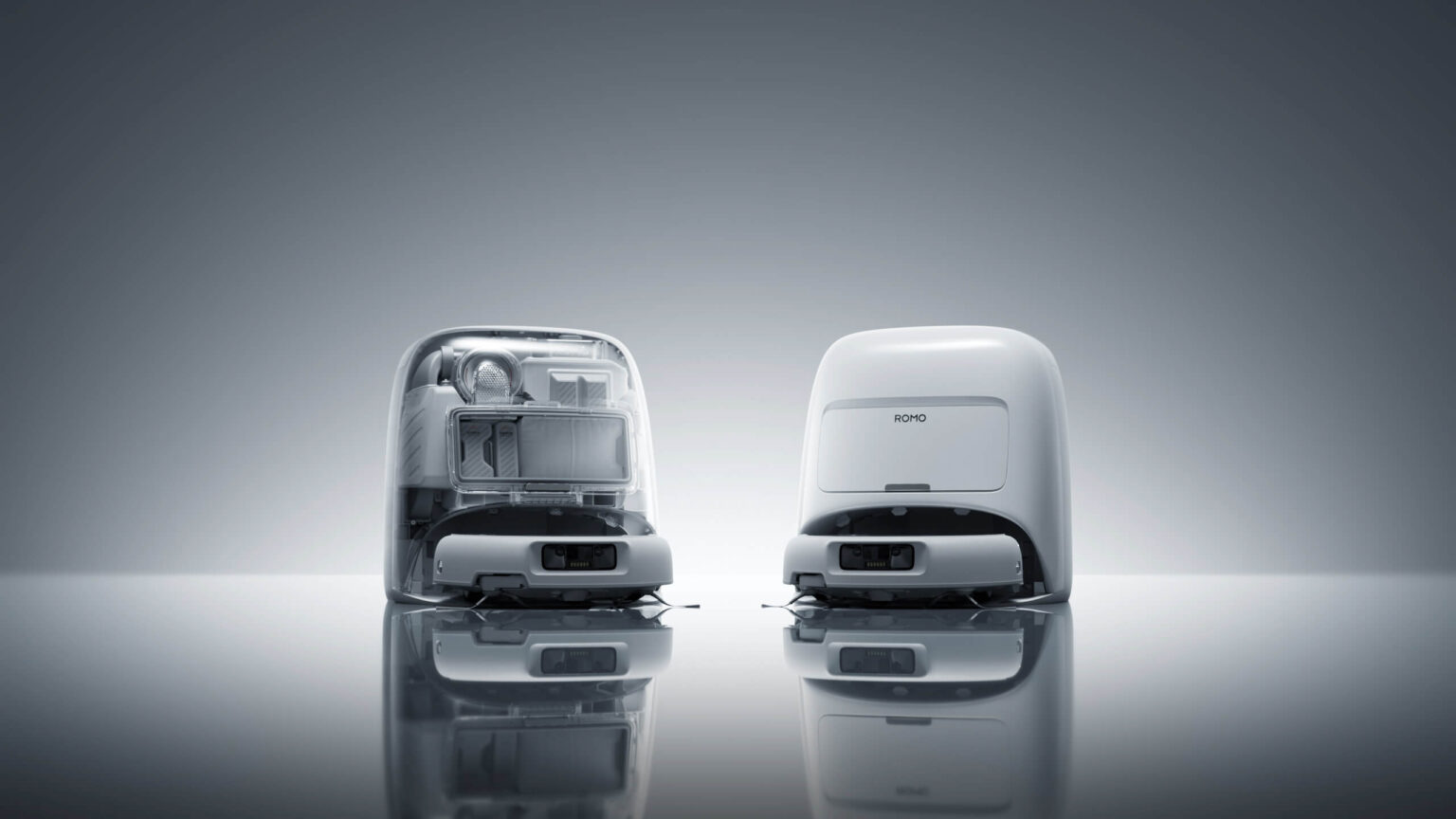
The teaser image reveals two docking station designs: one features a semi-transparent, Nothing-style structure that exposes internal components such as the dustbin, water tank, and mop-cleaning mechanism—clearly designed to showcase its engineering. The second design takes a more minimalistic approach, featuring a smooth, white enclosure with a discreet front flap labeled “Romo,” ideal for modern living spaces.
The vacuum itself has a clean, circular design and low profile, equipped with front-facing sensors likely used for 3D mapping and real-time obstacle detection. Twin side brushes direct debris toward the central suction area, suggesting an emphasis on efficient cleaning performance.
Inside the open-style dock, a thoughtfully organized layout includes designated zones for dust and water storage, along with what appears to be a rotating element for automated mop washing and drying. The system hints at support for auto-refill and self-cleaning features—capabilities already seen in premium models from rivals such as Ecovacs, Roborock and Dreame.
With Romo, DJI is signaling more than just a product launch—it’s a calculated step into the smart home arena, and possibly the start of a broader push beyond aerial and handheld imaging.