China Accelerates Advanced Chip Production Push To Power Home-Grown AI Ambitions
 April Ossington
26 Feb 2026
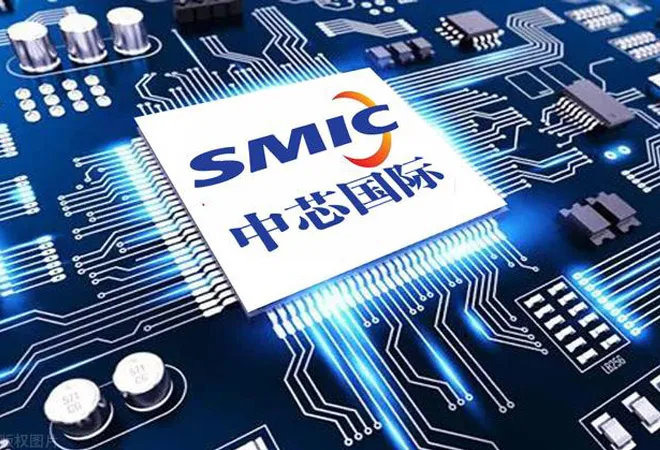
China’s leading semiconductor manufacturers are intensifying efforts to increase output of higher-performance chips, backed by substantial state support, as the country seeks to underpin the rapid growth of its domestic artificial intelligence sector despite continuing United States export controls.
Semiconductor Manufacturing International Co, Hua Hong Semiconductor and several chip producers with ties to Huawei are either expanding existing facilities or preparing new production lines capable of manufacturing chips at the most sophisticated process nodes currently achievable within China. These include 7-nanometre class processes and iterations approaching 5-nm performance levels, according to individuals familiar with the plans. The objective is to supply the surging domestic demand for AI processors and data-centre hardware.
In semiconductor fabrication, smaller nanometre figures generally indicate more advanced technology. Globally, 3-nm chips represent the forefront of large-scale commercial production, with 2-nm devices beginning to enter early manufacturing stages at companies such as TSMC. Nodes at 10-nm, 7-nm and below are typically regarded as advanced, and only a limited number of manufacturers worldwide can produce them in high volumes.
China is aiming to raise output of these relatively advanced chips to around 100,000 wafers within one to two years, up from fewer than 20,000 at present, according to two sources. One of them said policymakers have outlined a longer-term ambition to add a further 500,000 wafers of annual capacity by 2030. Whether those targets can be achieved remains uncertain, as US restrictions have limited access to cutting-edge fabrication tools. While domestic equipment makers have improved their capabilities, foreign-produced systems continue to outperform local alternatives in critical areas.
SMIC, which appears on the US Entity List trade blacklist, is leading the drive to advance China’s chipmaking capabilities. Lacking access to ASML’s extreme ultra-violet lithography machines, the company has relied on less sophisticated deep ultra-violet tools combined with complex multi-patterning techniques to manufacture chips described by industry observers as 7-nm-like. This approach has been replicated at facilities in Shanghai and Beijing, with co-chief executive Liang Mong-Song playing a central technical role, sources said.
The company is also developing processes sometimes characterised as 5-nm-like. Huawei’s Kirin 9030 smartphone processors and its latest Ascend AI accelerators are produced using SMIC’s N+3 technology, an enhanced version of its 7-nm platform designed to deliver performance comparable to 5-nm generation chips.
Despite these advances, SMIC avoids formally labelling its lines as advanced nodes. Industry executives say the greater challenge lies not only in technological breakthroughs but in ensuring sufficient yield rates and consistent production volumes.
Hua Hong Semiconductor, historically focused on mature-node manufacturing, has begun shifting resources towards more sophisticated processes under pressure from central and regional authorities to strengthen domestic capacity. Huawei has provided technical assistance to support this transition, according to people familiar with the matter.
Other Huawei-linked ventures in southern China are also moving into advanced chip fabrication. PengXinWei has become an important research and development hub for Huawei’s pilot production lines, while Dongguan Guangmao Technologies, established in late 2023 with backing from the Dongguan municipal government and Huawei, intends to manufacture chips more advanced than 10-nm.
JHICC, previously known for memory chip production and also subject to US sanctions, is now being used as a testing ground for domestically developed fabrication equipment and materials, providing a semi-commercial environment for validation.
Huawei occupies a pivotal position in coordinating production expansion across advanced logic chips and critical power components. The company plans to introduce several new Ascend processors in 2026, including the Ascend 950 PR and Ascend 950DT, alongside integrated AI computing systems.
In 2024, Huawei accounted for approximately 23 per cent of China’s AI computing chip market, according to Bernstein Research. Nvidia retained 66 per cent, while AMD held 5 per cent. Domestic developers such as MetaX and Moore Threads each had around 1 per cent.
Government bodies at both national and local levels play an active role in allocating scarce advanced manufacturing capacity among domestic chip designers. Huawei is reported to receive priority access, followed by groups including Cambricon Technologies, Alibaba’s T-head semiconductor unit, Sugon Information, Moore Threads and MetaX.
Limited advanced manufacturing capacity remains one of the principal constraints on China’s ambition to construct an AI computing ecosystem capable of challenging that of the United States. Analysts note that the competitiveness of domestic AI chip designers depends heavily on reliable access to high-performance fabrication within China, especially as restrictions limit cooperation with overseas foundries.
The shift towards local production partners marks a significant departure from the past, when Chinese designers commonly relied on TSMC or Samsung for contract manufacturing services. Industry executives say that strategy is no longer considered sustainable in the long term.
For China’s leading foundries, the change represents a major commercial opportunity. SMIC has become the world’s third-largest contract chipmaker by revenue, behind TSMC and Samsung, while Hua Hong has narrowed the gap with GlobalFoundries and Taiwan’s UMC in terms of market capitalisation.
Even so, industry sources caution that sharply increasing output may still fall short of total domestic demand for advanced logic chips and is unlikely to pose an immediate competitive threat to established global leaders.
Among chip designers, Cambricon has reported rapid revenue growth since late 2024 and achieved its first annual net profit last year. It supplies inference processors to Alibaba Cloud and is collaborating with Alibaba on next-generation designs. The company has stated that it has mastered key technologies for complex physical chip design at 7-nm nodes and has deployed them across several products.
Hygon Information Technology has also emerged as a domestic alternative to Nvidia’s A100, with its DCU accelerators compatible with widely used AI software frameworks. The company generated 2.74 billion yuan in AI chip revenue during the first three quarters of 2025, representing an increase of 45 per cent year on year, equivalent to roughly A$580 million at current exchange rates.
Research from Donghai Securities in December indicated that domestically developed CPUs accounted for more than 60 per cent of procurement under China’s Xinchuang information technology programme, with Huawei and Hygon leading the primary tier of suppliers.
Authorities are also considering regulatory measures to oversee purchases of Nvidia’s H200 AI processors, even if Washington authorises their sale, reflecting an effort to balance support for domestic champions with continued participation by foreign vendors.
Access to the most advanced lithography equipment, particularly EUV and leading immersion systems, remains a significant obstacle. Nonetheless, China is increasing investment in its own lithography development programmes and encouraging chipmakers to source domestic tools wherever feasible. At the same time, the slowing pace of Moore’s Law and a growing industry focus on advanced packaging techniques may provide additional avenues for incremental progress.
Analysts observe that although China’s ambitions are substantial, rapid scaling remains constrained by equipment limitations. However, supply chain assessments suggest leading foundries are firmly in expansion mode, pushing deeper into more advanced process nodes.
While EUV lithography remains beyond China’s reach for now, broader segments of the domestic semiconductor equipment industry have improved markedly. Continued capacity expansion is expected to benefit not only local manufacturers but also foreign equipment suppliers whose products comply with export control regulations.