Caught Lying About Market Share, Dreame Pivots To New Claims As Chinese Brands Take On Rivals In Robot Vacuum War
 David Richards
07 Jul 2026
David Richards
07 Jul 2026
After ChannelNews exposed Chinese appliance brand Dreame for openly fabricating robotic vacuum market share claims in Australia, a move fully supported by their global PR firm We Communications, the Company has quickly pivoted, with their social media marketing now claiming they have manufactured 10 million cleaning devices.
The stunt is symptomatic of a bigger war: Chinese robot vacuum brands are locked in a brutal battle for dominance, and the biggest casualties are South Korea’s Samsung Electronics and LG Electronics, both of whom are now scrambling to claw back ground in Australia with new robotic cleaning models.
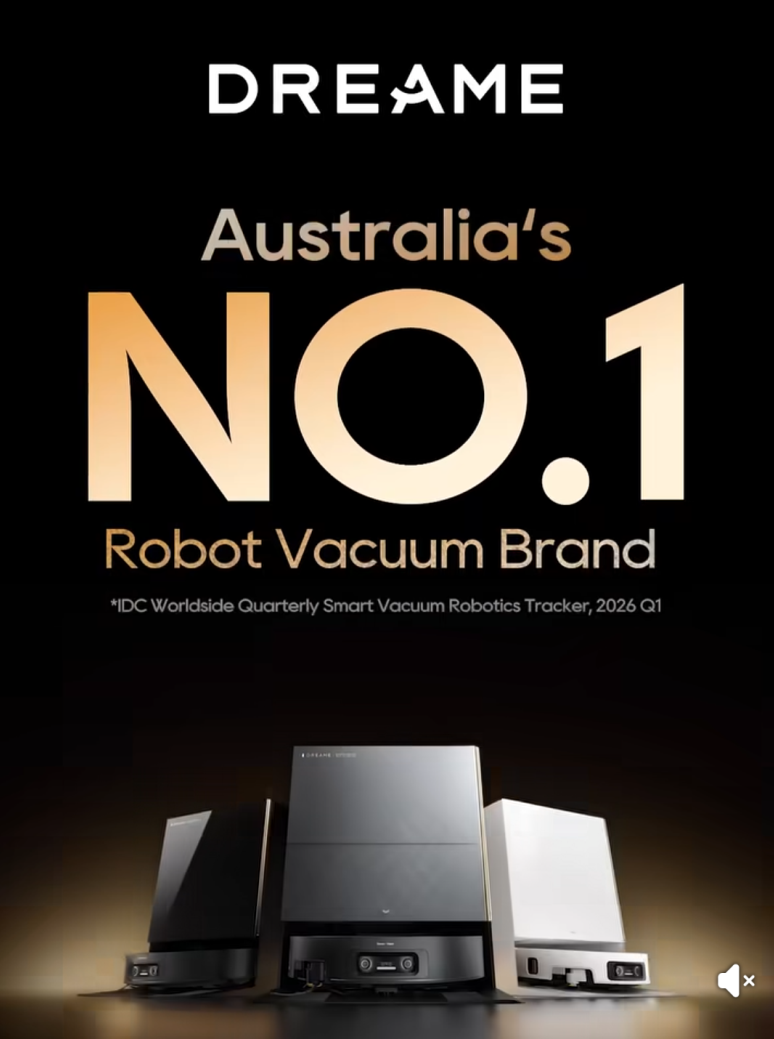
This claim proved to be totally false
It was only weeks ago that Dreame, backed by We Communications who act for the brand globally, attempted to use the endorsement of the International Data Corporation to spruik their position in the Australian market, only for IDC to torpedo the claim, telling ChannelNews: “We don’t collect appliance sales or robotic vacuum cleaning data in Australia”.
What IDC’s global data does reveal is telling. The world’s five largest household robot vacuum makers last year were all Chinese, commanding a combined 54.5 per cent of the global market. Roborock topped the list with 17.7 per cent, with Ecovacs second.
A Category China Now Owns
Once a niche appliance, the robot vacuum has become a test case for whether Samsung and LG can regain ground in a category that, much like the TV market before it, is seeing Chinese firms go head to head with the South Koreans, and winning.
China’s grip on the sector is tightening fast.
Data from the General Administration of Customs of China shows the country exported US$1.67 billion worth of cleaning robots in the first quarter alone. The category spans both household robot vacuums and commercial cleaning robots, giving Chinese manufacturers a wide export base across homes, offices, hotels and public spaces.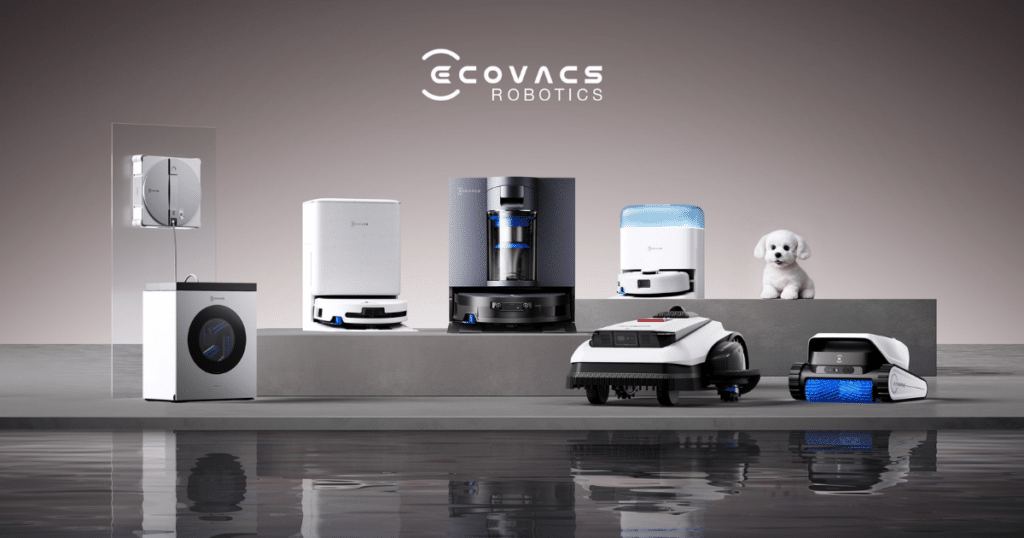
In the Australian consumer market, Roborock is the #1 brand, battling Ecovacs, well known for their premium engineering, and Dreame, a Company that one minute is spruiking Chinese cars and the next hairdryers and robot vacuums.
All three are currently running extensive discount campaigns in Australia, with Roborock product pushed through Aldi and Amazon, as the brands jostle for position in the premium segment where Ecovacs plays.
Also muscling into the market is Mova, seen as having an excellent affordable-premium offering, recently launching products that are more premium than some models from Roborock and Dreame.
Shortly I will be in China to catch up with Ecovacs, a Company that, unlike Dreame, is not into anything they think they can sell, but focuses primarily on robotic vacuum cleaning and the advanced development of cleaning products built around the latest technology and chipsets.
Roborock’s Staggering Numbers
The scale of Chinese momentum is best illustrated by Roborock, whose overseas revenue surged 63.5 per cent year-on-year to approximately A$2.2 billion, accounting for 56 per cent of the Company’s total revenue. Roborock ranked first in more than 10 markets, including Australia, Korea, the US and Germany.
The problem for Samsung and LG is structural. Chinese firms enjoy a decisive manufacturing advantage and can get product to market at a speed other manufacturers simply cannot match. Batteries, motors, sensors and other key components are all sourced domestically, shortening development cycles and slashing costs.
China had more than one million registered robot-related companies last year, while investment in embodied AI and robotics has skyrocketed. The Chinese brands’ growing influence is now increasingly visible even in Korea’s home market.
In Australia, growth has been driven by premium models from Companies such as Ecovacs, whose products feature AI functions, automatic mop cleaning, automatic water supply and drainage systems, and advanced obstacle avoidance. Critically, Chinese brands moved early to capture demand across both premium and affordable categories, leaving no gap for the Koreans to exploit. 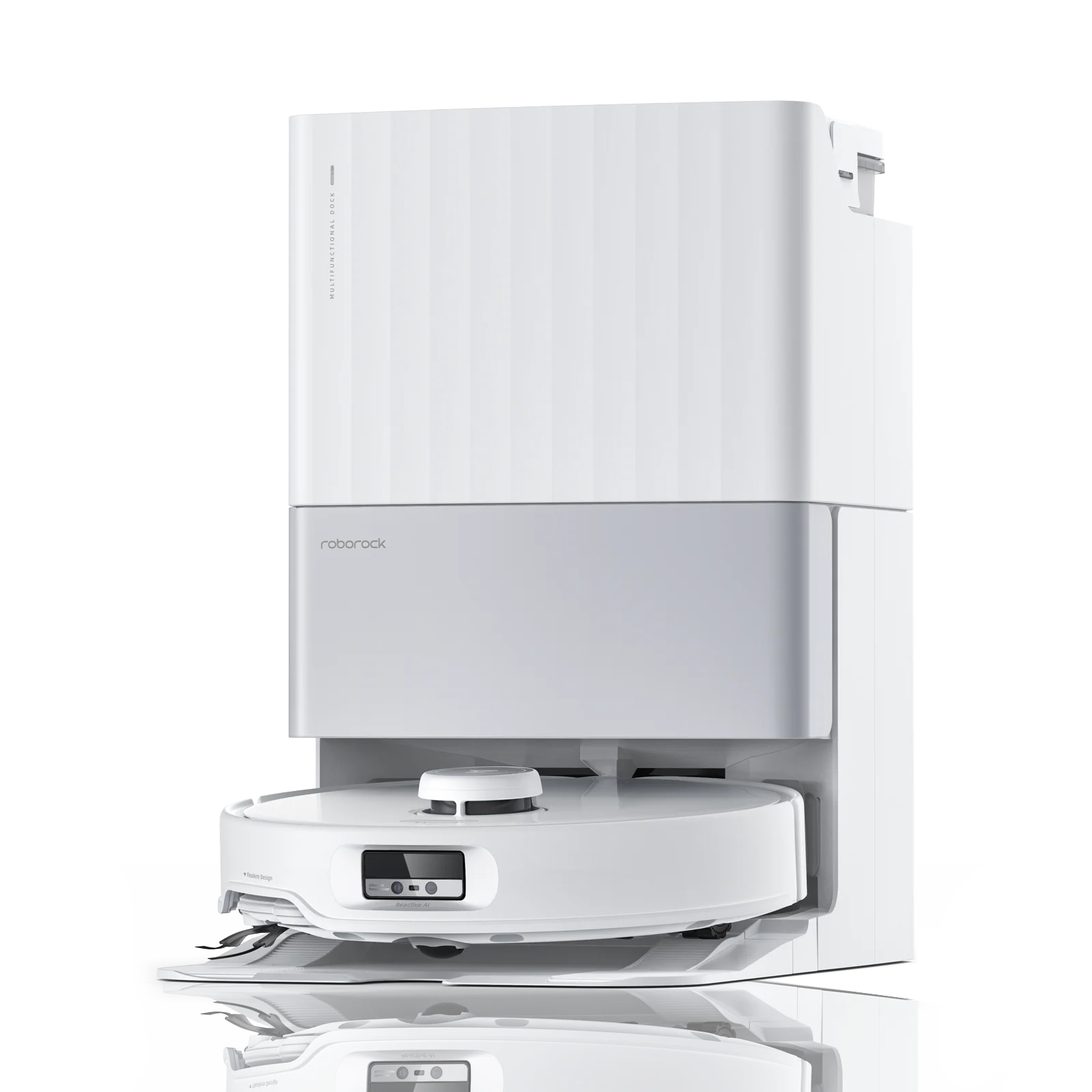
More Than A Vacuum: The Data Question
“Robot vacuums are no longer just cleaning devices. They are becoming AI appliances that move around the home and collect spatial and behavioural data,” one industry source said.
That shift has raised the bar for Samsung and LG. The challenge is no longer simply launching another robot vacuum, it’s giving consumers a reason to choose a Korean brand in a category where Chinese rivals have already built massive scale.
Samsung last month launched a standard version of its Bespoke AI Steam robot vacuum in select markets, expanding the lineup beyond the Ultra and Plus models introduced previously. The Company is leaning heavily on its Knox security platform as robot vacuums increasingly map homes and process user data, while also highlighting AI-based object recognition and navigation. Features such as steam sterilisation, automatic mop washing and drying, and threshold climbing are squarely aimed at premium buyers.
LG, who are struggling in the consumer market on several fronts, is attempting a comeback with the Home Bot AI Objet Collection Roni, its first new premium robot vacuum in two years. The model combines AI-based obstacle recognition with 100-degree-Celsius steam functions for mop hygiene and an automatic water supply and drainage system integrated into its Hidden Station. LG is also emphasising its LG Shield security system, which protects data across devices, servers and mobile apps.
“Chinese brands gained an early lead while Korean companies were slow to respond with new models,” a source recently told the Korea Times. “But as robot vacuums become part of the AI home appliance ecosystem, competition is likely to shift toward security, service reliability and brand trust.”
For Samsung and LG, that shift can’t come fast enough. And for brands like Dreame, whose credibility is already under fire, trust may prove the hardest feature of all to manufacture.