Bill Gates-Backed Startup Raises A$180M for Light-Powered AI Chips
 Joe Gallop
28 Jan 2026
Joe Gallop
28 Jan 2026
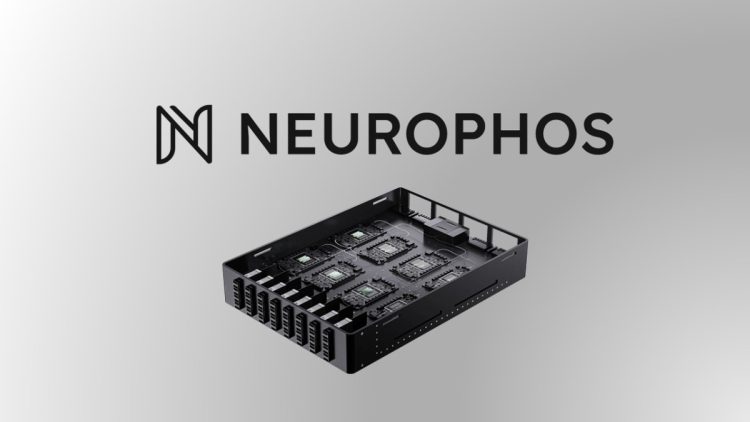
Neurophos, a Texas-based startup developing photonic AI chips, has raised US$110 million (A$181.5 million) in a Series A funding round, bringing its total capital to US$118 million (A$194.7 million).
The round was led by Bill Gates’ Gates Frontier Fund, alongside Microsoft’s M12 venture fund, Aramco Ventures, Bosch Ventures and others.
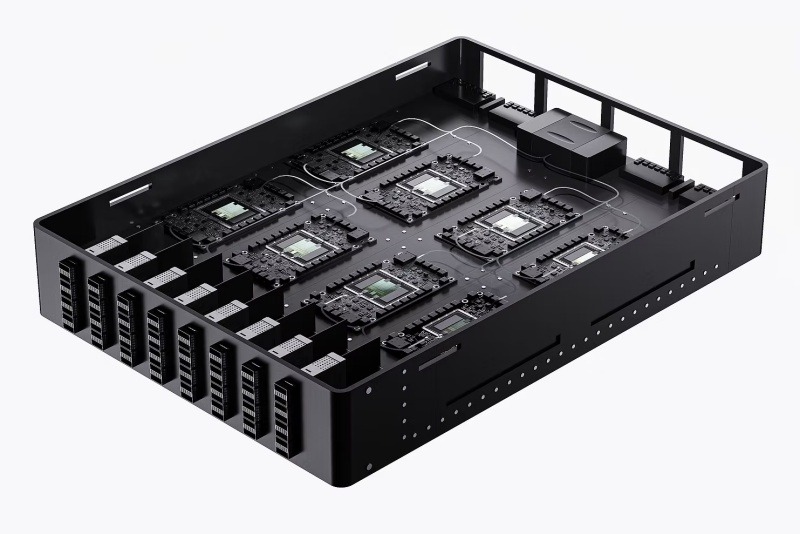
The company is pioneering optical processing units (OPUs) that use light, rather than electricity, to perform AI calculations.
By integrating over one million micron-scale optical elements on a single chip, Neurophos claims its technology can deliver up to 100× the energy efficiency and performance of current GPUs.
CEO Patrick Bowen (pictured), who co-founded the company after researching metamaterials at Duke University, says the technology addresses a growing challenge in AI computing.

“Moore’s Law is slowing, but AI can’t afford to wait,” Bowen said. “Our breakthrough packs massive optical parallelism on a single chip, improving both efficiency and speed while avoiding the power limits that constrain conventional GPUs.”
The startup’s chips rely on metamaterial optical modulators – components 10,000 times smaller than existing photonic elements – allowing dense, manufacturable optical computing.
The first integrated photonic compute systems, including datacenter-ready OPU modules, are expected for early evaluation this year, with volume production targeted for 2028.
Neurophos is also expanding its engineering footprint, opening a site in San Francisco to meet early customer demand.
Investors see the potential to disrupt the current GPU-dominated AI market. Michael Stewart, managing partner at Microsoft’s M12, said: “Hyper-efficient optical computation could enable the scaling AI needs before the end of the decade.”
With AI data centers consuming ever more power and Nvidia’s GPUs facing thermal and scaling constraints, Neurophos’ photonic chips offer a possible route to faster, cooler and greener AI hardware.
While commercial adoption remains a few years away, the technology could reshape the AI hardware landscape and mark a step toward a post-silicon computing era.