Big W Cashes In On Labubu Craze, As Counterfeits Flood Market
 David Richards
19 Aug 2025
David Richards
19 Aug 2025

Big W is cashing in on the collectible toy craze, raking in millions from online sales of Labubu plush dolls from Chinese toymaker Pop Mart International — but not without controversy.
Shoppers say stores have been swamped with desperate parents hunting for the $84 dolls, which industry insiders estimate cost less than $10 to produce. “Everyone at school has one,” my grand daughters told me, highlighting the red-hot demand that has turned Labubu into Australia’s must-have toy.
Created by Hong Kong artist Kasing Lung and boosted by K-pop endorsements and influencer hype, Labubu’s popularity has exploded. In Japan, Pop Mart has even opened specialty stores dedicated solely to the quirky characters.
But surging demand has sparked a flood of counterfeit dolls, particularly across online marketplaces and overseas Chinese sites. Six-packs from hit series like Exciting Macaron and Big into Energy have tripled in price since January, with collectors warning that verifying authenticity is now a major challenge.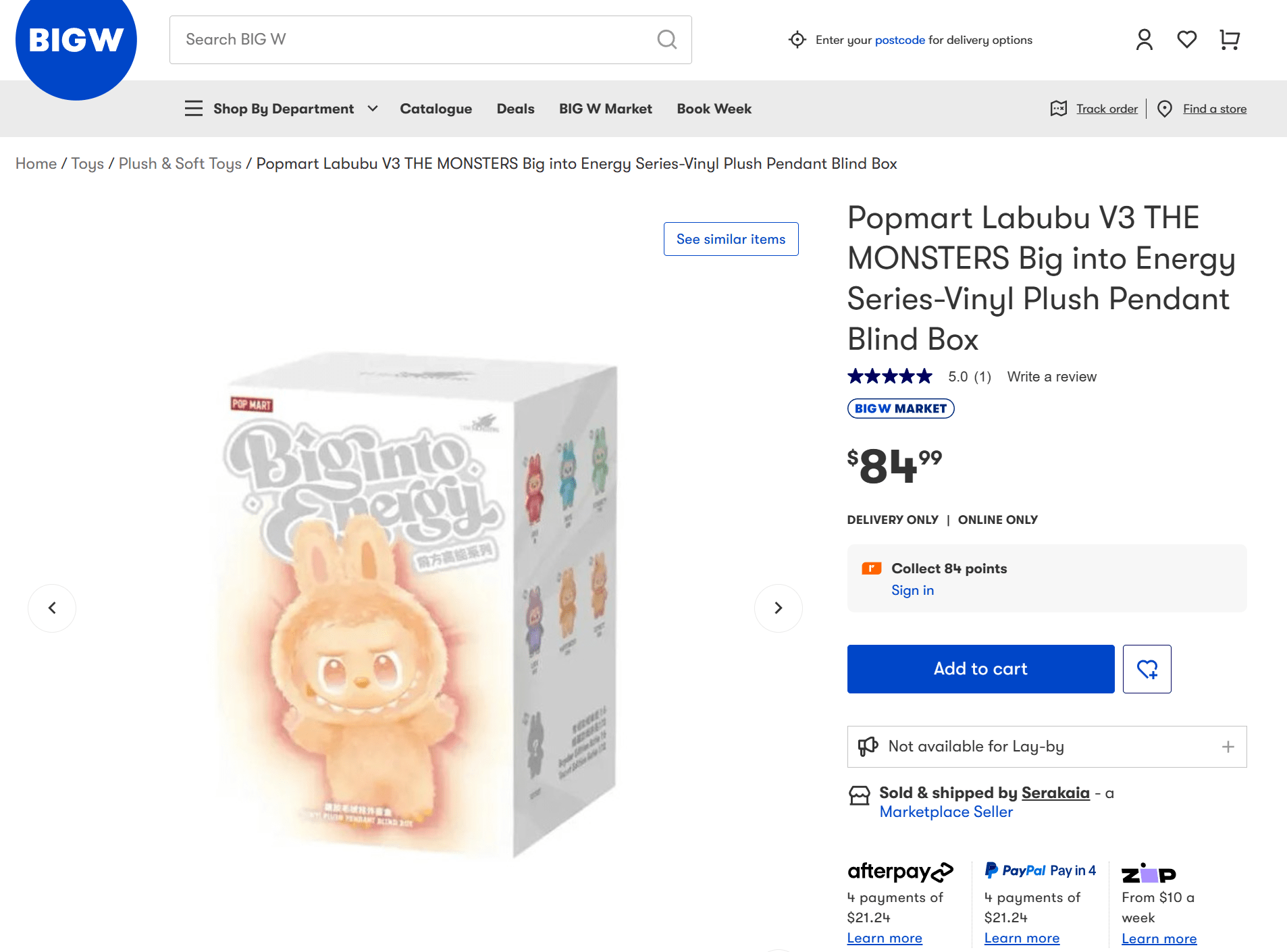
Retail analysts say high prices and tight supply are fueling the counterfeit trade. One industry observer told ChannelNews: “Some parents don’t care if the doll is fake — as long as it looks the same. At $84 each, the priority is keeping kids happy.”
The internet is littered with complaints from buyers duped by fakes, and websites have emerged offering guides on how to spot them. Platforms including Amazon and eBay are ramping up anti-counterfeit efforts, while Japan’s SNKRDUNK marketplace now uses X-ray scans, ultraviolet tests, and logo inspections before attaching authentication badges to verified dolls.
Big W is not accused of selling counterfeits — but the retailer’s success highlights the growing risks for parents, collectors, and brands as Labubu mania continues to sweep Australia.