Asus Pushes OLED Over TN Panels For The Future Of Competitive Gaming
 Joe Gallop
31 Aug 2026
Joe Gallop
31 Aug 2026
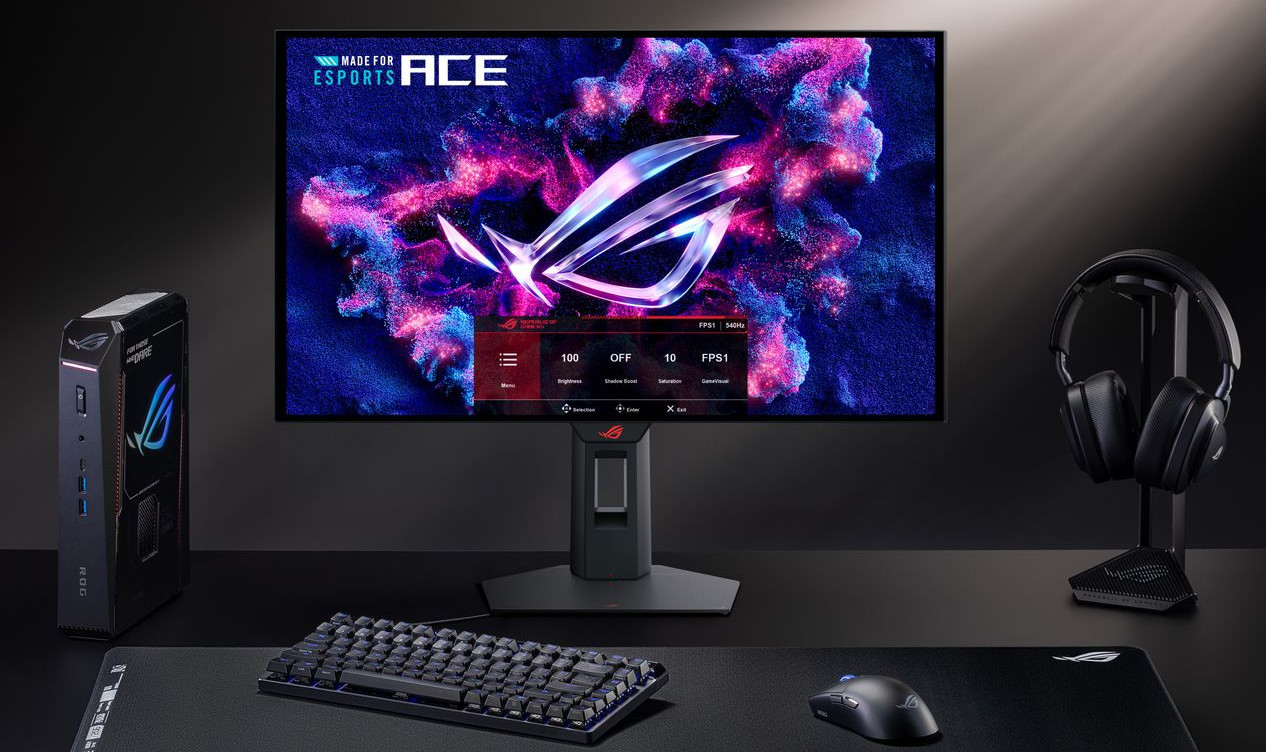
Asus has declared the end of traditional TN gaming monitors after unveiling four 24.5-inch OLED displays aimed at competitive and esports players.
The company introduced three new 24.5-inch monitors at Gamescom 2026, joining the ROG Strix OLED XG259QWPG Ace first shown at Computex earlier this year.
The new ROG gaming monitors combine Full HD resolution with refresh rates ranging from 360Hz to a blistering 720Hz, promising the speed associated with TN panels without their traditionally weak colour reproduction, contrast and viewing angles.
“For years, esports monitors almost exclusively wielded TN panels,” Asus said. “Built for pure speed, these monitors made stratospheric refresh rates possible, but they struggled to shake off the limitations of the tech: washed-out colors, shallow contrast, and poor viewing angles, to name a few. The latest OLED panels kick those limitations to the curb.”
The new range comprises the ROG Swift OLED PG259QWS Ace, XG259QWPG Ace, XG259QDPG and XG259QDNS Ace.
Two models use WOLED technology, while the other two feature Samsung Display’s recently announced QD-OLED panel. The WOLED monitors have glossy screen coatings, while the QD-OLED variants use matte finishes.
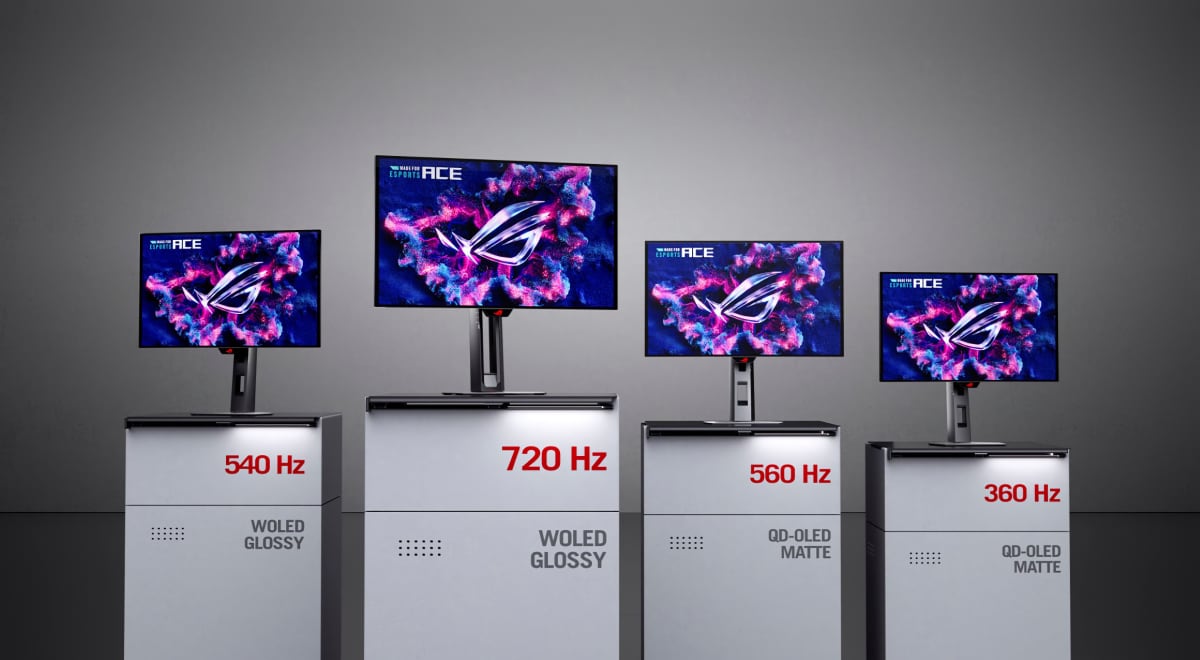
Refresh rates differ across the range, with options spanning 360Hz, 540Hz, 560Hz and 720Hz. All four models have a 1920 x 1080 resolution and support HDR, with claimed peak brightness reaching between 1,700 and 1,800 nits.
Selected models will also offer premium features including DisplayPort 2.1 connectivity and Dolby Vision support.
Although the displays remain limited to Full HD resolution, Asus is pitching them squarely at esports players who value responsiveness and motion clarity over higher pixel counts.
The company argued that OLED’s deeper blacks and stronger colour reproduction improve the overall gaming experience, while its near-instantaneous pixel response provides a more tangible competitive advantage by reducing motion blur.
The launch signals another major challenge to TN technology, which has remained popular in competitive gaming because of its high refresh rates and relatively low cost.
Australian pricing and availability for the four monitors have not yet been announced.