Asus Oxiis Turns Regular Bicycles Into E-Bikes With Portable Booster
 April Ossington
13 Aug 2026
April Ossington
13 Aug 2026
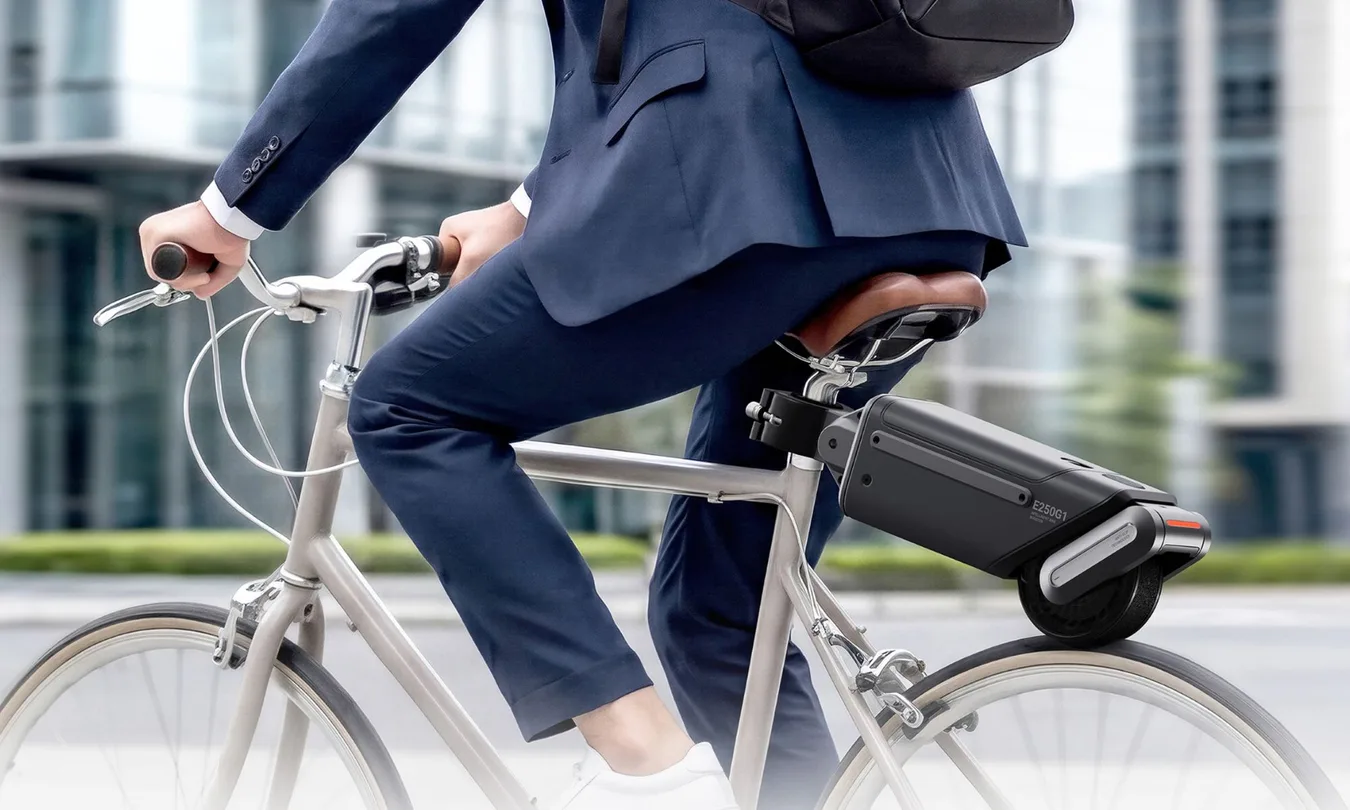
Asus is preparing to enter the growing e-bike accessories market with a compact electric booster designed to add motor assistance to an existing bicycle without requiring a permanent conversion.
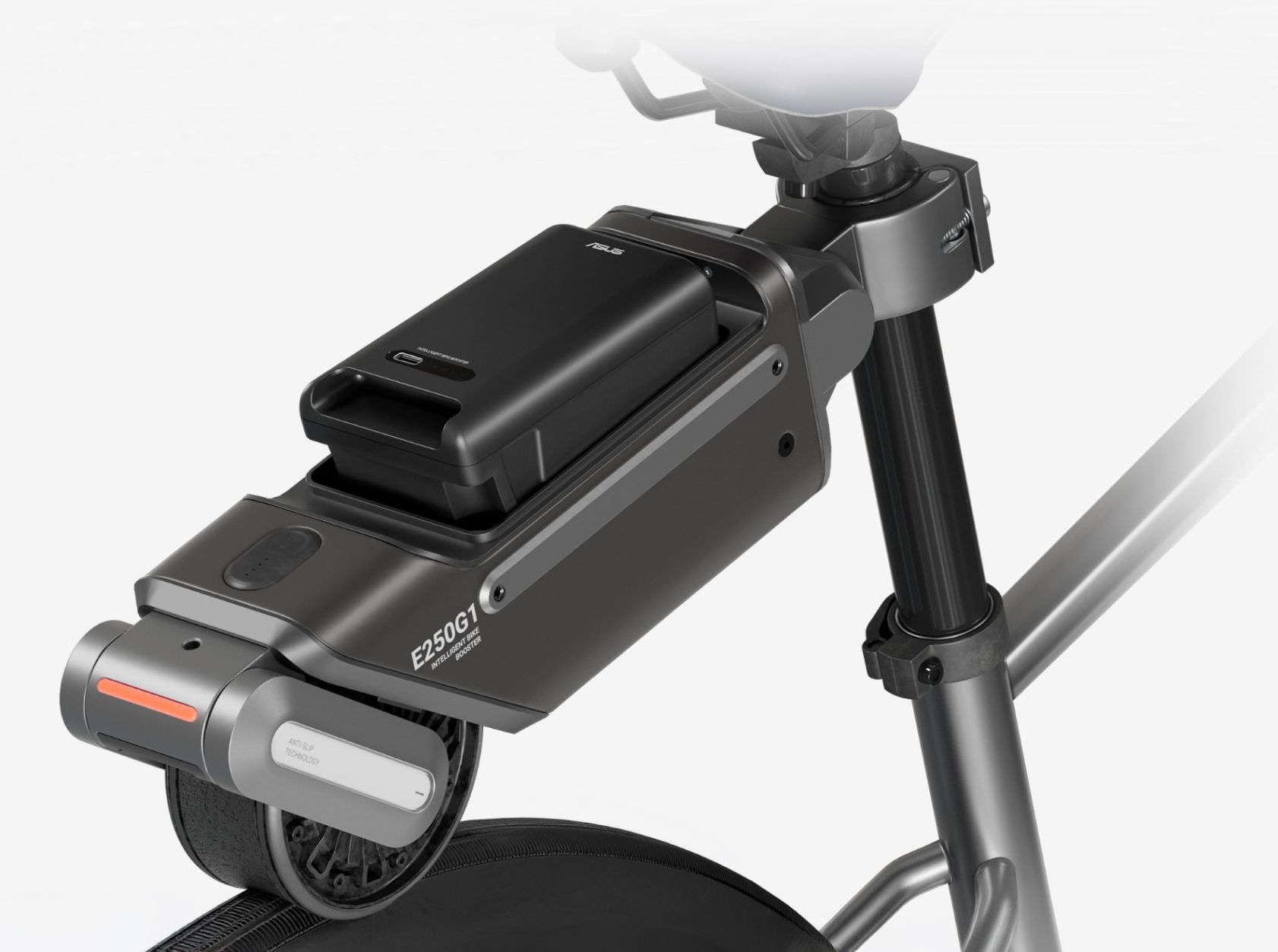
Called the Asus Oxiis E250G1, the portable system attaches to a bicycle’s seatpost and uses a motorised roller positioned against the rear tyre. When activated, the roller helps drive the wheel and provides additional power while the rider continues pedalling.
The approach means cyclists can potentially add electric assistance to a bicycle they already own rather than purchasing a dedicated e-bike or installing a more complicated motor conversion system.
At the heart of the Oxiis is a friction-drive mechanism. A small motor maintains contact with the rear tyre, transferring power directly to the wheel. Asus has incorporated an anti-slip system intended to maintain consistent contact between the roller and tyre when travelling across uneven surfaces.
The device also uses what Asus calls Adaptive Boost Technology. The system can detect changes in riding conditions and automatically increase assistance when the cyclist encounters an incline or headwind.
Riders who prefer greater control can select from Eco, Normal and Sport assistance settings. Modes can be changed using a physical control on the Oxiis or through its companion smartphone application, which is available for iOS and Android devices.
Installation has been designed to require minimal additional equipment. A wireless cadence sensor fitted around the pedal area detects the rider’s pedalling activity without requiring cables to be routed around the bicycle.
Asus
Compatibility does have some limitations. The Oxiis E250G1 cannot be installed on bicycles equipped with carbon-fibre seatposts, while full-suspension mountain bikes are also excluded.
Weighing approximately 3.7kg, the entire unit is compact enough to be removed from the bicycle and carried in a backpack when it is not being used.
Its removable battery supports charging through a 100W USB-C Power Delivery charger, with a full recharge taking approximately two hours.
Asus claims riders can travel for up to 50km on a charge when using Eco mode. Actual range is likely to vary depending on factors such as rider weight, terrain, weather conditions and the amount of electrical assistance required.
The Oxiis also carries an IPX4 water-resistance rating, providing protection against water splashes encountered during everyday riding.
Safety features include an integrated rear light with brake detection. When the system detects that the bicycle is slowing, the light automatically signals braking to cyclists and other road users travelling behind.
Asus has designed the booster to accommodate bicycles with wheel sizes ranging from 16 inches through to 700C. That gives the system potential compatibility with several bicycle categories, including folding bikes, commuter models and some hardtail mountain bikes.
The company initially demonstrated the Oxiis at the Taipei International Cycle Show before presenting it again at Eurobike.
A broader release is expected later in 2026, although Asus has yet to announce pricing or confirm exactly which markets will receive the Oxiis E250G1.
If widely released, the portable design could provide an alternative for cyclists interested in electric assistance without permanently modifying their existing bicycle, while its removable construction means the same bike can still be used as a conventional pedal-powered model when the booster is left at home.