Chinese Investors Snap Up Iconic Hi-Fi Brands As Samsung Builds Global Audio Empire
 David Richards
12 Nov 2026
British, German and Danish audio brands are increasingly falling under Asian ownership as Chinese investors and South Korea’s Samsung reshape the global premium audio industry, raising questions about the future of European manufacturing and the value of historic Western brand names currently being sold in Australia.
A massive consolidation of the global premium audio market is underway, with Chinese investors buying some of Europe’s best-known hi-fi brands while South Korean technology giant Samsung builds an increasingly powerful audio empire spanning everything from budget speakers to some of the world’s most expensive premium sound systems.
At stake are decades-old British, German, Danish and American audio brands whose reputations were built on engineering, sound quality and manufacturing heritage.
Many are now controlled by Asian investors, with manufacturing increasingly concentrated in China, even as their marketing continues to emphasise European design, engineering and brand heritage.
The changes are particularly significant for Australian retailers, including JB Hi-Fi, Harvey Norman and specialist audio dealers, who sell products from many of these brands.
The battle is no longer simply about which manufacturer can build the best loudspeaker or amplifier. It is increasingly about who controls the brands, manufacturing, technology, distribution and ultimately the retail shelf space.
Samsung Builds An Audio Powerhouse
Samsung has emerged as one of the industry’s most powerful consolidators.
Its acquisition of Harman International in 2017 gave the South Korean company control of brands including JBL, Harman Kardon, AKG, Infinity, Mark Levinson and Revel.
The group subsequently expanded its premium audio interests through Harman’s acquisition of Masimo’s Sound United consumer audio business, adding Bowers & Wilkins, Denon, Marantz, Polk Audio, Definitive Technology, Classé and HEOS.
The move delivered Samsung with a significant advantage over competitors that depend on a single brand or a narrow product category.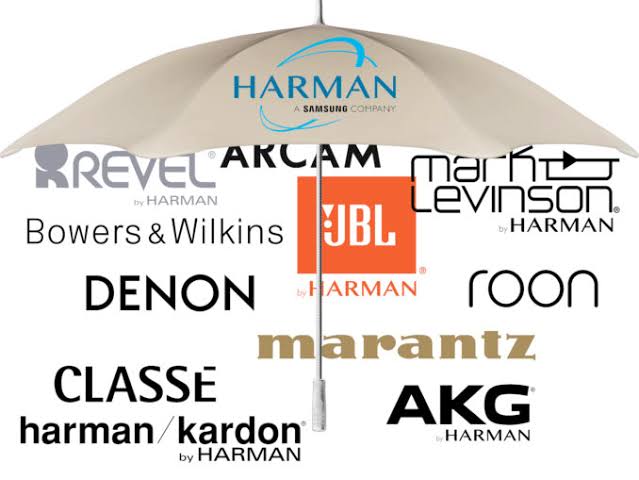
The implications for Australian retailers are considerable, with Samsung-linked brands competing across multiple categories, sometimes against one another.
American audio company Bose has also been expanding, acquiring McIntosh Group in November 2024, bringing McIntosh and Sonus faber into its portfolio.
However, it is the growing influence of Chinese investors that is fundamentally changing the ownership structure of many traditional European hi-fi manufacturers.
British Audio Heritage, Chinese Ownership
One of the most prominent examples is KEF, the British loudspeaker company founded in Kent in 1961 which in Australia is distributed by Advanced Audio.
Despite its strong British identity and reputation for acoustic engineering, KEF has long been owned by Hong Kong-based Gold Peak, which also controls the historic British loudspeaker brand Celestion.
KEF is using it’s British engineering heritage, to sell the brand despite it being a Chinese owned Company.
Another major player is International Audio Group, or IAG, the Chinese-controlled audio business associated with brothers Bernard and Michael Chang.
IAG has assembled an extensive portfolio of established British audio brands, including Wharfedale, Quad, Mission, Castle, Leak and Audiolab, along with Japanese premium audio manufacturer Luxman.
The group has shifted significant manufacturing operations to China while retaining elements of European design, engineering and brand development.
The strategy has allowed historic brands to survive and compete at prices that would be difficult to achieve if all manufacturing remained in Britain.
It also illustrates a broader change in the audio market: Chinese companies are no longer simply manufacturing equipment for Western brands. Increasingly, they own the brands themselves.
Chinese Investors Target German And Danish Manufacturers
Danish loudspeaker manufacturer Dynaudio is another example of the shift.
The company came under the control of Chinese electronics manufacturer GoerTek, a major supplier of acoustic and electronic components.
Unlike acquisitions focused primarily on manufacturing cost reductions, GoerTek invested in Dynaudio’s Danish engineering operations, expanding its research and development capabilities.
This approach highlights an important distinction in Chinese investment strategies.
Some investors acquire European brands primarily for their established names, intellectual property and distribution networks. Others seek to combine European acoustic engineering with Chinese manufacturing scale and financial backing.
Dynaudio’s reported decision to close its US subsidiary and restructure its American operations also demonstrates the pressure facing even established premium audio brands.
German headphone specialist Beyerdynamic has also moved into Chinese ownership following its acquisition by Cosonic, a company connected to Shenzhen-listed Jiahe Intelligent Technology.
The transaction ended approximately a century of family ownership and placed another historic German audio manufacturer under Chinese control.
The challenge for Beyerdynamic is maintaining its reputation for German engineering while integrating with a manufacturing group that has substantial operations in China.
German ultra-premium audio manufacturer MBL has also attracted Chinese investment following its financial difficulties, with the business reportedly acquired out of insolvency by interests connected to Chinese jewellery group Chow Tai Seng and audio distributor United Audio.
The acquisition demonstrates that Chinese investors are targeting not only mass-market audio manufacturers but also specialist companies operating at the very top of the hi-fi market.
Marshall Becomes A Major Chinese Investment
The iconic Marshall brand, whose amplifiers became synonymous with British rock music, is another high-profile example.
HongShan Capital Group, formerly Sequoia Capital China, acquired a controlling interest in Stockholm-based Marshall Group in 2025, in a transaction valuing the business at approximately €1.1 billion.
The investment gave the Chinese private equity group control of a brand with enormous international recognition across speakers, headphones and music equipment.
Marshall’s British rock heritage remains central to its marketing, despite the business being headquartered in Sweden and now controlled by Chinese investment interests.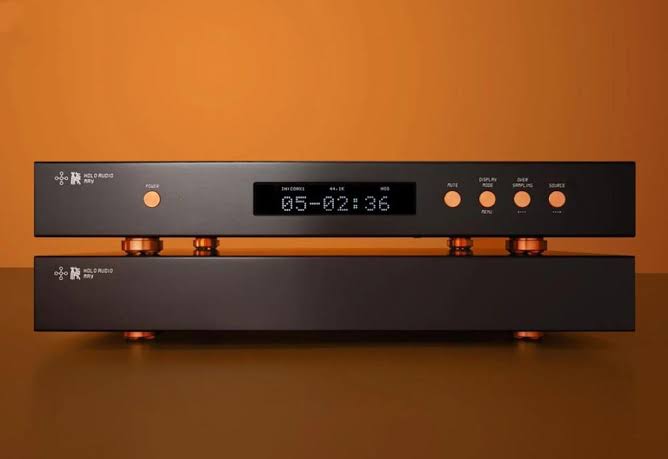
For Chinese investors, the appeal is obvious.
Building a new global premium audio brand can take decades. Buying an established name provides immediate access to consumer recognition, retail distribution and brand credibility.
One of the most closely watched developments involves Sennheiser, the German audio brand whose consumer business is once again up for sale.
Swiss hearing-aid manufacturer Sonova acquired Sennheiser’s consumer audio division in a transaction announced in 2021 and completed in 2022.
The acquisition covered consumer headphones, earbuds and soundbars, but not the entire Sennheiser business.
Sonova announced in March 2026 that it intended to divest the consumer operation and concentrate on hearing instruments and cochlear implants.
The decision followed a strategic review that concluded consumer audio was no longer central to the company’s long-term direction.
Sonova subsequently classified the business as a discontinued operation in its 2025/26 financial accounts, recognising a CHF38.3 million pre-tax impairment against the disposal group.
The consumer business recorded an after-tax loss of CHF106.5 million, including the effects of impairment charges.
Sonova Annual Report 2025/26+1
However, selling Sennheiser is potentially more complicated than disposing of an ordinary consumer electronics business.
The Sennheiser name remains associated with the founding German family and the separately operated professional audio business. Sonova acquired the consumer operation with rights to use the Sennheiser brand rather than outright ownership of the entire name.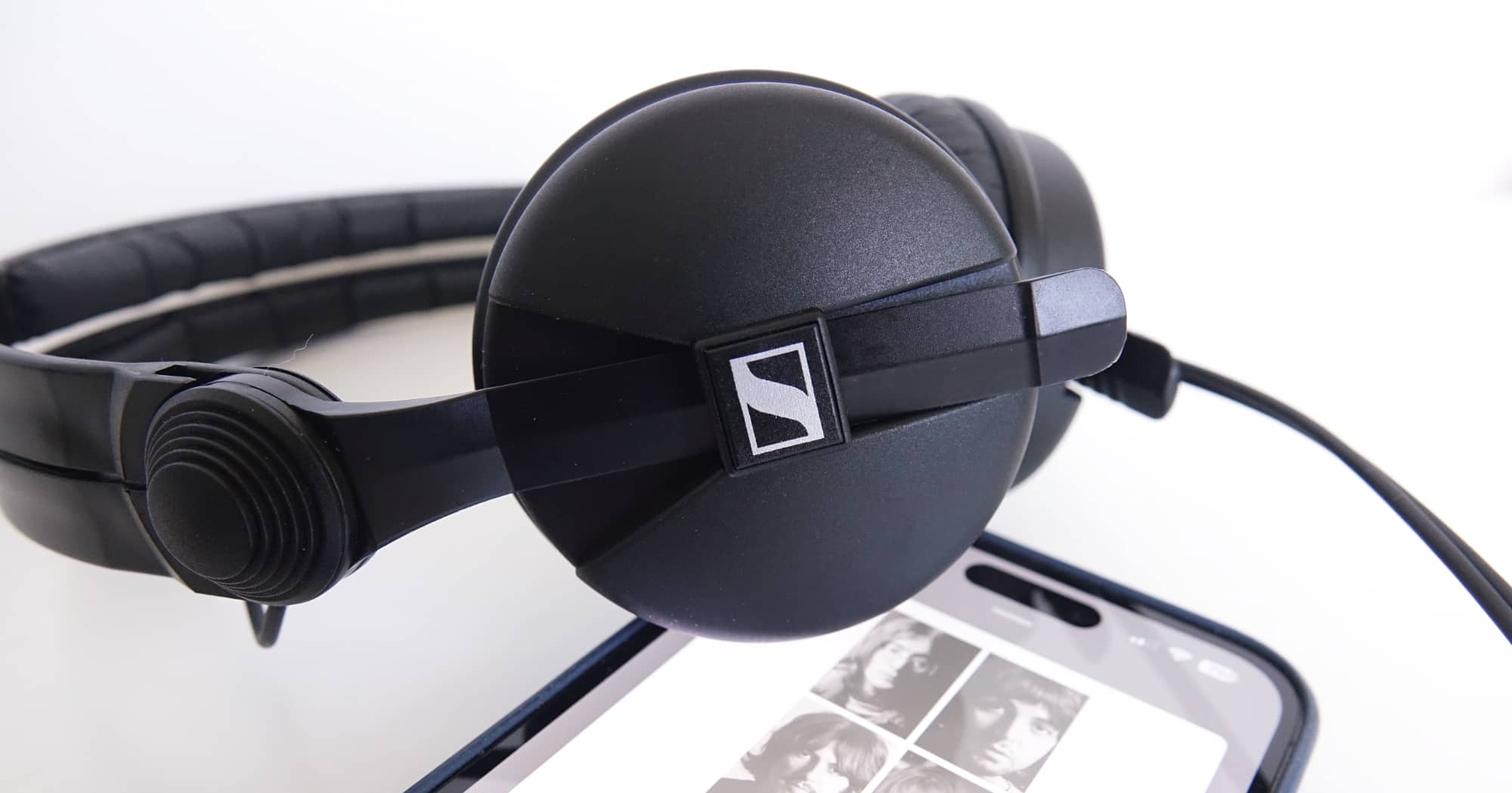
That creates a potential complication for prospective buyers, particularly those seeking complete control of a globally recognised German audio brand.
Chinese investors could be interested in the business because of Sennheiser’s international reputation, engineering heritage and established distribution network.
However, claims that a Chinese buyer has been selected, that the family has blocked a transaction or that investment has effectively stopped need independent confirmation.
The underlying commercial question is whether a new owner could successfully reposition the Sennheiser consumer operation while preserving the German identity that makes the brand valuable.
Dynaudio Pulls Out Of America
The consolidation is taking place against a difficult trading environment for some established premium audio manufacturers.
Dynaudio announced in July 2026 that it would close its US subsidiary and cease commercial operations in North America during the northern autumn.
The Danish company said it would redirect resources towards Europe and Asia, citing economic challenges and market uncertainty.
Significantly, Dynaudio acknowledged that it had achieved sales growth in North America, suggesting its withdrawal was not simply the result of falling demand.
The company said it would work to maintain customer support and warranty arrangements as its American operations were wound down.
The decision highlights the increasingly difficult economics of operating a global premium audio brand.
Manufacturers must fund research and development, maintain international distribution, support specialist dealers and compete against larger groups with considerably greater financial resources.
For Chinese-owned manufacturers, the ability to concentrate investment in selected markets while drawing on established Asian manufacturing operations can provide an important advantage.
Chinese Manufacturers Are Building Their Own Brands
Acquisitions are only one part of China’s growing influence.
Chinese manufacturers are also developing their own audio brands, increasingly competing against established Western manufacturers on technology, performance and price.
One of the most interesting examples in Australia is WiiM, the streaming audio brand developed by Linkplay Technology.
Unlike companies that have acquired decades-old European names, Linkplay has developed its own consumer electronics brand, targeting the rapidly growing market for network streamers, wireless audio and integrated amplifiers.
The company was founded in 2014 by technology executives with experience at businesses including Google, Broadcom, InterVideo and Harman.
Its founder and chief executive, Lifeng Zhao, previously held senior software and semiconductor industry positions.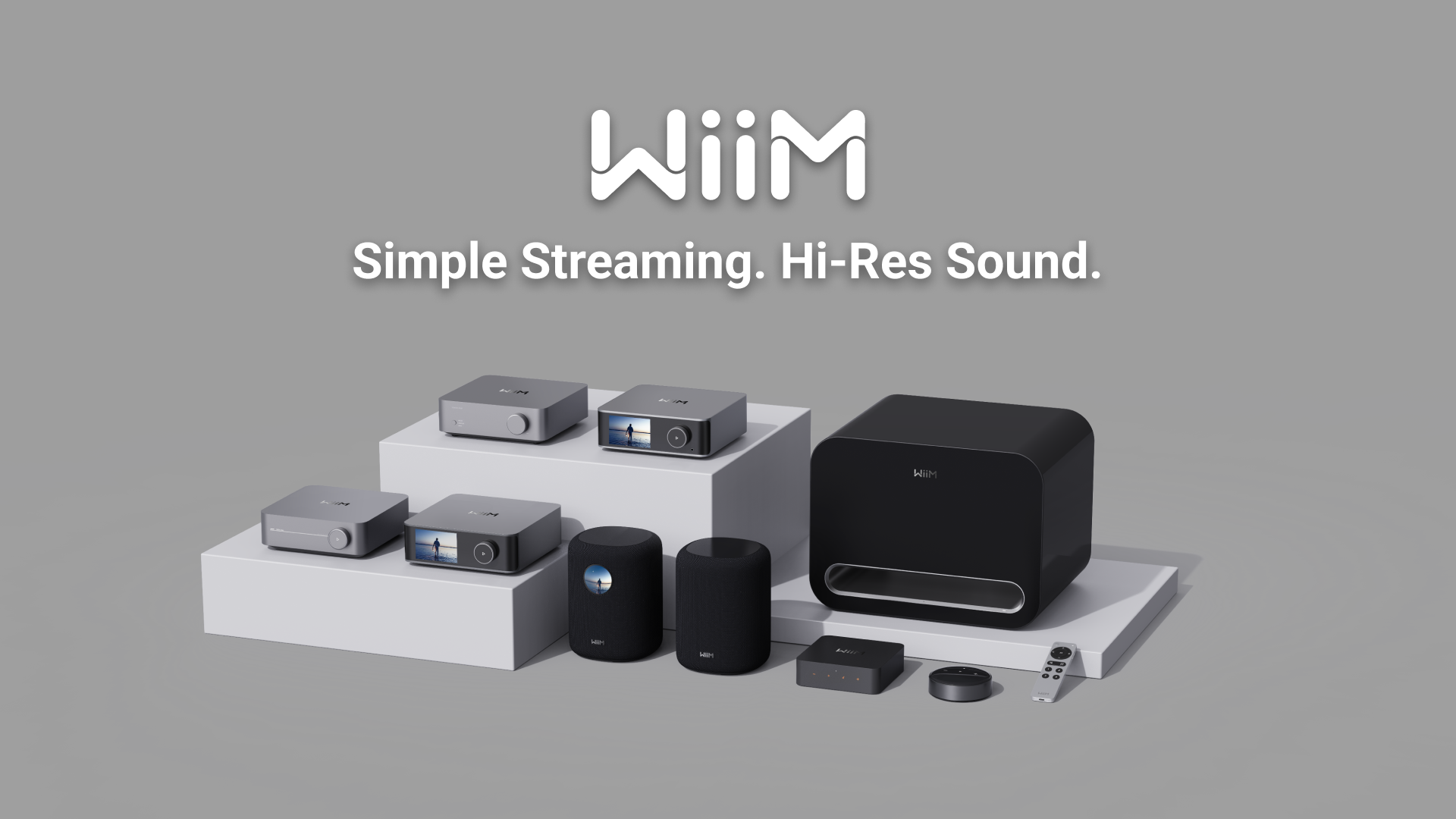
Although Linkplay has a US corporate presence, its investment and manufacturing connections extend deeply into China.
Reported investors include Chinese technology and electronics businesses Baidu, Edifier, Fenda Technology and GuoGuang Electric, alongside financial investors.
Edifier and Fenda are particularly significant because both have established audio manufacturing operations.
WiiM’s strategy is markedly different from that of traditional premium audio manufacturers.
Rather than relying on heritage, expensive cabinetry or decades of brand recognition, it competes through streaming technology, software development, connectivity and aggressive pricing.
Its products offer features traditionally associated with considerably more expensive hi-fi equipment, including high-resolution streaming, multiroom audio, digital signal processing and integration with established music services.
For Australian specialist audio retailers, this creates both an opportunity and a threat.
WiiM can attract new customers into the hi-fi market by making advanced streaming technology more affordable.
However, it also puts pressure on established manufacturers whose streaming amplifiers and network audio components command significantly higher prices.
The same trend is visible across the broader Chinese audio industry, where manufacturers are becoming increasingly confident about selling products under their own names rather than acting as contract suppliers to Western companies.
What This Means For Australian Audio Retailers
For Australian retailers and distributors, the changing ownership of premium audio brands presents a significant commercial challenge.
A growing number of brands competing for space on Australian retail shelves are now controlled by a relatively small group of international corporations and investment groups.
Samsung’s Harman business has the scale to negotiate with major retail chains across multiple product categories, while Chinese-backed manufacturers can use their manufacturing capabilities and lower-cost supply chains to compete aggressively on price.
The challenge for independent distributors and smaller specialist manufacturers is maintaining margins and market visibility against companies with much greater financial resources.
There is also the question of brand heritage.
Consumers paying thousands of dollars for a premium British, German or Danish loudspeaker may assume they are purchasing a product manufactured by an independent European company.
Increasingly, that is not necessarily the case.
However, Chinese ownership does not automatically mean a product is manufactured in China, nor does it imply a deterioration in quality. Some investors have preserved European engineering and manufacturing operations, while others have expanded research and development following their acquisitions.
The more important issue is transparency about ownership, engineering, manufacturing and long-term product support.
For premium audio dealers, after-sales service, access to replacement parts and continuity of distribution can be just as important as the reputation of the brand itself.
The Next Battle Is Over Technology, Not Just Heritage
The industry is also undergoing a fundamental technological shift.
Traditional hi-fi manufacturers built their reputations around loudspeaker design, amplifiers, acoustic engineering and high-quality physical components.
Increasingly, however, consumers are buying connected audio systems where software, streaming platforms, wireless connectivity and digital signal processing are central to the experience.
That shift potentially favours companies with expertise in semiconductors, software development, wireless networking and large-scale electronics manufacturing.
Chinese technology companies are particularly well positioned in several of these areas.
Businesses such as Linkplay demonstrate how a relatively young audio brand can compete with established manufacturers by delivering sophisticated streaming features at considerably lower prices.
At the same time, Samsung can draw on technology and engineering capabilities across its broader consumer electronics business, giving Harman access to resources that few independent audio manufacturers can match.
The result is an industry increasingly divided between large multinational groups, Chinese-backed manufacturers and smaller specialist companies seeking to protect their positions in the premium market.
For traditional European and American audio brands, the question is no longer simply whether they can survive under foreign ownership.
It is whether their historic reputations, engineering expertise and premium pricing can remain competitive in a market increasingly controlled by Asian technology and manufacturing groups.
And with Sonova still seeking a buyer for the Sennheiser consumer business, further consolidation may be on the way.