Apple Moves To Reshape Retail Network In Australia
 David Richards
16 Jul 2025
David Richards
16 Jul 2025

Apple Australia appear to be reshaping their retail operations with the closing down of stores and the refurbishment of others.
Earlier this week Apple confirmed the closure of their Hornsby Shop on Sydney’s North Shore with insiders telling ChannelNews that others could follow as Apple struggles to deliver growth as well as new AI technology similar to their competitors.
One of their main stores in NSW, Chatswood Chase has been closed for renovations for several months, the move comes as shares in Apple tank wiping billions off their value and sales slow.Yesterday we revealed that preliminary data from the IDC’s Worldwide Quarterly Mobile Phone Tracker report suggests that all the brands combined shipped 295.2 million smartphones globally in Q2 2025, up 1% from 292.2 million units in Q2 2024. Samsung alone shipped 58 million handsets, up from 53.8 million units it shipped in the same quarter last year.
The South Korean tech giant retained its top spot by shipping the most number of smartphones globally, witnessing a 7.9% jump.
Apple, only saw its shipments grow by only 1.5% in Q2 2025 from last year, shipping 46.4 million units.
This pushed Apple into second spot behind Samsung who has a commanding 15.7% of the global smartphone shipments in the quarter.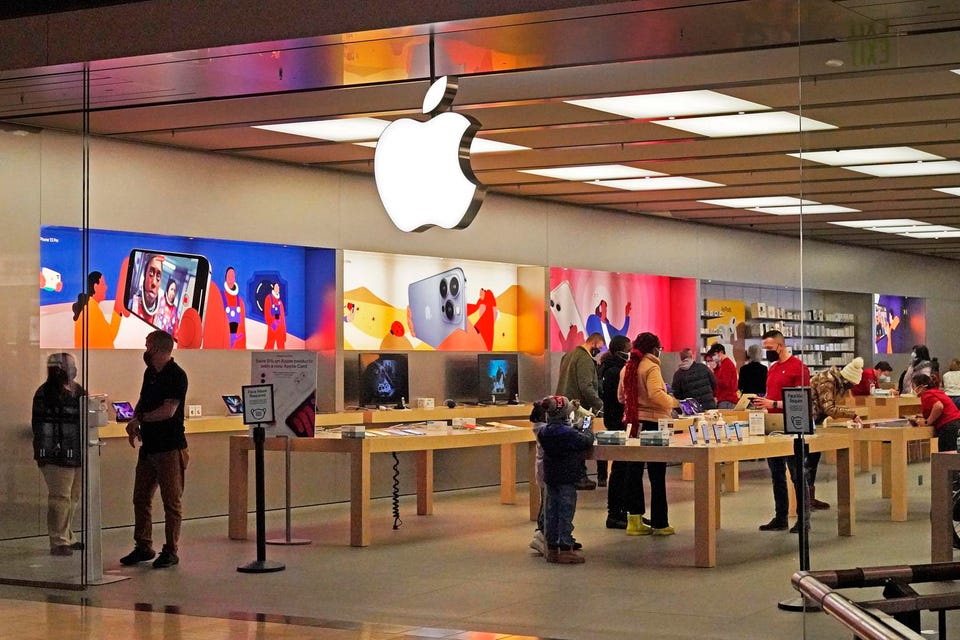
Year to date Apple shares is down over 14% with investors losing over A$941 billion as the business struggles to identify their next big move.
Investors are now calling for Apple to make a big acquisition and more aggressively pursue talent in an effort to plug holes in the Company’s revenue slide.
Over the last six years, Apple has acquired over 100 companies, a rate of roughly one every three to four weeks.
While Apple’s largest acquisition was the US$3 billion purchase of Beats Electronics, many acquisitions are much smaller and focused on specific technologies.
Overnight it was announced that Apple who has a massive stockpile of cash reserves, inked a US$500-million deal with Pentagon-backed MP Materials, for a supply of rare earth magnets, becoming one of the first tech companies to ink a U.S. supply agreement after China curbed exports earlier this year.
The move comes as Apple struggles to work out how to overcome the impact of Trump tariffs with the bulk of their manufacturing based in China and assembly in India.
Currently Apple is gearing up for simultaneous production of the iPhone 17 in both China and India, despite attempts by the Chinese government to disrupt this as they don’t want Foxconn a key Apple partner to move manufacturing of parts and the subsequent assembly of Apple products in China to be moved to another Country.
Recently Foxconn started importing components from China to India for assembling the upcoming iPhone 17 and this has caused friction both in the USA where Trump wants iPhones manufactured and assembled as well as in China.
Currently the vast majority of iPhones are still assembled in China, but Apple has for many years been working on boosting the number of phones made in other countries.
India is the company’s secondary manufacturing hub, with Apple reportedly aiming to achieve 50% of iPhone production there within the next couple of years.
Currently Apple has six other stores in Sydney and metropolitan areas with management now running a ruler over the cost of operation and their return on investment in high profile high traffic retail locations where the likes of JB Hi Fi a major seller of iPhones already has stores.
Recently Bloomberg reported that Apple may be warming to the idea of a big acquisition in an effort to catch up with their competitors.
Bloomberg News reported last month that executives have held internal talks about making an offer for AI startup Perplexity AI, which would add talent and help Apple develop an AI-based search engine.
The startup recently completed an investment round that valued it at $14 billion.
Dan Ives, an analyst at Wedbush who a long-time Apple bull is, called buying Perplexity a “no brainer,” and said even if Apple paid $30 billion, that sum would be “a drop in the bucket relative to the monetization opportunity Apple can achieve on AI.”