EXCLUSIVE: Another Telstra Fetch TV Deal Goes Pear Shaped After Harvey Norman Dumping, Will JB Hi Fi Be Next?
 David Richards
05 Dec 2025
David Richards
05 Dec 2025

Telstra’s $51 million move to acquire a controlling stake in Fetch TV has suffered another major setback, with Harvey Norman dumping the product from its stores.
ChannelNews understands the decision followed Telstra’s attempt to introduce a new monthly fee for Fetch TV users—charging them simply to access the platform and record free-to-air programs.
According to Harvey Norman insiders, the retailer’s sales process effectively shifted from selling a simple streaming box to trying to sell a contract.
When the issue was raised with Telstra, Harvey Norman was told, “We can supply you with a sticker for the boxes still in stores.” 
Unimpressed, Harvey Norman management chose to discontinue Fetch TV entirely. The retailer has now replaced it with Foxtel’s Hubbl streaming puck, priced at $99 and positioned as offering broader access to streaming services.
Fetch TV has also been removed from the Harvey Norman website.
Analysts are now questioning why Telstra bought Fetch TV in the first place, considering it already held a 35% stake in Foxtel at the time—giving it indirect access to the more advanced Hubbl device, which many viewed as a superior product compared to Fetch’s hardware.
Earlier this year, two of Fetch TV’s largest telecommunications partners, Optus and iiNet, also dropped the struggling service. And just two weeks ago, ChannelNews revealed that Telstra had laid off 27 staff from its streaming box division due to falling revenue and growing operational costs.
Observers say Telstra’s history in set-top boxes and streaming “has been a total failure for years.”
Telstra’s difficulties stretch back to the BigPond era. The company’s early T-Box platform was intended to offer BigPond and Telstra broadband customers access to internet TV channels, free-to-air TV, and video-on-demand—but the product was widely considered a disaster.
In 2015, Telstra launched Telstra TV, a rebadged Roku device that was supposed to unify streaming services and free-to-air channels under one platform. Despite millions spent on licensing fees, the device failed to gain traction. Even when offered for free, many customers preferred Foxtel’s superior service or abandoned the Roku-based box altogether.
Industry commentary at the time labelled Telstra TV “a dismal failure.”
After years of missteps, Telstra invested another $50 million to acquire a 51.4% share of Fetch TV, declaring it the centrepiece of its future entertainment strategy. The investment included the cost of transitioning Telstra TV users across to the Fetch platform.
By mid-2023, Telstra began offering Fetch devices such as the Mini 4K and Mighty 4K. But even as Telstra moved in, key partners who had helped grow the Fetch brand—Optus, iiNet, and Malaysia’s Astro TV—were backing out.
There is now speculation that JB Hi-Fi may also drop Fetch TV due to the same contractual and legal concerns raised by Harvey Norman, particularly around Telstra’s push for a mandatory $3 monthly fee.
On 31 October 2024, Telstra officially discontinued the original Roku-based Telstra TV product and shifted entirely to Fetch TV. But insiders describe the move as “another doomed chapter” in Telstra’s long-running struggle to become a player in the home entertainment market—especially now that Foxtel has been sold to UK streaming giant DAZN, reducing Telstra’s formerly substantial stake to just 6%.
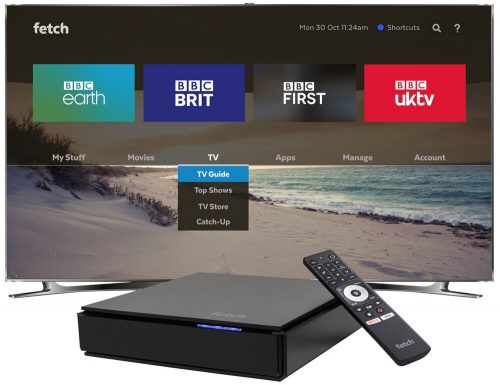
Fetch TV Mini vs Foxtel Hubbl: What’s the Difference?
Fetch TV Mini
Fetch TV, launched in 2010, combines IPTV, streaming apps, subscription channel packs, and free-to-air (FTA) TV.
Its latest “Mini G5” box supports 4K and includes:
FTA TV tuner
Streaming apps (Netflix, Stan, Prime Video, Disney+, Paramount+ and more)
On-demand movie rentals
Ability to pause/rewind live TV (now tied to Telstra’s new fee)
A unified interface intended to merge live TV, catch-up services, and streaming.
The system attempts to replicate the aggregation style of Chromecast and Hubbl, but with mixed results.
Hubbl
Hubbl, launched in 2024 by Comcast, is a newer “all-in-one” streaming and FTA aggregation platform available as:
Hubbl Hub (a compact streaming puck)
Hubbl Glass (a smart TV with Hubbl built in)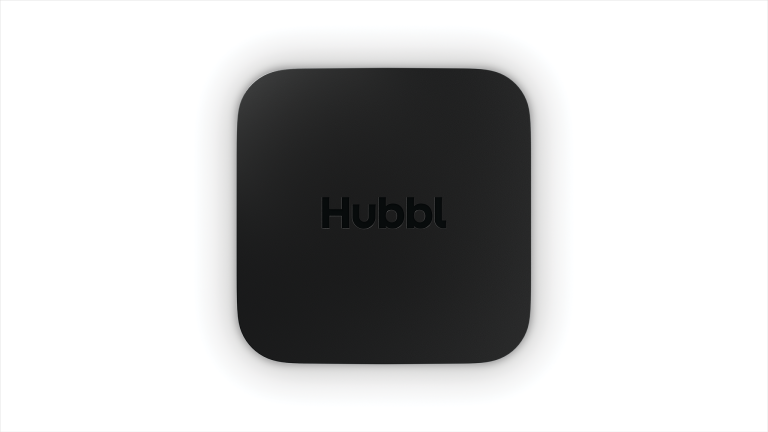
Hubbl focuses on simplicity:
Unified content library
Partnerships with major streaming services
Easy updates and app management (Hubbl controls the app ecosystem)
Former flagship feature: Stack & Save, offering discounts for bundling multiple streaming subscriptions (now replaced with new offerings).
Many reviewers consider Hubbl a more polished and consumer-friendly system compared with Fetch.