Alibaba Unveils Powerful New AI Chip as China Ramps Up Competition With Nvidia
 Dominic Bayley
24 Sep 2026
Dominic Bayley
24 Sep 2026
Alibaba Group Holding Ltd. is stepping up its push into artificial intelligence with a new chip it describes as China’s most powerful AI accelerator yet, as the technology giant prepares for a major expansion of its data-centre infrastructure.
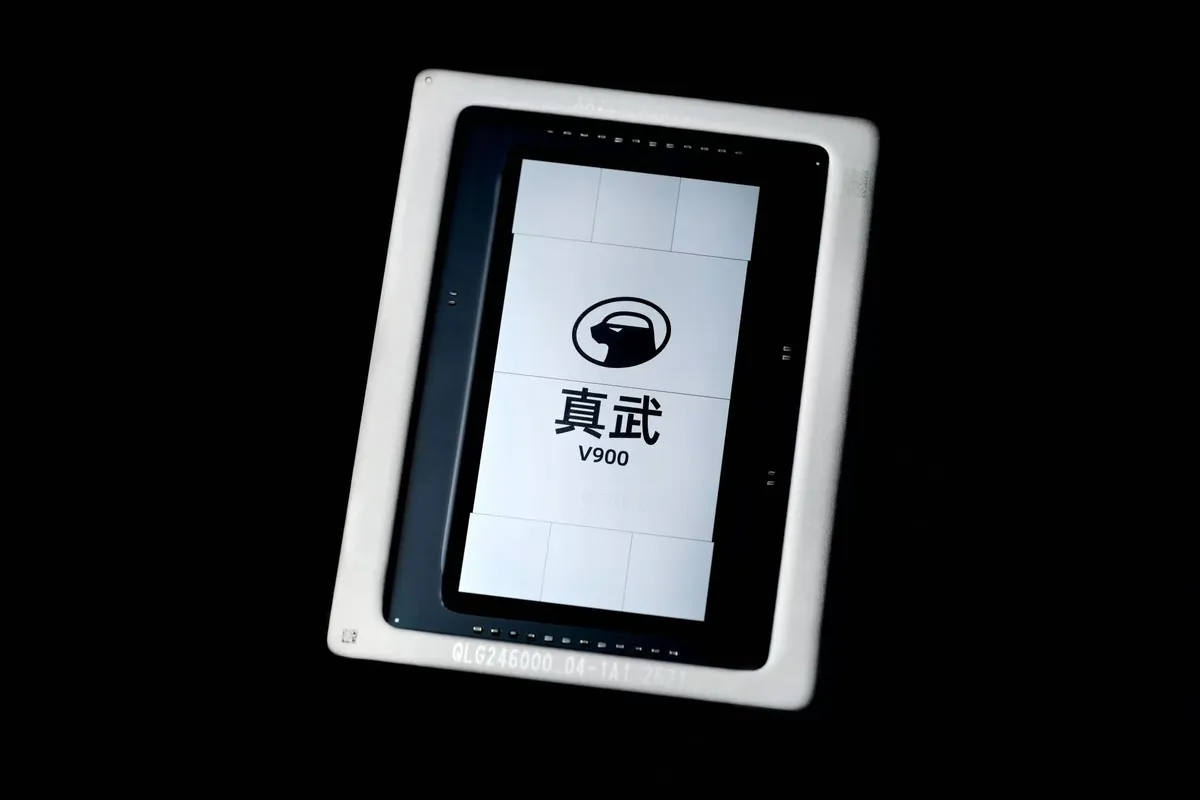
The company on Tuesday unveiled the Zhenwu V900, an AI accelerator developed by Alibaba’s T-Head semiconductor division. Alibaba says the new chip delivers three times the performance of its predecessor and can be deployed in clusters containing as many as 500,000 processors to support the training of advanced AI models.
The announcement highlights Alibaba’s growing ambitions to compete with Nvidia and become a major player across the AI hardware and software stack.
Billions Going Into AI
Alibaba has committed more than $53 billion over three years to expand its AI capabilities and infrastructure. The company also raised approximately $10.2 billion through a follow-on share offering in August.
CEO Eddie Wu has made artificial general intelligence a central priority for Alibaba, with the company investing heavily in chips, cloud computing and increasingly capable AI models.
Wu said Alibaba plans to develop AI models with between 5 trillion and 10 trillion parameters, far beyond the scale of many models currently available. The goal is to create systems capable of handling longer and increasingly complex tasks.
The company also plans to dramatically expand its cloud infrastructure. Alibaba is targeting 20 gigawatts of global data-centre capacity by 2032 for Alibaba Cloud.
Citigroup estimates that such an expansion could generate more than $160 billion in external revenue for Alibaba’s rapidly growing cloud business.
China Pushes Ahead Despite US Restrictions
Alibaba’s aggressive expansion comes as China’s AI industry faces significant restrictions on access to the world’s most advanced chips.
US export controls have limited Chinese companies’ ability to obtain Nvidia’s most powerful AI processors and have also restricted access to manufacturing capacity at leading chipmaker Taiwan Semiconductor Manufacturing Co.
Alibaba showcased its own chips, cloud services and AI models at the event, but Wu did not provide details on whether the company has secured enough domestic semiconductor production to meet rapidly increasing demand.
It remains unclear how closely Alibaba is working with Chinese manufacturers such as Semiconductor Manufacturing International Corp., which is already facing capacity constraints.