AI Glasses Shipments Rise 263% As Meta Dominates Global Market
 Emma Wheaton
22 Sep 2026
Emma Wheaton
22 Sep 2026
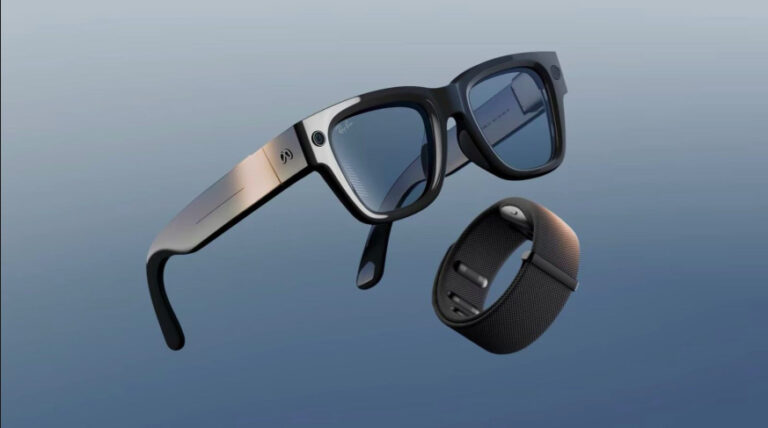
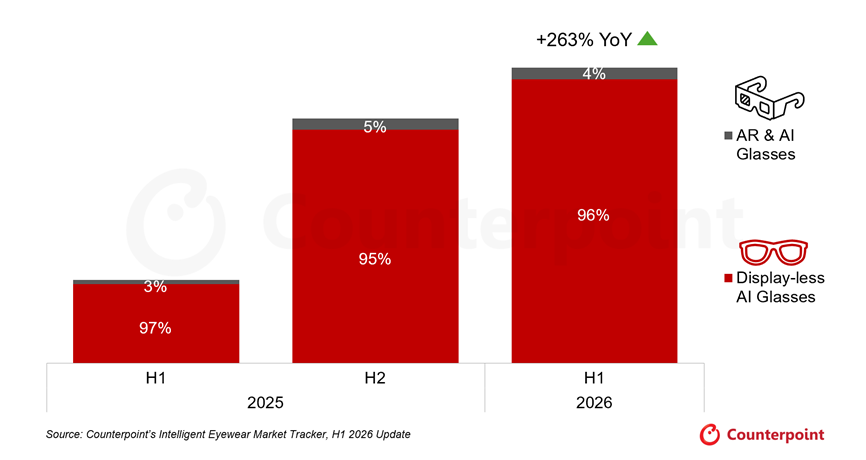
Global shipments of AI-powered glasses surged 263% year-on-year during the first half of 2026, according to new findings from Counterpoint Research.
Counterpoint’s Global Intelligent Eyewear Market Tracker found that display-less AI glasses represented 96% of total AI glasses shipments during the six months to June.
Shipments of display-less AI glasses increased 258% year-on-year and 22% compared with the second half of 2025. Counterpoint attributed the growth primarily to Meta and EssilorLuxottica expanding their product ranges, entering additional markets and increasing promotional activity.
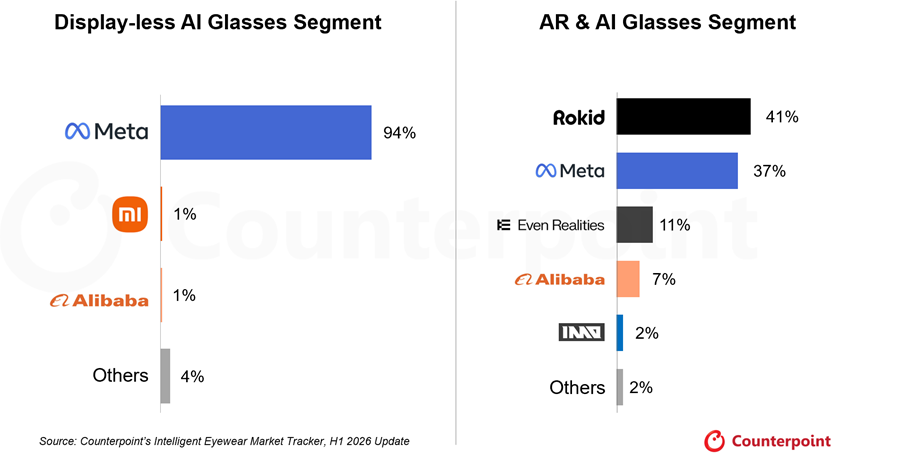
Meta is the dominant player in the category with the company accounting for approximately 94% of global display-less AI glasses shipments during the first half of the year. Its shipments rose 260% year-on-year and 22% sequentially.
The growth has been supported by additional Ray-Ban Meta variants, lower-priced Meta Glasses, expansion into new markets and broader retail distribution.
Counterpoint’s Research Vice President Peter Richardson said the competitive landscape had changed little since the launch of Ray-Ban Meta AI Glasses in 2023, with Meta strengthening its position.
In the augmented reality (AR) and AI glasses market, shipments in this smaller segment increased 449% year-on-year and 18% sequentially. The category remains niche compared with display-less products.
Chinese manufacturers are driving much of the AR and AI glasses market, with companies like Rokid, Even Realities, Alibaba and INMO speeding up product launches. China accounted for 45% of the segment’s shipments in the first half, just ahead of North America at around 41%.
Counterpoint Principal Analyst Flora Tang said China’s established supply chain for micro-displays, waveguides, audio components and manufacturing is helping local companies bring products to market faster as well as refine them through user feedback.
Despite the rapid growth, the industry faces challenges, including higher memory and semiconductor costs and growing concerns around privacy, especially around those glasses embedded with cameras.
Counterpoint says it expects these issues to create uncertainty but also predicts they are not likely to derail broader growth.
The research firm expects competition to intensify as Meta, Google, Samsung and Apple increase their investment in AI glasses. Future products are expected to move towards “agentic AI”, which will offer assistance that is more proactive and context aware, featuring improvements in software, voice interaction, sensing and low-power computing.
With privacy concerns continuing, there is also the potential for camera-free AI audio glasses to emerge. These could broaden the appeal of AI-powered eyewear beyond today’s camera-equipped versions.