$50BN Retail Giant Dollarama Takes Aim At Australia, Accessory Distributors In The Firing Line
 David Richards
22 Sep 2026
David Richards
22 Sep 2026

Australian retailers and distributors who have never heard of Canadian discount giant Dollarama are about to discover just how disruptive a retailer with massive buying power, extraordinary margins and an appetite for cheap accessories can be.
The roughly A$50 billion Canadian retail powerhouse has already established its beachhead in Australia through its acquisition of The Reject Shop, but the real threat is only now starting to emerge.
Dollarama is beginning to inject its global sourcing machine into the Australian operation, and that has potentially serious implications for Kmart, Big W, Officeworks, Bunnings and Aldi, as well as dozens of distributors supplying low-cost consumer electronics accessories, kitchen products and general merchandise.
The biggest mistake competitors could make is assuming Dollarama bought The Reject Shop simply to operate a better version of The Reject Shop.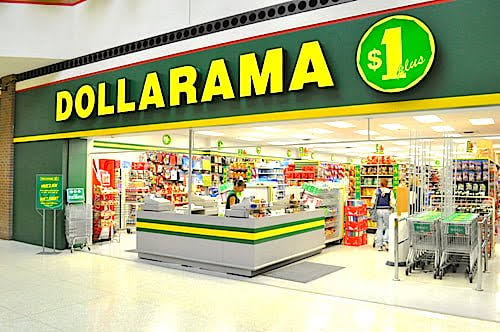
It didn’t.
The Canadian group has effectively bought itself an instant Australian retail network, local management infrastructure, distribution capability and hundreds of established store locations from which it can progressively roll out the far more efficient Dollarama model.
And accessories could become one of the first major battlegrounds.
Canadian industry observers at the recent IFA trade show joked that Dollarama had virtually “invented the word cheap” when it came to accessories selling below $25.
Behind that reputation is a sophisticated international sourcing operation, particularly out of China, capable of buying enormous volumes of inexpensive products and moving them through thousands of stores.
That potentially puts Dollarama directly into categories that Australian retailers and distributors have traditionally relied on for attractive margins.
Accessory Distributors Face A New Threat
In Canada, Dollarama already sells a broad range of mobile accessories including USB charging cables, USB-C and Lightning-type cables, wall chargers, car chargers, phone holders and stands, screen protectors, basic phone cases and related products.
Its audio offering includes inexpensive wired earphones and headphones, Bluetooth earbuds, wireless headphones and small portable Bluetooth speakers.
Then there are PC accessories.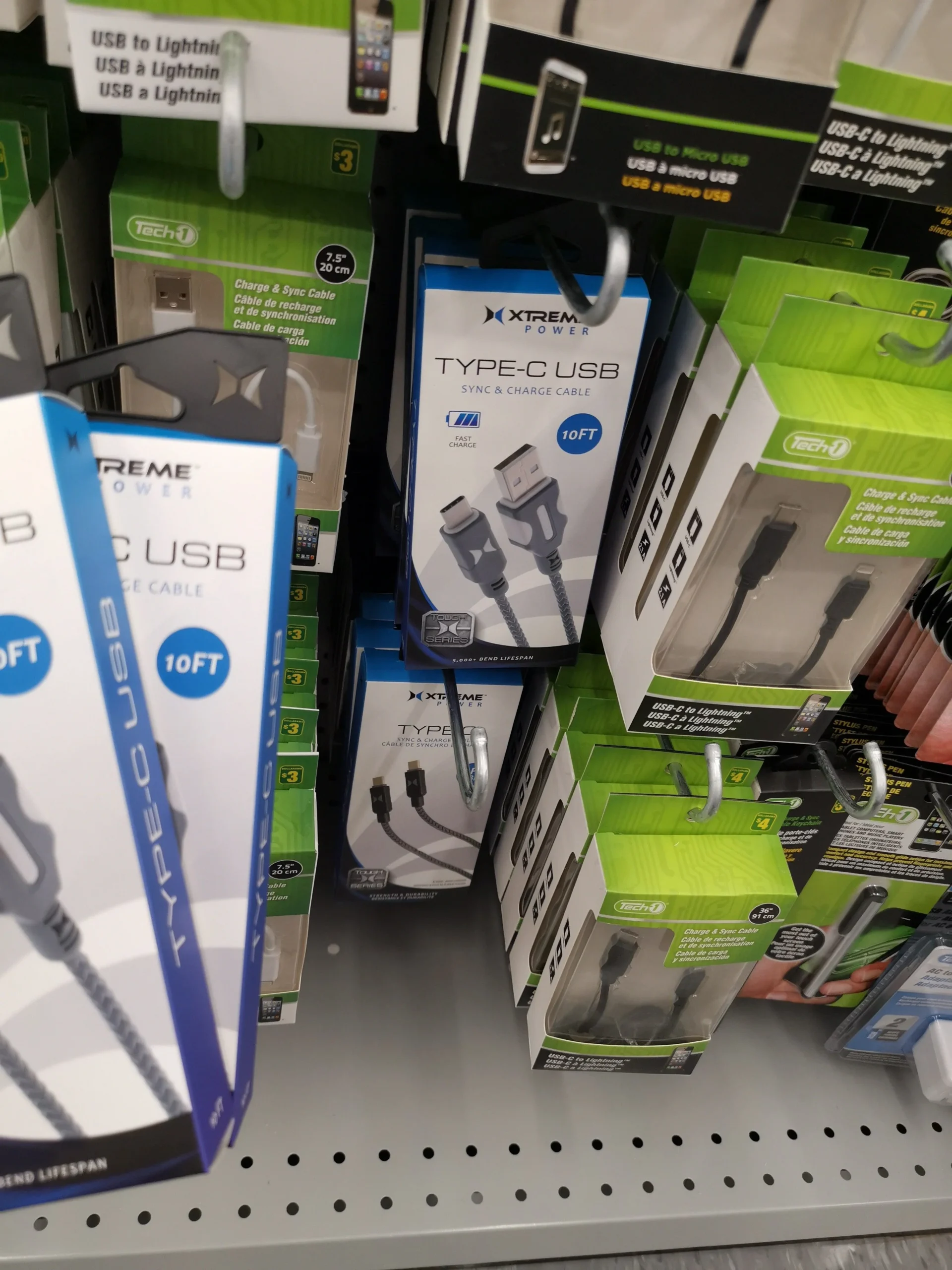
Dollarama sells computer mice, mouse pads, USB cables, adapters, basic hubs and connectors, cable-management products, keyboards and other low-cost peripherals.
The television and home entertainment category includes HDMI and AV-type cables, adapters, remote-control accessories and other inexpensive connectivity products.
Individually these are cheap products.
Collectively they represent a potentially significant threat.
Accessories are particularly important because they can deliver attractive margins for retailers and distributors compared with fiercely contested big-ticket categories such as televisions, PCs and smartphones.
A retailer capable of putting a $5, $10 or $15 cable, charger, mouse, pair of earbuds or phone accessory in front of consumers could put significant pressure on competitors selling similar products at considerably higher prices.
And Dollarama doesn’t need those products to generate traffic for another department.
It expects to make money selling them.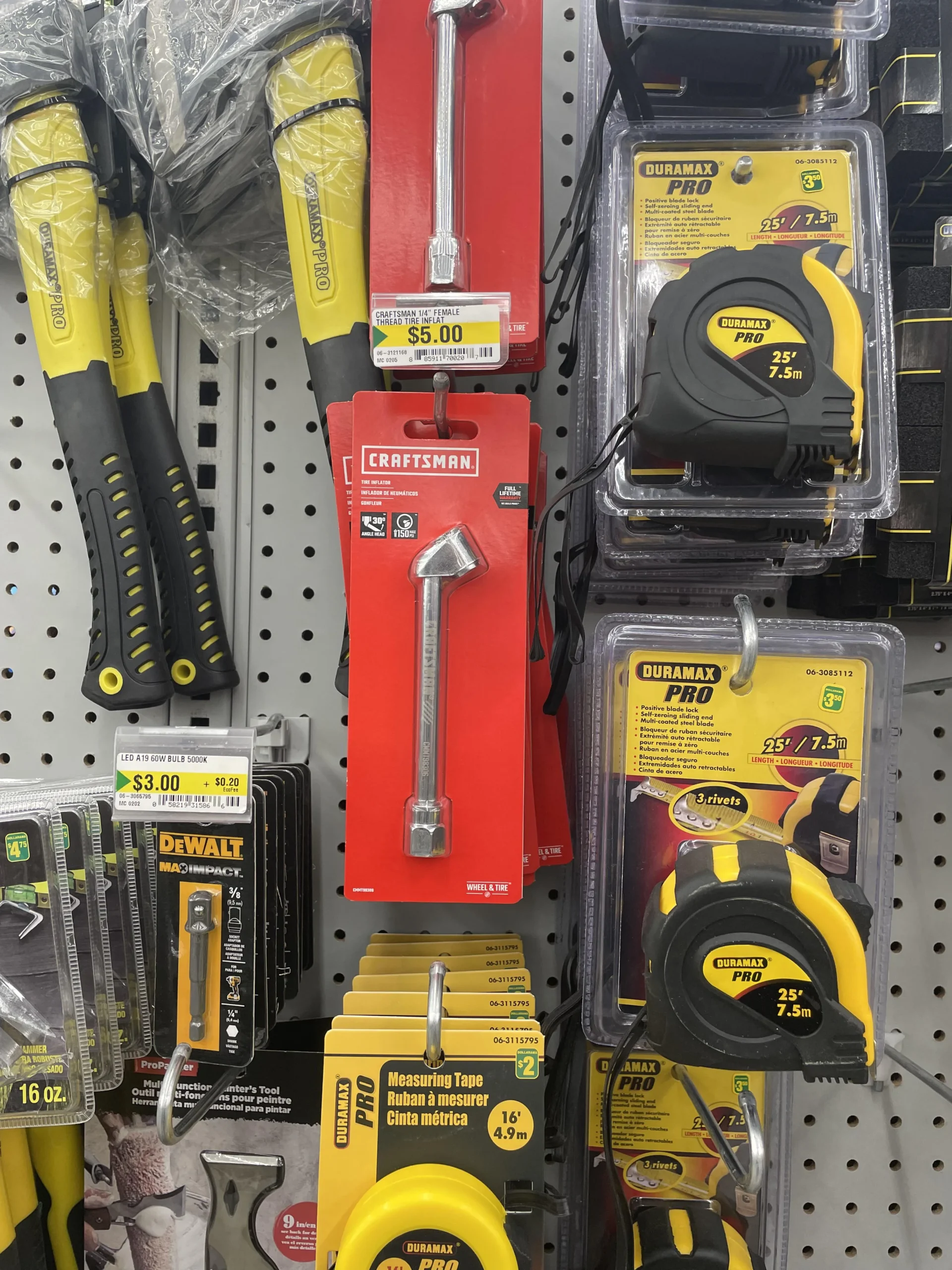
That is one of the fundamental differences between the Canadian retailer and traditional promotional discounting.
Dollarama says it operates without loss leaders.
Its model is based on sourcing products cheaply enough that it can deliver an aggressive shelf price while still generating a margin.
Its latest financial results demonstrate just how successful that formula has become.
45.7% Gross Margins
For its second quarter of FY2027, ended August 2, 2026, Dollarama reported revenue of C$2.027 billion, up 17.6%.
EBITDA reached C$653 million, representing an extraordinary 32.2% group EBITDA margin.
Net profit climbed 8.7% to C$349.3 million.
Canadian same-store sales increased 5.4%, while the Canadian operation generated a gross margin of 45.7% and an EBITDA margin of 34.9%.
In simple terms, Dollarama generated almost C$35 of EBITDA for every C$100 of Canadian sales during the quarter.
Those are extraordinary economics for a retailer built around the concept of low prices.
For FY2026, Dollarama generated net profit of C$1.309 billion, up 12.1%, while diluted earnings per share increased 13.7%.
With the Canadian dollar currently trading around parity with the Australian dollar, the scale of the business is particularly easy for Australian competitors to understand.
This is not a struggling foreign retailer gambling on Australia.
It is a highly profitable retail machine capable of funding a multi-year assault on the Australian market while its local operation is still being rebuilt.
That could prove particularly uncomfortable for Australian businesses trying to repair their own economics through private-label merchandise.
Kmart’s Anko Strategy In The Crosshairs
Kmart is arguably the most obvious competitor.
Its highly successful Anko private-label strategy has transformed the retailer and built enormous consumer recognition around inexpensive homewares, kitchen products, storage, toys, stationery and increasingly consumer electronics accessories.
Dollarama is now bringing a similar sourcing philosophy into Australia, but from a different retail format.
Its model combines elements of Aldi’s purchasing discipline, Kmart’s private-label sourcing strategy and the traditional variety store.
The critical difference is that Dollarama can operate from significantly smaller stores.
That allows it to establish locations in suburban and neighbourhood shopping centres where a full-size Kmart or Big W simply isn’t viable.
The result could be a powerful combination of low prices and convenience.
Instead of consumers making a dedicated trip to a discount department store, Dollarama can potentially put low-cost accessories, kitchenware, household products, toys and consumables within a short distance of their weekly shopping trip.
The company ultimately wants an Australian network approaching 700 stores.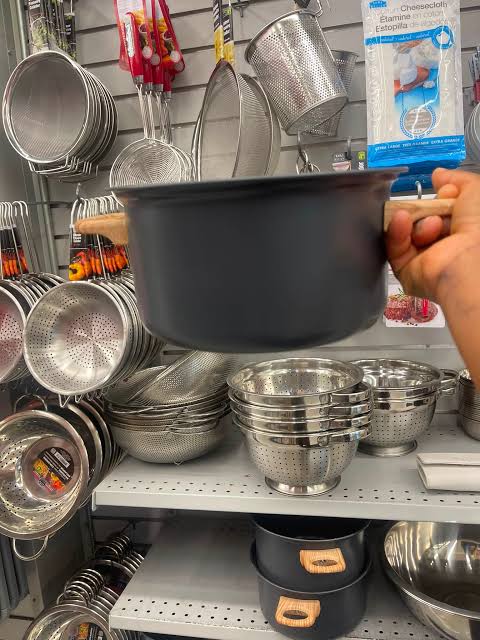
At that scale, Dollarama would no longer be a niche variety retailer.
It would become a national retail competitor with considerable purchasing leverage.
Officeworks Could Feel The Heat
Officeworks also has reason to watch what happens next.
The Wesfarmers-owned retailer has increasingly turned to private-label and directly sourced products as it attempts to protect margins across highly competitive technology and office categories.
Dollarama potentially attacks the bottom end of that market.
Consumers don’t necessarily need sophisticated product knowledge when buying a basic USB cable, mouse pad, inexpensive mouse, adapter, cable organiser or simple computer peripheral.
Price and convenience can dominate the purchasing decision.
That creates a problem for established retailers and, potentially, an even bigger problem for the distributors sitting between factories and those retailers.
Dollarama’s direct-sourcing model is specifically designed to remove intermediaries wherever possible.
As more Australian merchandise is fed through Dollarama’s international procurement operation, local distributors could find themselves competing against products sourced directly from factories at global scale.
The danger is therefore not simply losing sales to another retailer.
Dollarama could reset consumer expectations about what basic accessories should cost.
That could force established retailers to lower prices, squeeze suppliers for better buying terms, increase private-label sourcing or bypass distributors altogether.
Bunnings, Big W And Aldi Are Also Exposed
The threat extends well beyond technology.
Dollarama has a substantial kitchen and household operation in Canada, putting specialist retailers such as Kitchen Warehouse into the competitive mix.
Kmart and Big W face overlap across household products, kitchenware, storage, toys, seasonal merchandise, stationery, pet products, personal care and electronics accessories.
Bunnings and Mitre 10 could see increased competition around inexpensive hardware, storage, household consumables and selected general merchandise.
Aldi is perhaps the most interesting comparison.
Its Special Buys program has conditioned Australian shoppers to walk into a supermarket and buy products ranging from tools and kitchen appliances to electronics and household goods from brands they may never previously have encountered.
Kmart has done something similar with Anko.
That means Dollarama doesn’t have to convince Australians that unfamiliar or private-label brands can represent value.
Its competitors have already spent years doing that work.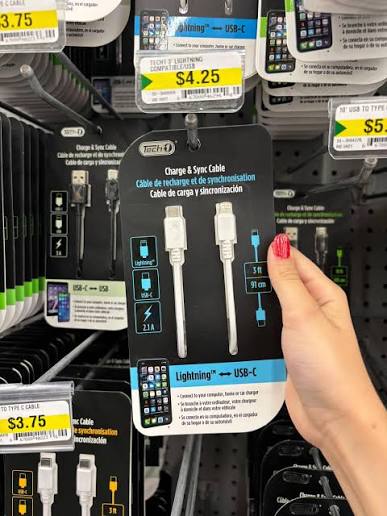
Dollarama simply needs to convince shoppers that its products are cheaper or represent better value.
The Chinese Sourcing Machine Arrives
This is where Dollarama’s international buying operation becomes critical.
The company identifies direct sourcing, scale purchasing, private-label development, branded merchandise, imported products, locally sourced goods and multiple fixed price points as important components of its model.
It also refreshes approximately 25–30% of its SKUs annually.
Stores are relatively compact.
Layouts are highly standardised.
Inventory and replenishment are centrally controlled.
And, crucially, Dollarama is increasingly applying this infrastructure to Australia.
The company confirmed last week that the first Dollarama-sourced imported products are now reaching Australian stores.
It has previously indicated that by the end of FY2027 approximately half of imported products sold through the Australian operation are expected to be sourced through Dollarama’s international sourcing infrastructure.
That could be the point at which Australian competitors really start feeling the impact.
Instead of The Reject Shop negotiating products based largely on the requirements and volumes of an Australian discount chain, the business can increasingly plug into a sourcing organisation supporting thousands of stores internationally.
The transformation is not simply about putting different products on The Reject Shop’s shelves.
It is about changing the economics behind those products.
Prepared To Sacrifice Sales For Lower Prices
Dollarama is also signalling that it is prepared to make decisions in Australia that could initially hurt revenue.
Management wants to shift the Australian assortment towards lower price points and has warned investors that the strategy could initially reduce sales dollars.
That is a significant signal to competitors.
Dollarama appears prepared to sacrifice some top-line revenue while establishing a stronger value proposition.
A retailer backed by more than C$1.3 billion in annual profit can afford to play a considerably longer game than many smaller Australian competitors and distributors.
The Australian business generated A$185.7 million in second-quarter sales but lost approximately A$13.7 million as Dollarama poured money into transforming the operation.
The group is spending an additional A$35 million to A$45 million on integration, IT systems, additional employees, labour and operational changes, separate from expenditure associated with store renovations and expansion.
Those losses therefore need to be viewed in context.
Dollarama isn’t attempting to extract maximum profit from Australia immediately.
It is spending money installing the infrastructure needed to replicate a model that generates EBITDA margins approaching 35% in Canada.
Australia’s High Cost Base Is The Big Question
There is, however, one major obstacle.
Australia is expensive.
Labour costs, rents, logistics and regulatory costs are considerably different from those confronting Dollarama in its home market.
The economics of operating hundreds of small Australian stores will therefore be tested as the network expands.
Whether Dollarama can reproduce anything approaching its Canadian margins in Australia remains to be seen.
But it doesn’t necessarily need to.
Even at substantially lower Australian margins, the company’s purchasing scale and financial resources could allow it to compete aggressively.
And its management isn’t hiding the size of its ambition.
CFO Patrick Bui said last week that the ultimate objective remains building “the leading value retailer in the Australian market.”
CEO Neil Rossy has previously described the ambition as creating the “800-pound gorilla” of Australian value retail.
For Kmart, Big W, Officeworks, Bunnings, Aldi and the distributors supplying them, those comments are worth paying attention to.
Dollarama has the balance sheet to withstand losses.
It has the international sourcing infrastructure.
It has decades of experience in private-label and low-cost merchandise.
It now has an Australian store network.
And it is progressively replacing The Reject Shop’s buying model with its own.
The biggest threat may not be another discount department store selling cheap kitchenware or toys.
It could be thousands of relatively small transactions involving the cables, chargers, earbuds, computer accessories, kitchen products and household goods where Australian retailers and distributors have traditionally been able to generate healthy margins.
A $5 cable doesn’t look particularly threatening.
Multiply it across hundreds of products, hundreds of stores and millions of customer visits, and Dollarama starts looking very different.
Australian retailers might not know the Dollarama name today.
They are about to.